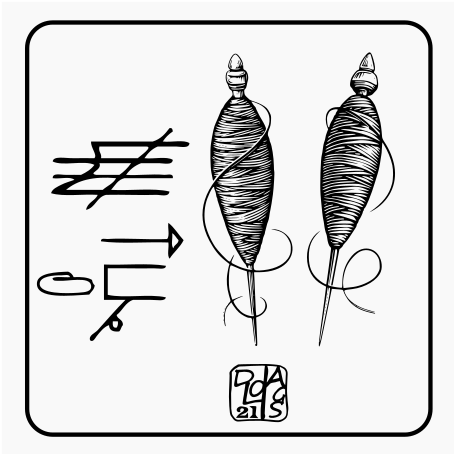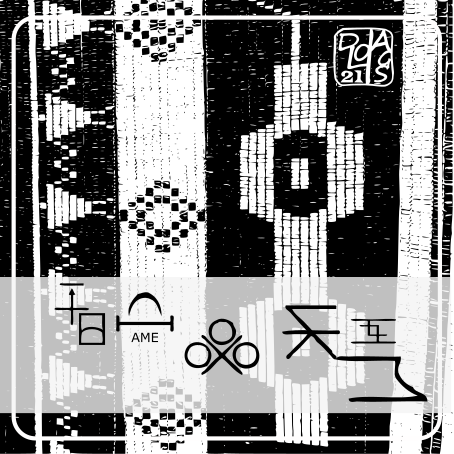
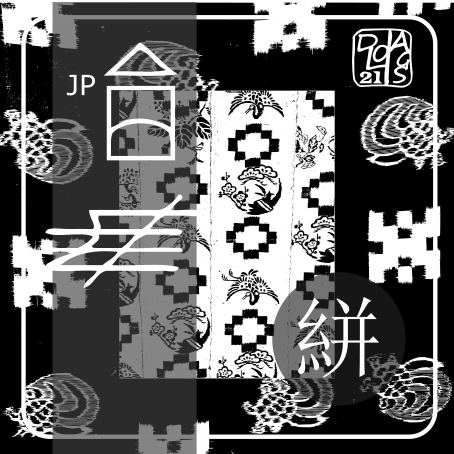
Kasuri 絣 refers to a family of Japanese textiles characterized by slightly blurred, almost vibrant patterns. This effect is not the result of printing or painting applied to the finished fabric, but of work carried out even before weaving begins. Certain sections of the threads are protected during dyeing, so that the designs emerge when the threads are finally assembled on the loom. This technique requires remarkable foresight: the artisan must envision the pattern before the fabric actually exists. Kasuri thus belongs to a long tradition in which textile creation relies as much on planning as on execution. The slight misalignments between the threads are part of its beauty. Where modern industry often seeks geometric perfection, kasuri values a living precision that leaves room for the slightest variation. This aesthetic aligns with certain Japanese conceptions of controlled imperfection. The fabric becomes a space where calculation, chance, and sensitivity meet. Kasuri reminds us that textiles are also an art of time, since their design emerges gradually as the work progresses.Lire la suitekasuri
Vous pouvez compléter, modifier, améliorer cette indéfinition ou en proposer une autre au regard de vos savoirs, langages, pratiques, histoire… qu’elle soit formulée sur un mode scientifique, culturel, poétique… contact@21dialogues21.org