
Catégories
Indéfinition

vélocipède

repère(s) :

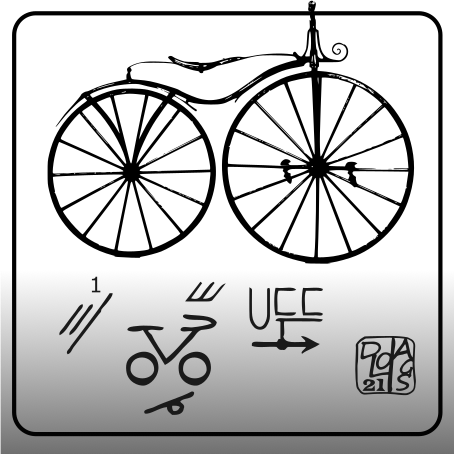
The term “velocipede” refers to several early types of bicycles developed in the 19th century. These machines represent a decisive milestone in the history of personal transportation. For the first time, a rider could cover significant distances using only their own muscle power, while benefiting from the mechanical efficiency of the wheels. The earliest models were often uncomfortable and difficult to handle, but they opened up a vast field of innovation. The velocipede contributed to the transformation of cities, leisure activities, and conceptions of movement. It also fostered a new relationship between the body and speed. Even before the automobile, it offered a modern experience of personal mobility. Its development spurred advances in metallurgy, bearings, tires, and road infrastructure. Through it, a culture of movement emerged that would profoundly shape the 19th and 20th centuries. The velocipede is thus one of the direct ancestors of the contemporary world of transportation.Lire la suitevélocipède

Vous pouvez compléter, modifier, améliorer cette indéfinition ou en proposer une autre au regard de vos savoirs, langages, pratiques, histoire… qu’elle soit formulée sur un mode scientifique, culturel, poétique… contact@21dialogues21.org
Catégories
Indéfinition

urushi

repère(s) :art

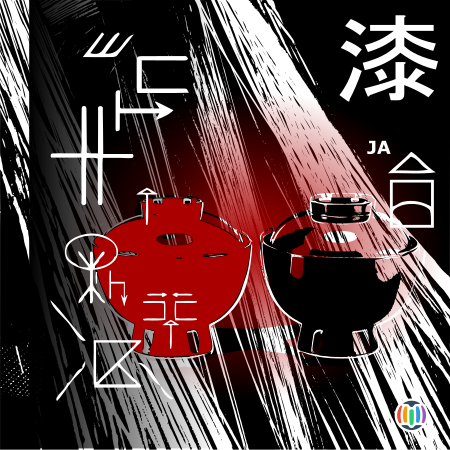
L’urushi 漆 est une laque naturelle traditionnelle au Japon [pratiquée également sous des formes diverses par ex. en Chine ou en Corée]. Elle est produite à partir de la sève de l’arbre d’urushi, également connu sous le nom d’arbre à laque (Toxicodendron vernicifluum). Elle sert à magnifier des bols, des plateaux, des boîtes, des ustensiles de cuisine, des instruments de…Lire la suiteurushi

Vous pouvez compléter, modifier, améliorer cette indéfinition ou en proposer une autre au regard de vos savoirs, langages, pratiques, histoire… qu’elle soit formulée sur un mode scientifique, culturel, poétique… contact@21dialogues21.org
Catégories
Indéfinition

teinture

repère(s) :

Textile dyeing is the process of coloring a textile material using dyes or pigments. It gives fibers, yarns, or fabrics a durable and uniform color. This technique has been used since ancient times to embellish clothing and upholstery fabrics. Dyes can be of natural origin, such as certain plants or insects, or of synthetic origin. Dyeing can be applied to various fibers, such as cotton, wool, silk, or polyester. The process relies on the penetration and fixation of the dye within the textile material. Several methods exist depending on the nature of the fiber and the desired result. Dyeing can be performed on the fiber, yarn, fabric, or finished garment. It generally requires the use of water, heat, and chemical auxiliaries. The quality of the dyeing is measured by its uniformity and washfastness. It must also be resistant to light, rubbing, and perspiration. The textile industry uses specialized equipment to control the process parameters. Recent innovations aim to reduce water consumption and environmental impacts. Dyeing plays an essential role in the aesthetics and commercial value of textile products. As such, it constitutes a fundamental step in the processing and finishing of textiles.Lire la suiteteinture

Vous pouvez compléter, modifier, améliorer cette indéfinition ou en proposer une autre au regard de vos savoirs, langages, pratiques, histoire… qu’elle soit formulée sur un mode scientifique, culturel, poétique… contact@21dialogues21.org
Catégories
Indéfinition

tartan

Tartan (or breacan) – Tartan is a checkered fabric generally associated with Scotland. Its appearance results from the regular interweaving of threads of different colors in the warp and weft. Although checkered fabrics exist in many parts of the world, tartan has taken on a special place in the Scottish imagination. Starting in the 18th century and especially in the 19th century, certain patterns gradually became associated with clans, families, or institutions. This evolution contributed to the construction of a modern national identity. Tartan demonstrates how a textile pattern can become a collective emblem. Its influence extends far beyond traditional clothing. It can be found in fashion, design, cultural movements, and even certain forms of social protest.Lire la suitetartan

Vous pouvez compléter, modifier, améliorer cette indéfinition ou en proposer une autre au regard de vos savoirs, langages, pratiques, histoire… qu’elle soit formulée sur un mode scientifique, culturel, poétique… contact@21dialogues21.org
Catégories
Indéfinition

rouet

repère(s) :

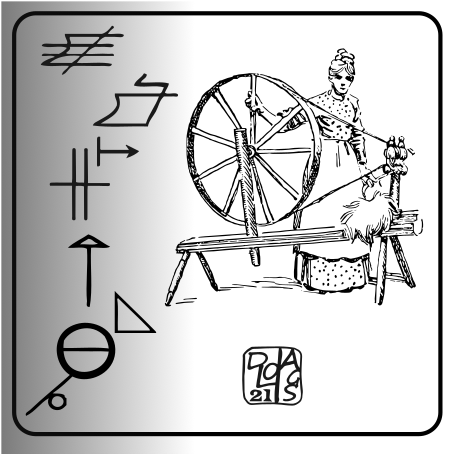
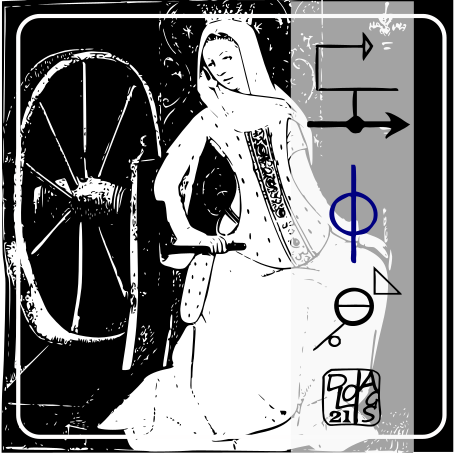
The spinning wheel is a machine designed to transform fibers into continuous thread. Appearing in various forms across Eurasia during the Middle Ages, this invention profoundly transformed textile production capabilities. Before its development, spinning relied primarily on the hand-held spindle. The spinning wheel significantly speeds up the process through a wheel driven by the hand or foot, providing the motion needed to twist the fibers. The spinning wheel thus bridges the worlds of textiles and mechanics. It also holds an important place in European folklore, as evidenced by several famous tales. Its image evokes domestic labor, artisanal patience, and technical innovation.Lire la suiterouet

Vous pouvez compléter, modifier, améliorer cette indéfinition ou en proposer une autre au regard de vos savoirs, langages, pratiques, histoire… qu’elle soit formulée sur un mode scientifique, culturel, poétique… contact@21dialogues21.org
Catégories
Indéfinition

roue hydraulique

repère(s) :

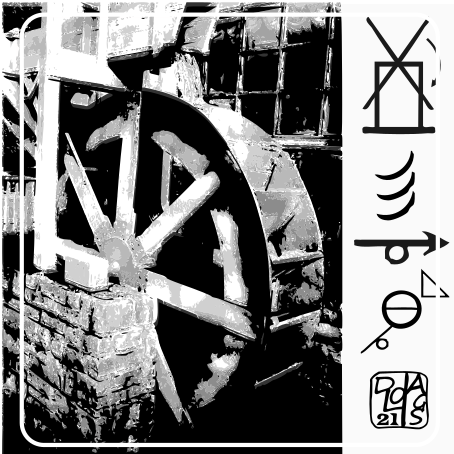
The waterwheel is one of the great inventions that enabled human societies to harness the forces of nature. Known in ancient times but widely developed during the Middle Ages, it converts the energy of water into mechanical motion. Installed on rivers and canals, it powers mills, hammers, sawmills, and irrigation systems. Its significance extends far beyond mere technology. It reshapes the organization of labor, fosters the growth of certain regions, and indirectly paves the way for subsequent industrial revolutions. The waterwheel illustrates a moment when societies learned to delegate physical labor to mechanical devices. It belongs to a long line of technologies based on rotation. In many European and Asian landscapes, it also became a familiar feature of the cultural environment. Its history shows that major innovations do not always originate in factories; they can emerge along the banks of a river.Lire la suiteroue hydraulique

Vous pouvez compléter, modifier, améliorer cette indéfinition ou en proposer une autre au regard de vos savoirs, langages, pratiques, histoire… qu’elle soit formulée sur un mode scientifique, culturel, poétique… contact@21dialogues21.org
Catégories
Indéfinition

roue dentée

repère(s) :

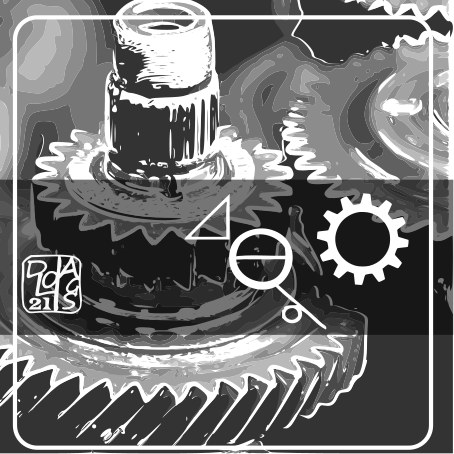
The gear represents a fundamental step in the evolution of technology. Unlike the simple wheel, which is used primarily for movement, the gear enables the transmission and transformation of motion. When several gears mesh together, they alter the speed, direction, or power of a mechanism. Clocks, mills, mechanical looms, and industrial machines rely heavily on this principle. The gear marks a decisive turning point in the history of mechanics: movements cease to be isolated and instead form organized systems. Studying it helps us understand how human societies gradually learned to coordinate complex operations. The image of the gear has also become a metaphor for collective work. Each wheel depends on the others to function.Lire la suiteroue dentée

Vous pouvez compléter, modifier, améliorer cette indéfinition ou en proposer une autre au regard de vos savoirs, langages, pratiques, histoire… qu’elle soit formulée sur un mode scientifique, culturel, poétique… contact@21dialogues21.org
Catégories
Indéfinition

roue de prière (tibétaine)

repère(s) :Tibet

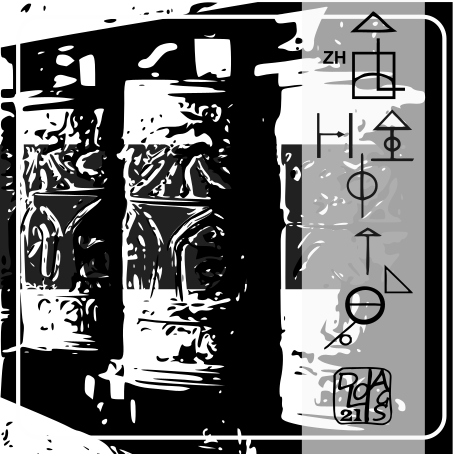
The Tibetan prayer wheel combines mechanical movement with spiritual practice. A cylinder mounted on an axle, it typically contains sacred texts or mantras inscribed on paper. By turning it, the devotee symbolically recites the prayers it contains. The circular motion thus becomes a form of religious action. The circle and rotation are associated with the continuity of the world and the circulation of teachings. This object also allows us to explore the connections between artisanal techniques, devotional practices, and cosmological representations.Lire la suiteroue de prière (tibétaine)

Vous pouvez compléter, modifier, améliorer cette indéfinition ou en proposer une autre au regard de vos savoirs, langages, pratiques, histoire… qu’elle soit formulée sur un mode scientifique, culturel, poétique… contact@21dialogues21.org
Catégories
Indéfinition

roue de Fortune

repère(s) :EuropeMoyen Âge

The Wheel of Fortune is one of the most powerful images in medieval European culture. Inherited from antiquity and popularized by the writings of Boethius, it represents the instability of the human condition. People rise and fall with the turns of the goddess Fortune, never able to control their destiny for long. In manuscripts, cathedrals, and literary works, this wheel depicts kings becoming beggars and the humble rising to power. The image is based on a fundamental observation: any circular motion implies a change in position. The wheel thus becomes a metaphor for time, chance, and the fragility of human achievements. Unlike transport wheels, which allow us to control movement, the Wheel of Fortune reminds us of what lies beyond our control. Its influence spans the centuries and continues to appear in games, performances, and everyday expressions. It demonstrates how a technical object can become a tool for philosophical reflection. The wheel is no longer merely a material instrument; it becomes a way of thinking about the world.Lire la suiteroue de Fortune

Vous pouvez compléter, modifier, améliorer cette indéfinition ou en proposer une autre au regard de vos savoirs, langages, pratiques, histoire… qu’elle soit formulée sur un mode scientifique, culturel, poétique… contact@21dialogues21.org
Catégories
Indéfinition

roue

repère(s) :savoir

The wheel is a circular mechanical device that rotates around an axis to facilitate the movement of people, animals, and loads. It is considered one of the most important inventions in human history. The first known wheels appeared around 3500 B.C. in Mesopotamia, where they were initially used on potter’s wheels before being adapted for transportation. This invention marked a decisive step in the development of societies, as it made it possible to move much heavier loads with less effort. Thanks to the wheel, trade expanded, distances became easier to travel, and economic activities became more efficient. Its use gradually spread to many civilizations around the world. Over the centuries, the wheel underwent numerous improvements: solid wooden wheels, spoked wheels, metal-rimmed wheels, and eventually wheels fitted with tires. Its importance is not limited to transportation. It also gave rise to numerous technical mechanisms, such as mills, gears, clocks, industrial machinery, and many tools. The wheel thus plays an essential role in the fields of agriculture, crafts, industry, and transportation.Lire la suiteroue

Vous pouvez compléter, modifier, améliorer cette indéfinition ou en proposer une autre au regard de vos savoirs, langages, pratiques, histoire… qu’elle soit formulée sur un mode scientifique, culturel, poétique… contact@21dialogues21.org
Catégories
Indéfinition

pneu

repère(s) :

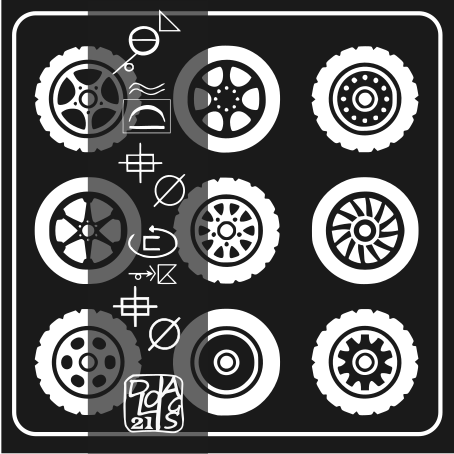
A tire is a rubber ring mounted around a wheel to provide contact between the vehicle and the ground. Its main functions are to support the vehicle’s weight, provide traction, transmit braking and acceleration forces, and absorb some of the road’s unevenness. The invention of the pneumatic tire dates back to 1845, when Robert William Thomson filed a patent for a wheel equipped with an air-filled casing. However, this innovation saw little use until 1888, when John Boyd Dunlop developed an inflatable tire for bicycles. The success of this invention led to its adoption on early automobiles. In 1891, Michelin developed the removable tire, making it easier to replace and repair. Throughout the 20th century, tires underwent numerous advancements thanks to the use of new materials, the introduction of the radial tire, and improvements in manufacturing processes. Today, they offer better traction, longer life, reduced fuel consumption, and enhanced safety. Current research focuses on tires that are more environmentally friendly, connected, and adapted to new transportation technologies.Lire la suitepneu

Vous pouvez compléter, modifier, améliorer cette indéfinition ou en proposer une autre au regard de vos savoirs, langages, pratiques, histoire… qu’elle soit formulée sur un mode scientifique, culturel, poétique… contact@21dialogues21.org
Catégories
Indéfinition

orimono donya

repère(s) :

The orimono donya (織物問屋), or textile merchant, played a central role in the textile economy. Unlike the weaver, he generally did not produce the fabrics himself. His role was to organize the flow of goods, finance production, and connect workshops with urban markets. During the Edo period and later in the Meiji era, these merchants often served as the true orchestrators of the local textile system. They commissioned designs, provided capital, selected raw materials, and ensured sales in major consumer centers. The most prosperous built grand residences and participated in local public life. They embodied a form of commercial capitalism based as much on market knowledge as on risk management.Lire la suiteorimono donya

Vous pouvez compléter, modifier, améliorer cette indéfinition ou en proposer une autre au regard de vos savoirs, langages, pratiques, histoire… qu’elle soit formulée sur un mode scientifique, culturel, poétique… contact@21dialogues21.org
Catégories
Indéfinition

penny-farthing

repère(s) :

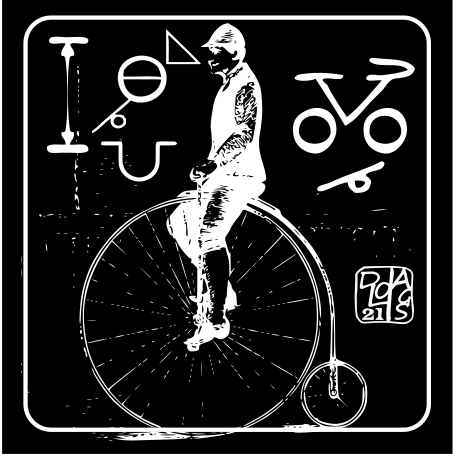
The penny-farthing, sometimes called a “high-wheeler,” is one of the most recognizable vehicles in the history of transportation. Its enormous front wheel and small rear wheel give it a spectacular silhouette. Its name comes from two British coins whose dimensions resembled the vehicle’s proportions. This configuration was driven by technical logic: before the invention of modern drivetrains, increasing the wheel’s diameter allowed for greater distance covered with each pedal stroke. The grand-bi represents a phase of intense experimentation in the history of the bicycle. It bears witness to an era when engineers were still searching for the most efficient forms of individual mobility. Riding it requires skill, balance, and courage. Despite its limitations, it helped popularize travel on two wheels. Even today, it remains a visual icon of 19th-century mechanical ingenuity. It serves as a reminder that the most familiar technologies are often the result of numerous trials and detours.Lire la suitepenny-farthing

Vous pouvez compléter, modifier, améliorer cette indéfinition ou en proposer une autre au regard de vos savoirs, langages, pratiques, histoire… qu’elle soit formulée sur un mode scientifique, culturel, poétique… contact@21dialogues21.org
Catégories
Indéfinition

obi

repère(s) :Japon

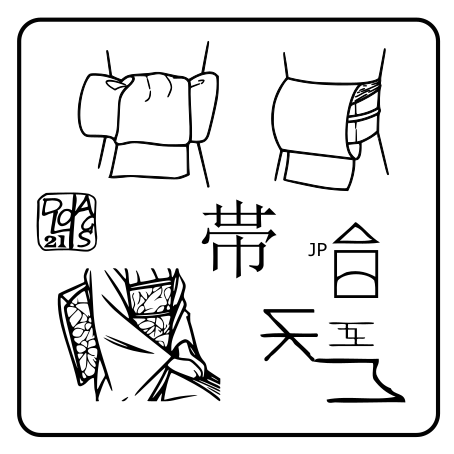
The obi 帯 is one of the most sophisticated forms of the sash. Its significance extends far beyond the realm of clothing. Over the centuries, its width, texture, color, and method of tying have signified age, social status, marital status, or even the ceremonial occasion. The knot at the back constitutes a true visual language. The obi is also a space for aesthetic invention where patterns inspired by nature, poetry, the seasons, or beliefs are displayed. It represents an interesting paradox: while it is a constraining element that holds the garment in place, it is also one of the primary vehicles for creativity. In the global history of costume, few objects have concentrated so many social and artistic meanings into a single strip of fabric. Its study opens up themes of weaving, the body, social representation, and the transmission of craftsmanship.Lire la suiteobi

Vous pouvez compléter, modifier, améliorer cette indéfinition ou en proposer une autre au regard de vos savoirs, langages, pratiques, histoire… qu’elle soit formulée sur un mode scientifique, culturel, poétique… contact@21dialogues21.org
Catégories
Indéfinition

nishijin-ori

repère(s) :JaponKyoto

Nishijin-ori 西陣織 is one of Japan’s most prestigious textile traditions. Developed in a historic district of Kyoto, it is distinguished by the richness of its patterns, the complexity of its weaves, and the use of particularly refined threads. For centuries, these fabrics have been associated with ceremonial garments, religious objects, and prestigious accessories. Nishijin-ori artisans often draw on skills passed down through several generations. Each fabric is the result of collaboration between designers, dyers, yarn preparers, and weavers. This collaborative process underscores that great artisanal traditions are rarely the work of a single individual. Nishijin-ori also stands as a remarkable example of the dialogue between conservation and innovation. Traditional techniques continue to be practiced while incorporating new materials and new uses.Lire la suitenishijin-ori

Vous pouvez compléter, modifier, améliorer cette indéfinition ou en proposer une autre au regard de vos savoirs, langages, pratiques, histoire… qu’elle soit formulée sur un mode scientifique, culturel, poétique… contact@21dialogues21.org
Catégories
Indéfinition

navette

repère(s) :

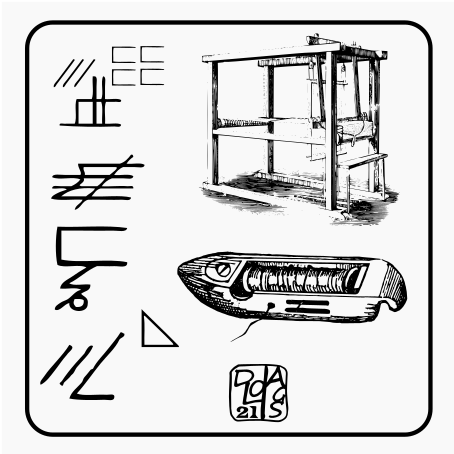
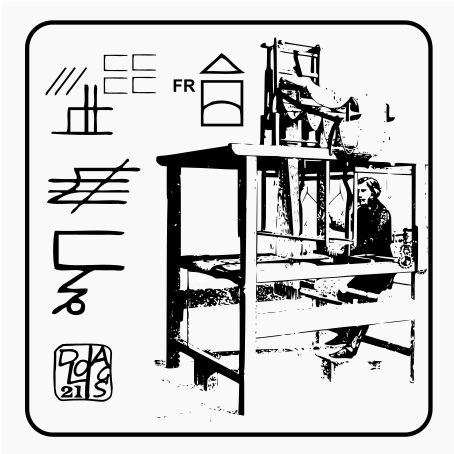
The shuttle is one of the most important tools in the history of weaving. Its role is to carry the weft thread from one side of the loom to the other. This movement, repeated thousands of times, gradually produces the fabric. Behind its apparent simplicity lies a fundamental invention. The shuttle transforms a series of individual threads into a coherent and durable surface. In several languages, its name evokes the idea of movement or back-and-forth motion. Improvements to the shuttle played a decisive role in increasing textile productivity in the modern era.Lire la suitenavette

Vous pouvez compléter, modifier, améliorer cette indéfinition ou en proposer une autre au regard de vos savoirs, langages, pratiques, histoire… qu’elle soit formulée sur un mode scientifique, culturel, poétique… contact@21dialogues21.org
Catégories
Indéfinition

métier Jacquard

repère(s) :France

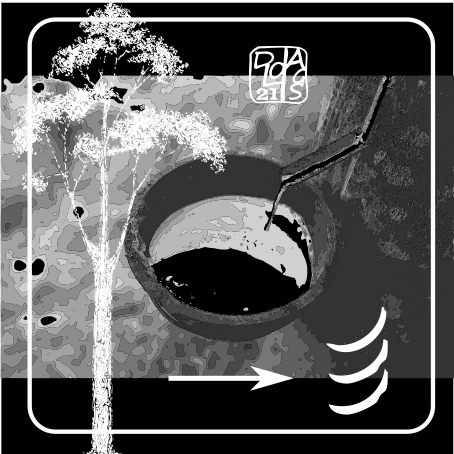
The Jacquard loom, developed in the early 19th century by Joseph Marie Jacquard, marked a major revolution in the history of textiles. His innovation relied on the use of punch cards to automatically control the woven patterns. Thanks to this system, complex designs could be reproduced with unprecedented precision. The Jacquard loom profoundly transformed European textile industries and also influenced Asian production centers. Its significance, however, extends beyond the realm of textiles. The punch cards would later inspire several pioneers of computer science. The Jacquard loom is thus often presented as a forerunner of modern programmable systems. It demonstrates how an innovation born in the world of thread can alter the history of machinery. This convergence of craftsmanship, automation, and information remains one of the most fascinating episodes in industrial history. Here, textiles become a technological laboratory.Lire la suitemétier Jacquard

Vous pouvez compléter, modifier, améliorer cette indéfinition ou en proposer une autre au regard de vos savoirs, langages, pratiques, histoire… qu’elle soit formulée sur un mode scientifique, culturel, poétique… contact@21dialogues21.org
Catégories
Indéfinition

latex

repère(s) :

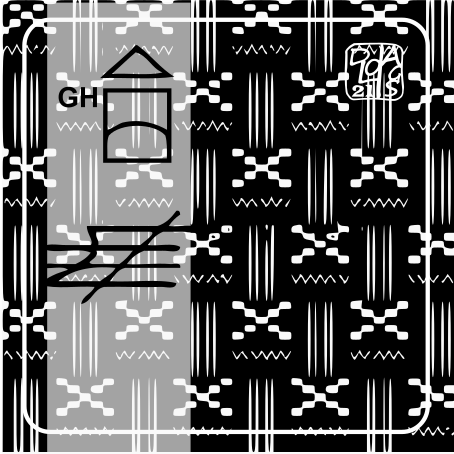
Latex is the milky substance produced by many plants when they are cut. In the case of the rubber tree, this liquid contains the particles used to manufacture natural rubber. Long viewed as a botanical curiosity, latex has gradually become a strategic raw material. Its extraction relies on a simple yet precise technique: making a controlled incision to collect the liquid without causing lasting damage to the tree. This process, known as tapping, requires experience and consistency. Latex illustrates a common pattern in the history of technology: a natural material acquires new meanings as scientific knowledge advances. Even today, it remains at the heart of many industrial supply chains. Studying it helps connect the plant world to that of materials. Bridging the gap between the rainforest and the chemistry lab, latex reminds us that even the most modern objects often retain deeply biological roots.Lire la suitelatex

Vous pouvez compléter, modifier, améliorer cette indéfinition ou en proposer une autre au regard de vos savoirs, langages, pratiques, histoire… qu’elle soit formulée sur un mode scientifique, culturel, poétique… contact@21dialogues21.org
Catégories
Indéfinition

kente

repère(s) :Ghana

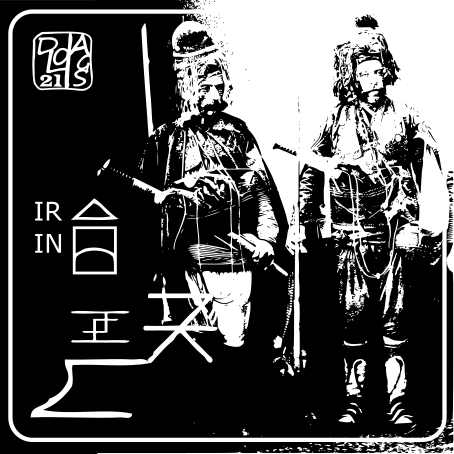
Kente is an iconic West African textile, particularly associated with the Akan people of Ghana. Composed of narrow strips woven separately and then joined together, it is characterized by vibrant geometric patterns. Each combination of patterns and colors can carry a specific meaning. Some evoke power, others wisdom, prosperity, or the memory of ancestors. Kente is therefore not merely a garment; it constitutes a visual language. Historically linked to royal courts, it has over time become a much broader cultural symbol. Its influence now extends far beyond the African continent. It is frequently used within diasporas as a marker of identity and historical continuity. Kente illustrates the ability of textiles to convey ideas and values. Like writing, fabric can tell a story. Its patterns show that textiles are often cultural archives as important as written texts.Lire la suitekente

Vous pouvez compléter, modifier, améliorer cette indéfinition ou en proposer une autre au regard de vos savoirs, langages, pratiques, histoire… qu’elle soit formulée sur un mode scientifique, culturel, poétique… contact@21dialogues21.org

Catégories
Indéfinition

kamarband

repère(s) :IndeIran

The kamarband is a long strip of fabric worn around the waist across a vast cultural region stretching from Iran to Central Asia and the Indian subcontinent. Its name comes from Persian: kamar means “waist” or “belt,” while band refers to something that fastens or wraps around. Originally, the kamarband served a practical purpose: to hold clothing in place, support the body during certain tasks, or carry small objects. However, it quickly took on social and symbolic significance. Depending on the era and region, its material, color, or the way it was tied could indicate rank, profession, or group affiliation. In the Mughal courts of India, the most prestigious kamarbands were made from luxurious fabrics and sometimes embellished with precious embroidery. Officers, dignitaries, and wealthy merchants made it an important part of their attire. In the 18th century, Europeans discovered this accessory through trade with the East. Adapted to Western fashion, it gave rise to the cummerbund, still worn today with certain formal garments. The kamarband thus illustrates how a simple object can travel between cultures, change its function, and acquire new meanings while retaining its fundamental role: connecting the garment to the body.Lire la suitekamarband

Vous pouvez compléter, modifier, améliorer cette indéfinition ou en proposer une autre au regard de vos savoirs, langages, pratiques, histoire… qu’elle soit formulée sur un mode scientifique, culturel, poétique… contact@21dialogues21.org