
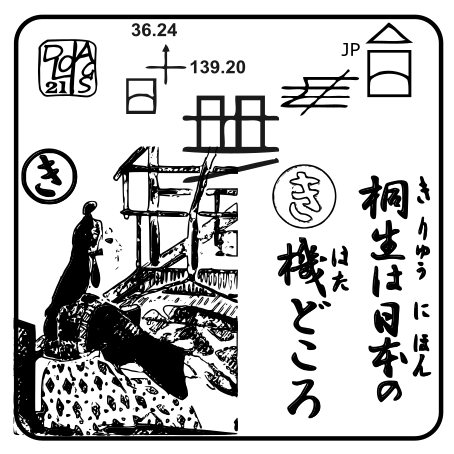
The phrase 日本の機どころ (Nihon no hatadokoro), often translated as “Japan’s weaving country” or “Japan’s city of looms,” is closely associated with Kiryu. It features prominently in Gunma’s popular culture and encapsulates several centuries of textile specialization. This phrase does not refer to a specific product but to a collective reputation. It expresses the idea that an entire region can be identified with a technical skill. Many cities around the world have been defined by a dominant industry: silk in Lyon, wool in Bradford, carpets in Isfahan. Kiryu belongs to this family of cities whose identity has become inseparable from a productive craft. The phrase serves as a condensed memory of several generations of artisans, merchants, and industrialists. It represents a true cultural motto of the city.Lire la suiteNihon no hatadokoro
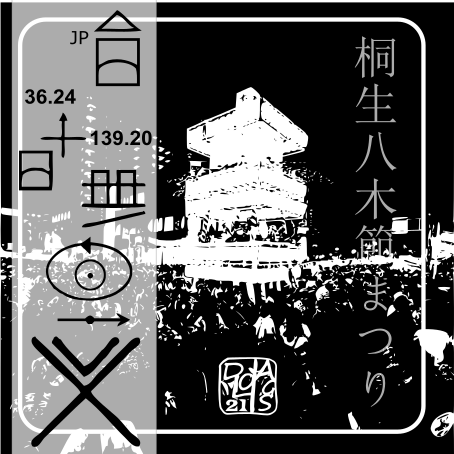
The Kiryu Matsuri 桐生八木節まつり is one of the major events on the local calendar. Like many Japanese urban festivals, it combines religious, community, and celebratory elements. Residents celebrate both their connection to the city and the continuity of traditions passed down through generations. Floats, music, decorations, and gatherings temporarily transform the urban landscape. The festival also serves as a special occasion for cultural transmission. The skills required to organize it bring together associations, families, and neighborhood groups. Behind the festival’s apparent spontaneity lies a considerable collective effort. The Kiryu Matsuri demonstrates how local communities create and preserve their own collective memory. It reminds us that a city’s identity is built as much through celebrations as through monuments.Lire la suiteKiryu Matsuri
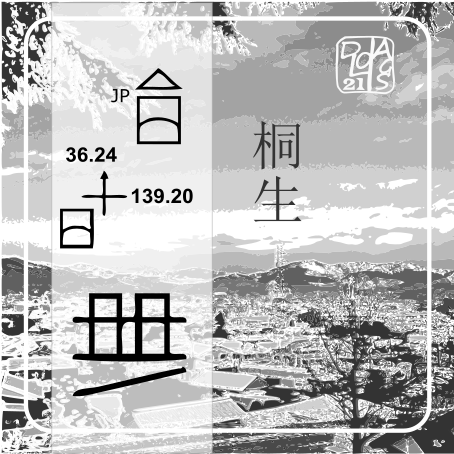
Located in Gunma Prefecture, the city of Kiryu 桐生 is often associated with a long tradition of textile production. Its development is linked to a combination of geographical, economic, and technical factors that fostered the emergence of a major production center. For centuries, the skills involved in spinning, dyeing, and weaving have formed an essential part of its identity. However, Kiryu is not merely defined by its artisanal specialization. The city illustrates how a community can build its reputation on mastery of a craft. Its history also attests to the ability of regions to integrate innovations while preserving ancient legacies. Like other textile cities around the world, it has had to navigate industrialization, international competition, and changing fashion trends. Kiryu thus serves as a particularly fascinating case study of the relationship between heritage and adaptation. Its history reflects several centuries of economic and cultural transformation in Japan.Lire la suiteKiryu
Jean-Auguste-Dominique Ingres, né à Montauban en 1780 et mort à Paris en 1867, est l’un des grands maîtres du néoclassicisme français. Élève de Jacques-Louis David, il s’impose comme le défenseur de la ligne, du dessin et de l’idéal antique, face au romantisme naissant. Son art, à la fois rigoureux et sensuel, exprime une recherche d’harmonie et de perfection formelle. Après…Lire la suiteJean-Auguste-Dominique Ingres
Honoré de Balzac (1799-1850) fut un écrivain français, l’un des plus éminents du XIXe siècle, connu pour son œuvre monumentale « La Comédie humaine ». Né à Tours, il monte à Paris pour étudier le droit, mais il abandonne rapidement cette carrière pour se consacrer à l’écriture. Après des débuts littéraires difficiles sous divers pseudonymes, il connaît le succès avec « Les Chouans »…Lire la suiteHonoré de Balzac
Horace Vernet, né à Paris en 1789 et mort en 1863, est un peintre renommé du XIXᵉ siècle, issu d’une lignée d’artistes : petit-fils de Joseph Vernet, célèbre pour ses marines, et fils de Carle Vernet, peintre de batailles et de chevaux. Héritier de cette tradition, Horace Vernet se distingue très tôt par son talent et son goût pour la…Lire la suiteHorace Vernet
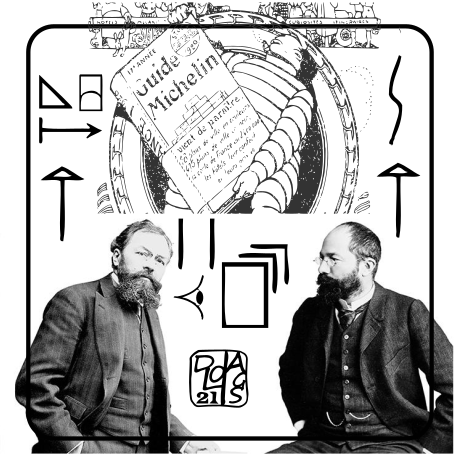
The Michelin Guide was launched at the turn of the 20th century, at a time when automobiles were still a rarity. Its initial goal was simple: to encourage travel and thereby promote the use of tires. To assist drivers, the guide provided practical information on roads, repair shops, and places to eat. Over time, the publication underwent a profound transformation. Its restaurant reviews eventually became its most famous feature. Michelin stars gradually gained global influence over the reputations of restaurants and chefs. The guide reflects how mobility transforms eating habits. Traveling involves eating, discovering new places, and exploring culinary traditions. Tires, roads, and gastronomy are thus linked within a single narrative. The Michelin Guide perfectly illustrates the sometimes unexpected cultural consequences of technical innovation.Lire la suiteGuide Michelin
Eugène Delacroix, né à Charenton en 1798 et mort à Paris en 1863, est la grande figure du romantisme pictural français. Élève de Pierre-Narcisse Guérin et admirateur de Rubens et des maîtres vénitiens, il s’impose dès le début du XIXᵉ siècle comme le rival d’Ingres, représentant du néoclassicisme. Delacroix privilégie la couleur, le mouvement et la passion, opposant à la…Lire la suiteEugène Delacroix
Ernest Renan (1823-1892) fut un écrivain, philologue, historien et philosophe français, célèbre pour ses travaux sur l’histoire des religions et ses idées progressistes. Né à Tréguier, en Bretagne, il reçoit une éducation religieuse et se destine initialement à la prêtrise. Cependant, ses études à Paris le conduisent à remettre en question sa foi, et il abandonne le séminaire pour se…Lire la suiteErnest Renan
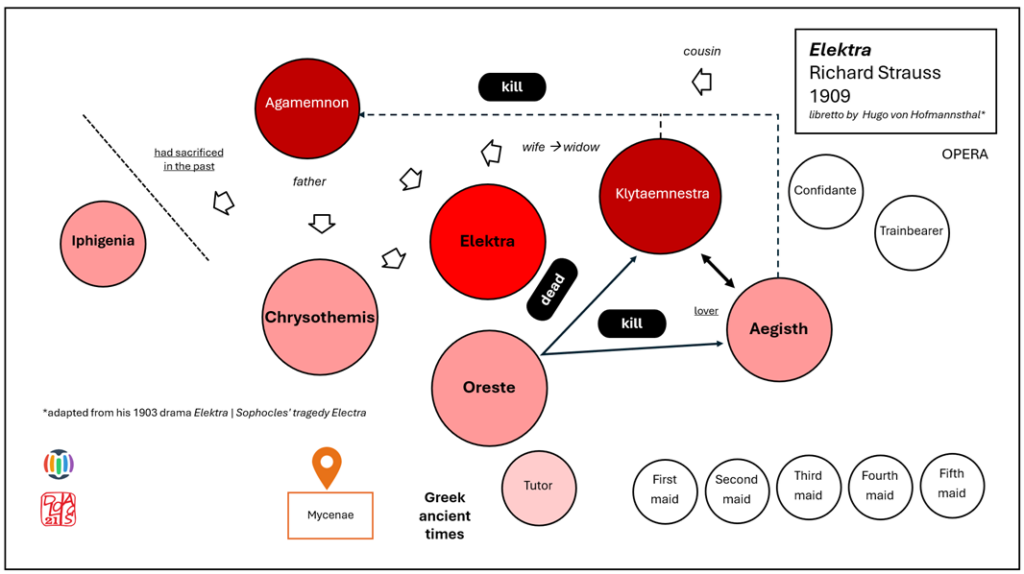
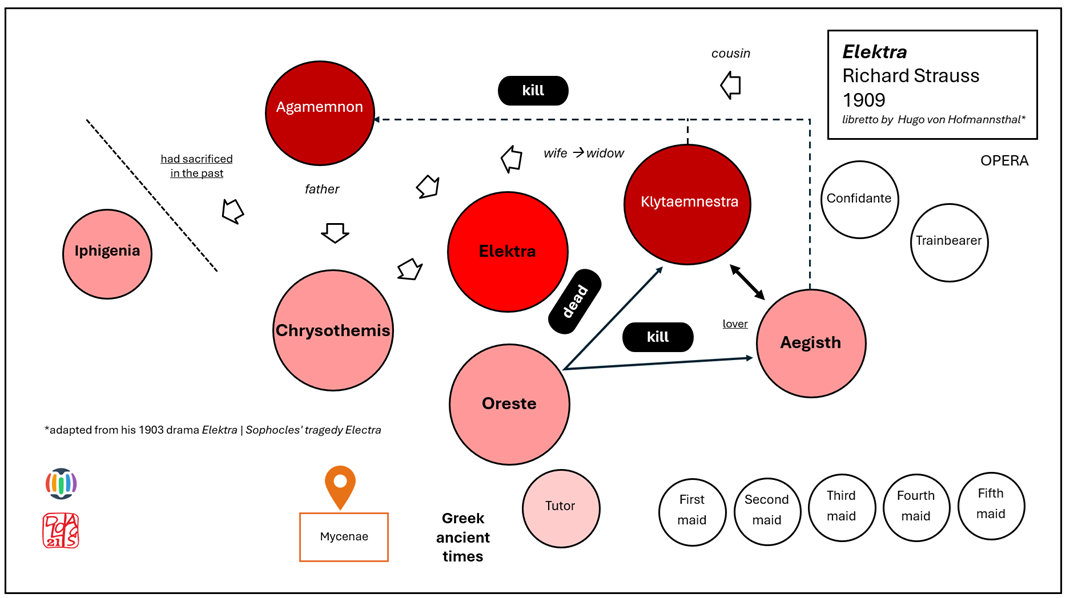
Elektra est un opéra en un acte de Richard Strauss, sur un livret de Hugo von Hofmannsthal d’après la tragédie d’Euripide et surtout la réécriture moderne du dramaturge autrichien. Créé le 25 janvier 1909 au Königliches Opernhaus de Dresde, l’ouvrage marque une étape décisive dans l’histoire de l’opéra du XXᵉ siècle par son langage harmonique audacieux, son intensité psychologique extrême…Lire la suiteElektra
Le débat entre « chocolatine » et « pain au chocolat » est une querelle bon enfant qui divise les Français depuis des générations. Pourtant, cette petite question est profondément ancrée dans notre terreau culturel et linguistique. Sans prétendre ici trancher un différend dont l’intensité et la régularité ne cessent d’étonner, risquons-nous ici à quelques mentions, sources de controverses plus…Lire la suiteChocolatine ou pain au chocolat ? Le débat fait rage…
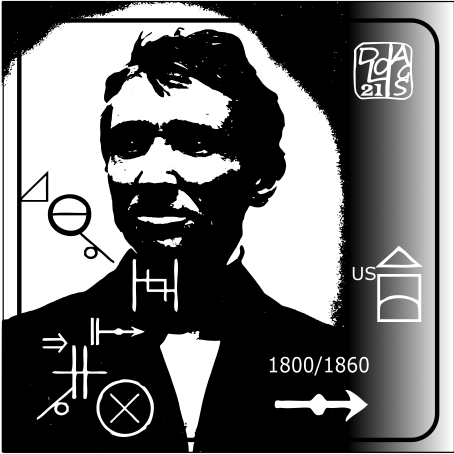
Charles Goodyear (1800–1860) was an American inventor whose name remains closely associated with one of the most important discoveries in the history of materials: the vulcanization of rubber. By the early 19th century, natural rubber had already attracted the interest of industrialists, but its use remained limited. Indeed, it became sticky and soft when exposed to heat, while it hardened and cracked in cold weather. These flaws prevented its widespread use. Convinced of the material’s potential, Goodyear devoted many years to experimenting with different methods to improve its properties. After numerous failures and significant financial difficulties, he discovered in 1839 that by heating rubber in the presence of sulfur, it was possible to make it much more stable, elastic, and durable. This process was subsequently named “vulcanization,” in reference to Vulcan, the Roman god of fire and the forge. This invention profoundly transformed modern industry. Thanks to vulcanization, rubber could be used in the manufacture of tires, gaskets, drive belts, electrical cables, and many everyday objects. It thus paved the way for the development of modern transportation and numerous industrial innovations. Paradoxically, despite the importance of his discovery, Charles Goodyear never achieved true financial prosperity. He spent much of his life in debt and died before he could see the full extent of his invention’s industrial success.Lire la suiteCharles Goodyear

Created in 1898, Bibendum is Michelin’s mascot and one of the world’s most famous advertising figures. Made up of a stack of tires, this character first appeared at a time when the automobile was still a novelty. His name comes from a Latin expression meaning roughly “one must drink.” In the early posters, Bibendum symbolically “drinks” away the obstacles on the road. Over time, he became much more than an advertising tool. He entered the history of graphic design, design, and popular culture. Few industrial mascots have achieved such longevity. Bibendum demonstrates how modern companies create their own mythologies. Through him, a technical object becomes a character, then a cultural icon. He now belongs as much to the history of art as to that of industry.Lire la suiteBibendum
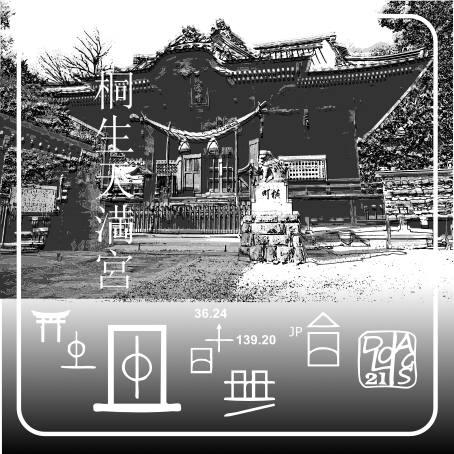
Kiryu-Tenmangū Shrine (桐生天満宮) is a branch of Kyoto/Kitano Tenmangū Shrine and one of the five major shrines in the Kanto region, where it serves as the guardian shrine of the city of Kiryu. This shrine has a long history. According to its records, it was built to worship the deity Amano Hohi no Mikoto, before later becoming a Tenmangu dedicated to the deity Sugawara no Michizane at the beginning of the Northern and Southern Courts period. (…) Furthermore, although Tenmangu is commonly known as the “god of learning,” the blessings of this shrine are not limited to that alone. Kiryu, whose scenic beauty has long been renowned, occupies an ideal location from a feng shui perspective. In other words, this place can be described as a kind of spiritual epicenter. In accordance with feng shui practices, the main shrine houses the four gods Seiryu, Byakko, Suzaku, and Genbu, positioned respectively in the east, west, south, and north. Their many blessings, drawn from the energy of heaven and earth, include business prosperity, family well-being, good health, happiness, and fortune, as well as protection from disasters.Lire la suiteKiryu-Tenmangū (Kiryu)
SHORTLire la suiteTITRE
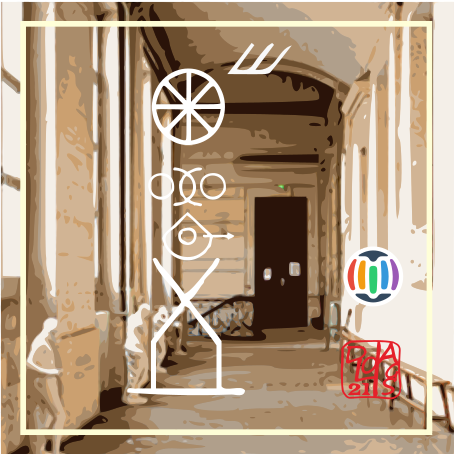
Fondée en 1808 par Isaac Rodrigues-Henriques, la Philomathique de Bordeaux est le fruit du siècle des Lumières. Initialement, l’école avait pour mission de promouvoir le savoir et de diffuser les connaissances scientifiques et techniques parmi les élites bordelaises. Le nom même de « Philomathique », issu des racines grecques « philo » (aimer) et « mathique » (les sciences), traduit…Lire la suitePhilomathique de Bordeaux
Il fallait trouver une héroïne ; beaucoup de noms furent prononcés. Du côté des hommes, Talazac, Taskin et Cobalet formaient une superbe distribution. Mais, pour la Manon, le choix resta indécis. Beaucoup, certes, avaient du talent, une grande réputation même, mais je ne sentais pas une seule artiste qui répondît à ce rôle, comme je le voulais, et qui aurait…Lire la suiteIl fallait trouver une héroïne… (Manon)
Before a fabric can be woven, it must first be conceived. The zuanka 図案家, or pattern designer, occupies a unique position in the Japanese textile industry. Their work consists of creating designs that are then translated into threads, colors, and weaving structures. They operate at the intersection of art and industry. The designer must understand the technical constraints of the craft while remaining attentive to changing tastes. Their creations respond to commercial demands but also contribute to the invention of new aesthetics. In certain periods, the best designers exert an influence comparable to that of contemporary fashion designers. Their work reveals the importance of imagination in an activity often perceived as purely artisanal.Lire la suitezuanka
Vous pouvez compléter, modifier, améliorer cette indéfinition ou en proposer une autre au regard de vos savoirs, langages, pratiques, histoire… qu’elle soit formulée sur un mode scientifique, culturel, poétique… contact@21dialogues21.org
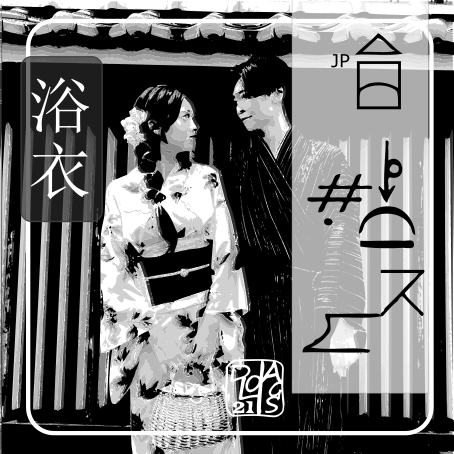
The yukata 浴衣 is a Japanese garment that is often associated today with summer festivals and leisure time, although its history is more complex. Originally, it was a lightweight garment worn after bathing. Its popularity stems from a combination of comfort, simplicity, and elegance. Unlike some more formal garments, the yukata allows for great freedom in patterns and colors. Its development has helped support numerous textile industries across Japan. The fabrics used for yukata often reflect the evolving aesthetic tastes of a given era. Flowers, waves, geometric patterns, and seasonal motifs make up a particularly rich visual vocabulary. The yukata is an excellent example of a garment where everyday use and artistic creation intersect. Studying it allows us to explore the relationships between textiles, climate, and social interaction.Lire la suiteyukata
Vous pouvez compléter, modifier, améliorer cette indéfinition ou en proposer une autre au regard de vos savoirs, langages, pratiques, histoire… qu’elle soit formulée sur un mode scientifique, culturel, poétique… contact@21dialogues21.org
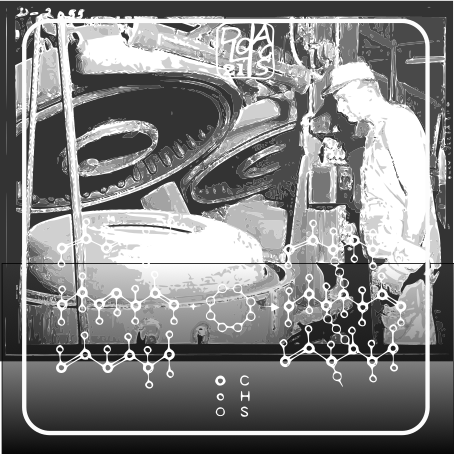
Vulcanization represents one of the major turning points in the history of materials. Before its development, natural rubber had significant limitations: it deformed when exposed to heat and became brittle in cold weather. The addition of sulfur followed by heat treatment creates stable bonds between the material’s molecules. This transformation significantly improves its strength and durability. The term refers to Vulcan, the Roman god of fire and the forge. The choice of this name underscores the idea of a material reshaped by the mastery of heat. Thanks to vulcanization, rubber moved beyond the realm of curiosity to become a leading industrial resource. Tires, gaskets, soles, cables, and thousands of other products benefit from it. Few processes have contributed as much to modern mobility. Vulcanization represents the exemplary convergence of science, industry, and the transformation of the material world.Lire la suitevulcanisation
Vous pouvez compléter, modifier, améliorer cette indéfinition ou en proposer une autre au regard de vos savoirs, langages, pratiques, histoire… qu’elle soit formulée sur un mode scientifique, culturel, poétique… contact@21dialogues21.org