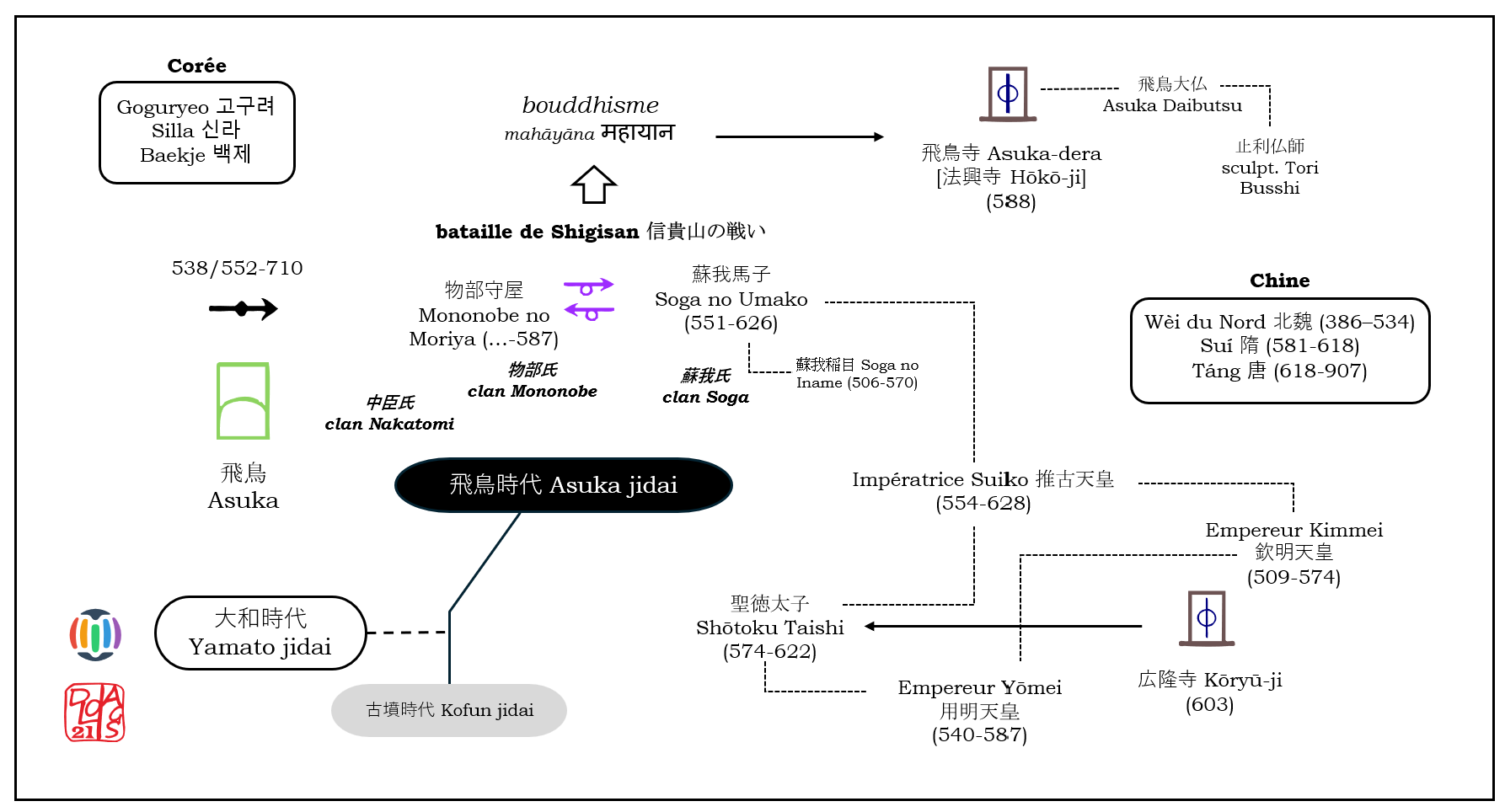
La période Yamato (大和時代, Yamato jidai) désigne la longue phase de l’histoire ancienne du Japon au cours de laquelle le pouvoir fut progressivement concentré autour de la cour de Yamato, située dans l’actuelle préfecture de Nara. Elle couvre approximativement les années 250 à 710 et englobe généralement la période Kofun (古墳時代, Kofun jidai) et la période d’Asuka (飛鳥時代, Asuka jidai).…Lire la suitePériode Yamato
Pantopique : Pays-Asie
Un pantopique correspond à la réunion de quelques repères, plus ou moins nombreux, que vous pouvez commenter, compléter, étendre, selon vos propres champs d’expériences, de savoirs, d’enquêtes… - contact@21dialogues21.org
Baekje (백제 | 百濟 ; jap. Kudara, 百済) fut l’un des Trois Royaumes de Corée (Samguk, 삼국, 三國), aux côtés de Goguryeo (고구려, 高句麗) et de Silla (신라, 新羅). Fondé traditionnellement en 18 av. J.-C., il occupait principalement la partie sud-ouest de la péninsule coréenne. Grâce à sa position maritime privilégiée, Baekje développa d’importants échanges avec la Chine et le…Lire la suiteBaekje
L’époque de Nara (奈良時代, Nara jidai) couvre la période comprise entre 710 et 794, lorsque la capitale du Japon fut installée à Heijō-kyō (平城京), l’actuelle ville de Nara (奈良). Cette période marque l’aboutissement des réformes politiques entreprises à l’époque d’Asuka et la mise en place d’un État fortement inspiré des modèles administratifs chinois. La capitale fut conçue selon un plan…Lire la suiteEpoque de Nara
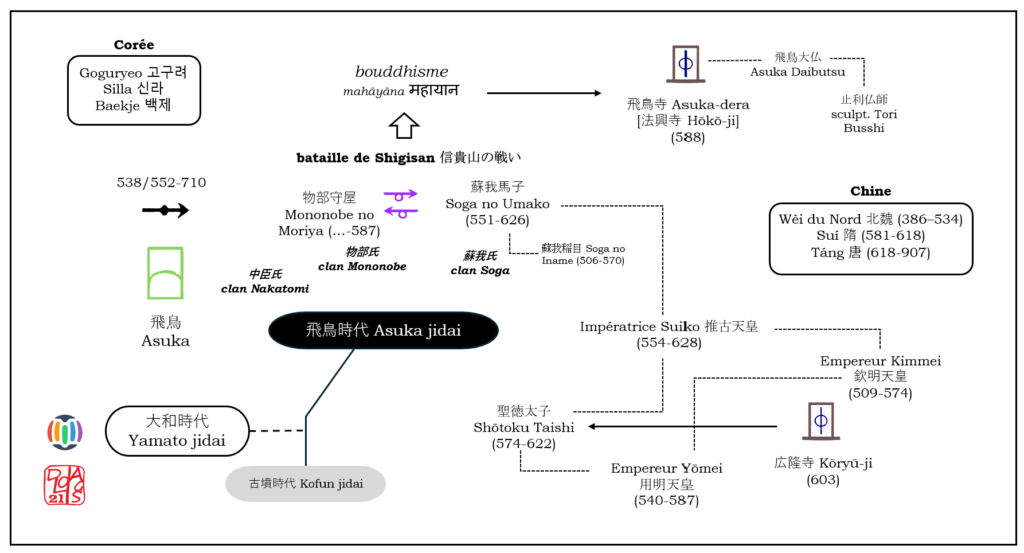
La période d’Asuka (飛鳥時代, Asuka jidai) désigne une phase de l’histoire japonaise s’étendant approximativement de 538 ou 552 à 710. Elle tire son nom de la région d’Asuka (飛鳥, Asuka), située dans l’ancienne province de Yamato (大和国, Yamato no kuni), où résidaient les souverains japonais de l’époque. Cette période est principalement caractérisée par l’introduction et l’enracinement progressif du bouddhisme (仏教,…Lire la suitePériode d’Asuka
Le temple Asuka-dera (飛鳥寺), également connu sous le nom de Hōkō-ji 法興寺, « Temple de la prospérité de la Loi bouddhique »), est considéré comme le premier grand temple bouddhique officiellement établi au Japon. Situé dans la région d’Asuka (飛鳥), au cœur de l’actuelle préfecture de Nara, il fut fondé à la fin du VIe siècle sous le patronage du…Lire la suiteAsuka-dera
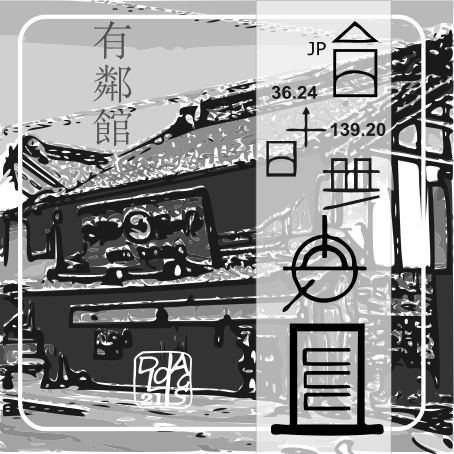
Yurin-kan 有鄰館 is a remarkable complex of historic buildings consisting of former warehouses associated with production and trade. The preserved structures span several periods, from the Edo period to the 20th century. Sake, miso, and soy sauce were once produced here. Today, the site offers an exceptional example of Japanese utilitarian architecture. The thick walls of the warehouses illustrate the importance of storage in pre-industrial and industrial economies. The Yūrinkan serves as a reminder that a textile town does not live by its looms alone. It also depends on networks for the supply, trade, and storage of goods. The buildings demonstrate how local prosperity was embodied in tangible infrastructure. They allow us to observe the connections between food, trade, and industry in a medium-sized Japanese town.Lire la suiteYurin-kan
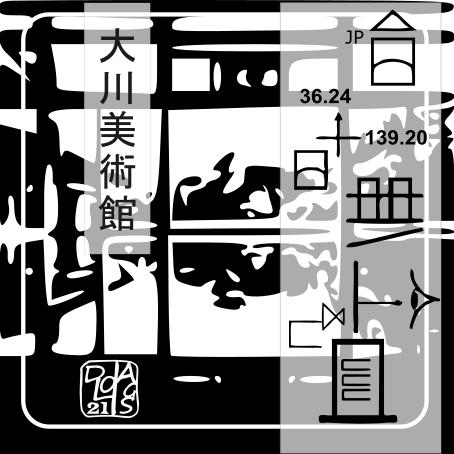
The Okawa Museum of Art 大川美術館 is an interesting example of cultural diversification in a city historically shaped by the textile industry. Founded with the collection of Kiryu-based patron and entrepreneur Eiji Ōkawa, the museum is primarily dedicated to modern Japanese art. Its existence demonstrates how the wealth generated by industry can be reinvested in sustainable cultural institutions. The museum also offers a glimpse into Kiryu’s evolution.Lire la suiteŌkawa Museum of Art
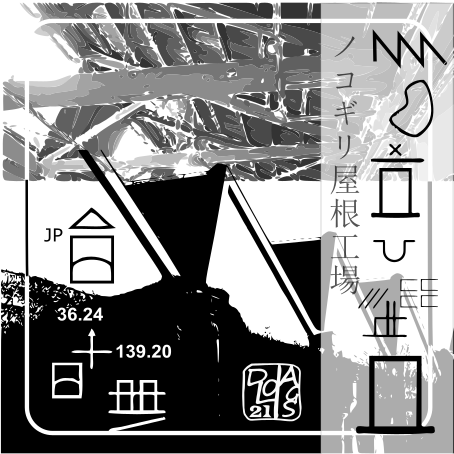
The “sawtooth-roofed factories” (Nokogiri-yane-koujou | ノコギリ屋根工場) are among Kiryu’s architectural landmarks. Their distinctive silhouette is the result of an ingenious adaptation to the needs of the modern textile industry. The north-facing glass walls provide the steady light essential for thread work and fabric inspection. In Kiryu, these buildings became ubiquitous during the period of industrial expansion in the late 19th and early 20th centuries. They embody a convergence of architecture, production, and artisanal craftsmanship. While large chimneys often symbolize Western industry, the sawtooth roofs here represent a different image of modern manufacturing. Their preservation in the urban landscape still allows us today to understand the city’s economic organization. These buildings are to Kiryu what the spinning mills are to Manchester or the canuts to Lyon.Lire la suiteNokogiri-yane-koujou
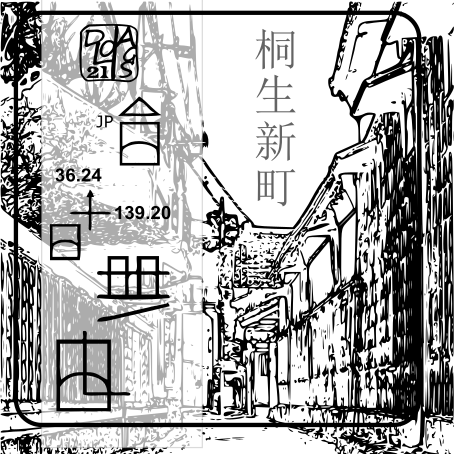
The historic district of Kiryu Shinmachi 桐生新町 is likely the best gateway to Kiryu’s history. Its origins date back to the late 16th century, when the town was organized around the Tenmangū Shrine. The street layout from that era remains largely visible today. For several centuries, Shinmachi became the commercial heart of the textile city. Silk brokers, yarn merchants, cloth merchants, dyers, and manufacturers established their businesses there. The streets still reveal this former prosperity through the warehouses, merchant houses, and workshops that have survived the transformations of the 20th century. Unlike many industrial cities, Kiryu has preserved an urban landscape where the textile economy remains visible in the stone, wood, and built structures. In 2012, the area was designated a district for the preservation of traditional architectural ensembles. Shinmachi thus serves as an open-air urban archive of Japan’s textile golden age.Lire la suiteKiryu Shinmachi
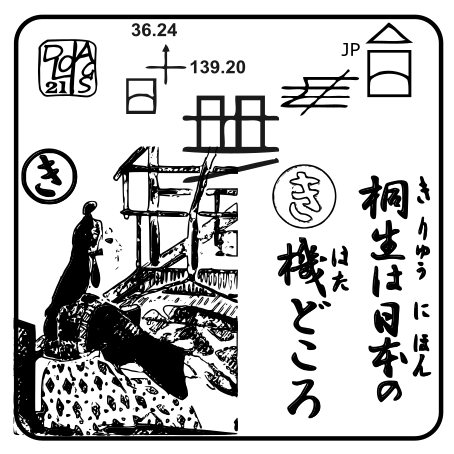
The phrase 日本の機どころ (Nihon no hatadokoro), often translated as “Japan’s weaving country” or “Japan’s city of looms,” is closely associated with Kiryu. It features prominently in Gunma’s popular culture and encapsulates several centuries of textile specialization. This phrase does not refer to a specific product but to a collective reputation. It expresses the idea that an entire region can be identified with a technical skill. Many cities around the world have been defined by a dominant industry: silk in Lyon, wool in Bradford, carpets in Isfahan. Kiryu belongs to this family of cities whose identity has become inseparable from a productive craft. The phrase serves as a condensed memory of several generations of artisans, merchants, and industrialists. It represents a true cultural motto of the city.Lire la suiteNihon no hatadokoro
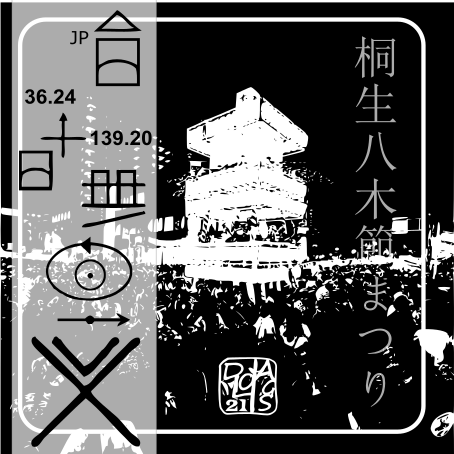
The Kiryu Matsuri 桐生八木節まつり is one of the major events on the local calendar. Like many Japanese urban festivals, it combines religious, community, and celebratory elements. Residents celebrate both their connection to the city and the continuity of traditions passed down through generations. Floats, music, decorations, and gatherings temporarily transform the urban landscape. The festival also serves as a special occasion for cultural transmission. The skills required to organize it bring together associations, families, and neighborhood groups. Behind the festival’s apparent spontaneity lies a considerable collective effort. The Kiryu Matsuri demonstrates how local communities create and preserve their own collective memory. It reminds us that a city’s identity is built as much through celebrations as through monuments.Lire la suiteKiryu Matsuri
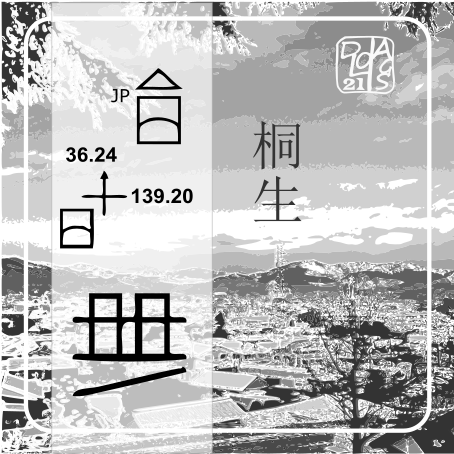
Located in Gunma Prefecture, the city of Kiryu 桐生 is often associated with a long tradition of textile production. Its development is linked to a combination of geographical, economic, and technical factors that fostered the emergence of a major production center. For centuries, the skills involved in spinning, dyeing, and weaving have formed an essential part of its identity. However, Kiryu is not merely defined by its artisanal specialization. The city illustrates how a community can build its reputation on mastery of a craft. Its history also attests to the ability of regions to integrate innovations while preserving ancient legacies. Like other textile cities around the world, it has had to navigate industrialization, international competition, and changing fashion trends. Kiryu thus serves as a particularly fascinating case study of the relationship between heritage and adaptation. Its history reflects several centuries of economic and cultural transformation in Japan.Lire la suiteKiryu
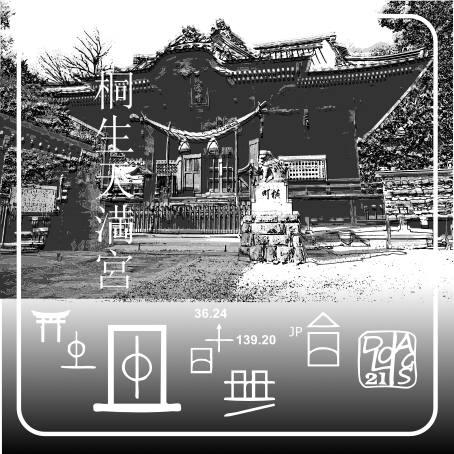
Kiryu-Tenmangū Shrine (桐生天満宮) is a branch of Kyoto/Kitano Tenmangū Shrine and one of the five major shrines in the Kanto region, where it serves as the guardian shrine of the city of Kiryu. This shrine has a long history. According to its records, it was built to worship the deity Amano Hohi no Mikoto, before later becoming a Tenmangu dedicated to the deity Sugawara no Michizane at the beginning of the Northern and Southern Courts period. (…) Furthermore, although Tenmangu is commonly known as the “god of learning,” the blessings of this shrine are not limited to that alone. Kiryu, whose scenic beauty has long been renowned, occupies an ideal location from a feng shui perspective. In other words, this place can be described as a kind of spiritual epicenter. In accordance with feng shui practices, the main shrine houses the four gods Seiryu, Byakko, Suzaku, and Genbu, positioned respectively in the east, west, south, and north. Their many blessings, drawn from the energy of heaven and earth, include business prosperity, family well-being, good health, happiness, and fortune, as well as protection from disasters.Lire la suiteKiryu-Tenmangū (Kiryu)
Before a fabric can be woven, it must first be conceived. The zuanka 図案家, or pattern designer, occupies a unique position in the Japanese textile industry. Their work consists of creating designs that are then translated into threads, colors, and weaving structures. They operate at the intersection of art and industry. The designer must understand the technical constraints of the craft while remaining attentive to changing tastes. Their creations respond to commercial demands but also contribute to the invention of new aesthetics. In certain periods, the best designers exert an influence comparable to that of contemporary fashion designers. Their work reveals the importance of imagination in an activity often perceived as purely artisanal.Lire la suitezuanka
Vous pouvez compléter, modifier, améliorer cette indéfinition ou en proposer une autre au regard de vos savoirs, langages, pratiques, histoire… qu’elle soit formulée sur un mode scientifique, culturel, poétique… contact@21dialogues21.org
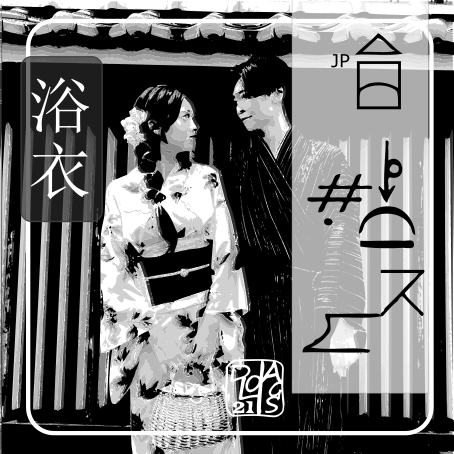
The yukata 浴衣 is a Japanese garment that is often associated today with summer festivals and leisure time, although its history is more complex. Originally, it was a lightweight garment worn after bathing. Its popularity stems from a combination of comfort, simplicity, and elegance. Unlike some more formal garments, the yukata allows for great freedom in patterns and colors. Its development has helped support numerous textile industries across Japan. The fabrics used for yukata often reflect the evolving aesthetic tastes of a given era. Flowers, waves, geometric patterns, and seasonal motifs make up a particularly rich visual vocabulary. The yukata is an excellent example of a garment where everyday use and artistic creation intersect. Studying it allows us to explore the relationships between textiles, climate, and social interaction.Lire la suiteyukata
Vous pouvez compléter, modifier, améliorer cette indéfinition ou en proposer une autre au regard de vos savoirs, langages, pratiques, histoire… qu’elle soit formulée sur un mode scientifique, culturel, poétique… contact@21dialogues21.org
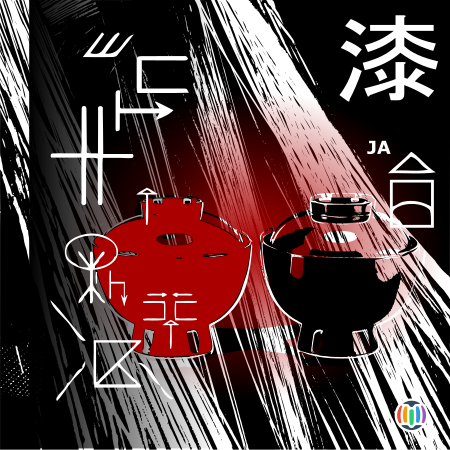
L’urushi 漆 est une laque naturelle traditionnelle au Japon [pratiquée également sous des formes diverses par ex. en Chine ou en Corée]. Elle est produite à partir de la sève de l’arbre d’urushi, également connu sous le nom d’arbre à laque (Toxicodendron vernicifluum). Elle sert à magnifier des bols, des plateaux, des boîtes, des ustensiles de cuisine, des instruments de…Lire la suiteurushi
Vous pouvez compléter, modifier, améliorer cette indéfinition ou en proposer une autre au regard de vos savoirs, langages, pratiques, histoire… qu’elle soit formulée sur un mode scientifique, culturel, poétique… contact@21dialogues21.org
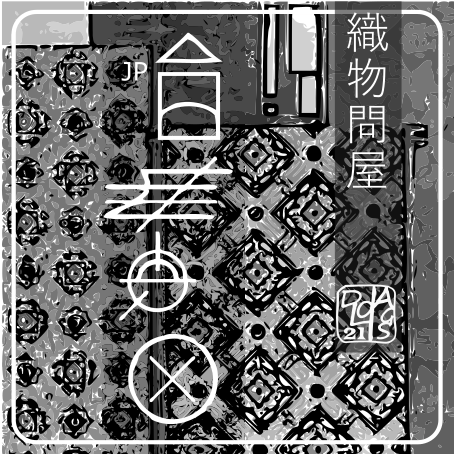
The orimono donya (織物問屋), or textile merchant, played a central role in the textile economy. Unlike the weaver, he generally did not produce the fabrics himself. His role was to organize the flow of goods, finance production, and connect workshops with urban markets. During the Edo period and later in the Meiji era, these merchants often served as the true orchestrators of the local textile system. They commissioned designs, provided capital, selected raw materials, and ensured sales in major consumer centers. The most prosperous built grand residences and participated in local public life. They embodied a form of commercial capitalism based as much on market knowledge as on risk management.Lire la suiteorimono donya
Vous pouvez compléter, modifier, améliorer cette indéfinition ou en proposer une autre au regard de vos savoirs, langages, pratiques, histoire… qu’elle soit formulée sur un mode scientifique, culturel, poétique… contact@21dialogues21.org
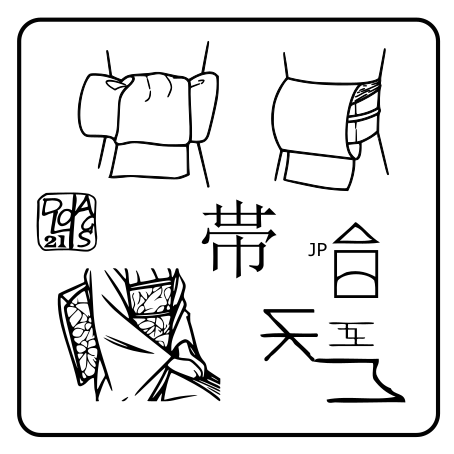
The obi 帯 is one of the most sophisticated forms of the sash. Its significance extends far beyond the realm of clothing. Over the centuries, its width, texture, color, and method of tying have signified age, social status, marital status, or even the ceremonial occasion. The knot at the back constitutes a true visual language. The obi is also a space for aesthetic invention where patterns inspired by nature, poetry, the seasons, or beliefs are displayed. It represents an interesting paradox: while it is a constraining element that holds the garment in place, it is also one of the primary vehicles for creativity. In the global history of costume, few objects have concentrated so many social and artistic meanings into a single strip of fabric. Its study opens up themes of weaving, the body, social representation, and the transmission of craftsmanship.Lire la suiteobi
Vous pouvez compléter, modifier, améliorer cette indéfinition ou en proposer une autre au regard de vos savoirs, langages, pratiques, histoire… qu’elle soit formulée sur un mode scientifique, culturel, poétique… contact@21dialogues21.org
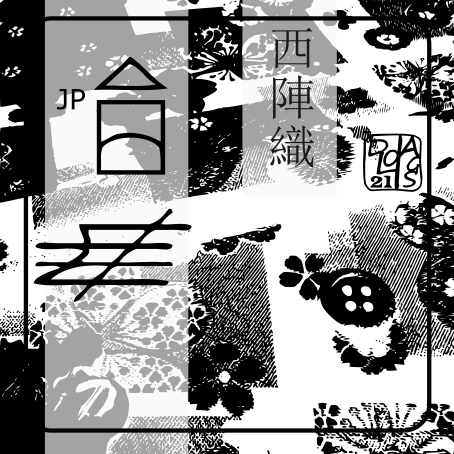
Nishijin-ori 西陣織 is one of Japan’s most prestigious textile traditions. Developed in a historic district of Kyoto, it is distinguished by the richness of its patterns, the complexity of its weaves, and the use of particularly refined threads. For centuries, these fabrics have been associated with ceremonial garments, religious objects, and prestigious accessories. Nishijin-ori artisans often draw on skills passed down through several generations. Each fabric is the result of collaboration between designers, dyers, yarn preparers, and weavers. This collaborative process underscores that great artisanal traditions are rarely the work of a single individual. Nishijin-ori also stands as a remarkable example of the dialogue between conservation and innovation. Traditional techniques continue to be practiced while incorporating new materials and new uses.Lire la suitenishijin-ori
Vous pouvez compléter, modifier, améliorer cette indéfinition ou en proposer une autre au regard de vos savoirs, langages, pratiques, histoire… qu’elle soit formulée sur un mode scientifique, culturel, poétique… contact@21dialogues21.org
The kamarband is a long strip of fabric worn around the waist across a vast cultural region stretching from Iran to Central Asia and the Indian subcontinent. Its name comes from Persian: kamar means “waist” or “belt,” while band refers to something that fastens or wraps around. Originally, the kamarband served a practical purpose: to hold clothing in place, support the body during certain tasks, or carry small objects. However, it quickly took on social and symbolic significance. Depending on the era and region, its material, color, or the way it was tied could indicate rank, profession, or group affiliation. In the Mughal courts of India, the most prestigious kamarbands were made from luxurious fabrics and sometimes embellished with precious embroidery. Officers, dignitaries, and wealthy merchants made it an important part of their attire. In the 18th century, Europeans discovered this accessory through trade with the East. Adapted to Western fashion, it gave rise to the cummerbund, still worn today with certain formal garments. The kamarband thus illustrates how a simple object can travel between cultures, change its function, and acquire new meanings while retaining its fundamental role: connecting the garment to the body.Lire la suitekamarband
Vous pouvez compléter, modifier, améliorer cette indéfinition ou en proposer une autre au regard de vos savoirs, langages, pratiques, histoire… qu’elle soit formulée sur un mode scientifique, culturel, poétique… contact@21dialogues21.org