Au détour d’une falaise, bien au-dessus des villages, le regard distingue parfois une petite construction de pierre accrochée à la montagne, ou l’ouverture sombre d’une grotte. Ces lieux presque invisibles racontent une tradition très ancienne du bouddhisme himalayen : la retraite de méditation. Au Ladakh, de nombreux maîtres ont choisi de s’éloigner temporairement du monde pour approfondir leur pratique. Les…Lire la suiteLes retraites de méditation au Ladakh
Pantopique : 06-économie
Un pantopique correspond à la réunion de quelques repères, plus ou moins nombreux, que vous pouvez commenter, compléter, étendre, selon vos propres champs d’expériences, de savoirs, d’enquêtes… - contact@21dialogues21.org
Les bijoux ladakhis accompagnent les grandes étapes de la vie : naissance, mariage, fêtes religieuses ou transmissions familiales. Ils incarnent un patrimoine vivant où l’esthétique dialogue constamment avec le symbolique. Les artisans travaillent principalement l’argent, métal longtemps préféré à l’or dans les sociétés himalayennes. Malléable, résistant et plus accessible, il sert de support aux pierres précieuses et semi-précieuses qui caractérisent…Lire la suiteLes bijoux ladakhis
Chaque matin, lorsque les premiers rayons du soleil éclairent les façades blanchies de གླེ་ (Gle, Leh), les rues du marché s’animent peu à peu. Les échoppes ouvrent leurs volets, les marchands disposent leurs produits, les habitants viennent faire leurs achats tandis que les voyageurs se mêlent à la foule. Plus qu’un simple lieu de commerce, le marché de Leh raconte…Lire la suiteLe marché de Leh, le cœur battant des montagnes
Dans les villages ladakhis, peu de réalisations sont véritablement individuelles. Les canaux d’irrigation, les récoltes, les maisons de terre, les fêtes religieuses ou l’entretien des chemins mobilisent depuis toujours l’ensemble de la communauté. Cette manière d’agir ensemble s’exprime par une notion profondément enracinée : མཉམ་འབྲེལ་ mnyam ‘brel, que l’on peut traduire par « coopération », « action commune » ou…Lire la suiteLa coopération ladakhie, une intelligence collective des montagnes
Bien avant l’apparition des billets modernes et des paiements électroniques, les échanges commerciaux du Ladakh reposaient sur une étonnante diversité de monnaies. Parmi elles figure le tangka, parfois orthographié tamka ou tanka, qui circula durant plusieurs siècles dans les royaumes himalayens. Bien plus qu’un simple moyen de paiement, cette petite pièce raconte l’histoire d’un territoire situé au croisement des grandes…Lire la suitetangka
Vous pouvez compléter, modifier, améliorer cette indéfinition ou en proposer une autre au regard de vos savoirs, langages, pratiques, histoire… qu’elle soit formulée sur un mode scientifique, culturel, poétique… contact@21dialogues21.org
Dans chaque maison ladakhie, il existe un objet que l’on saisit presque sans y penser, tant il accompagne les gestes du quotidien : le ཕོར་པ་ (phor pa), le traditionnel bol en bois. Dans les hautes vallées du Ladakh, où le métal était longtemps rare et coûteux, le bois représentait une ressource précieuse. Les artisans façonnaient les phor pa dans le…Lire la suitephor pa
Vous pouvez compléter, modifier, améliorer cette indéfinition ou en proposer une autre au regard de vos savoirs, langages, pratiques, histoire… qu’elle soit formulée sur un mode scientifique, culturel, poétique… contact@21dialogues21.org
Le long des chemins, à l’entrée des villages, dans les cours des monastères ou au bord des rivières, une roue métallique ou de bois tourne lentement sous la main d’un pèlerin. Ce geste, répété des milliers de fois chaque jour, appartient aux images les plus familières de l’Himalaya. Le moulin à prières se nomme en tibétain མ་ཎི་འཁོར་ལོ་ (ma ṇi ‘khor…Lire la suitemoulin à prières
Vous pouvez compléter, modifier, améliorer cette indéfinition ou en proposer une autre au regard de vos savoirs, langages, pratiques, histoire… qu’elle soit formulée sur un mode scientifique, culturel, poétique… contact@21dialogues21.org
Dans les villages reculés himalayens, avant l’arrivée des dispensaires modernes, une personne incarnait souvent à elle seule la médecine, la pharmacopée et une grande partie de la mémoire thérapeutique locale : l’amchi, appelé en tibétain སྨན་པ་ sman pa, littéralement « celui qui soigne par les remèdes ». Bien plus qu’un médecin au sens occidental, l’amchi est un observateur attentif du…Lire la suiteamchi
Vous pouvez compléter, modifier, améliorer cette indéfinition ou en proposer une autre au regard de vos savoirs, langages, pratiques, histoire… qu’elle soit formulée sur un mode scientifique, culturel, poétique… contact@21dialogues21.org
L’incident d’Isshi (乙巳の変, Isshi no Hen), également traduit par « coup d’État d’Isshi », est un événement politique majeur de l’histoire japonaise survenu en 645 durant la période d’Asuka (飛鳥時代, Asuka jidai). Son nom provient du cycle sexagésimal chinois (eto, 干支), l’année 645 correspondant à l’année Isshi (乙巳). Cet épisode marque la chute du puissant clan Soga (蘇我氏, Soga-shi), qui…Lire la suiteIncident d’Isshi
La période Yayoi (弥生時代, Yayoi jidai) correspond à une phase de la préhistoire japonaise généralement située entre le Ve siècle av. J.-C. et le IIIe siècle apr. J.-C., bien que sa chronologie fasse encore l’objet de débats. Son nom provient du quartier de Yayoi (弥生) à Tokyo, où furent découverts à la fin du XIXe siècle des vestiges caractéristiques de…Lire la suitePériode Yayoi
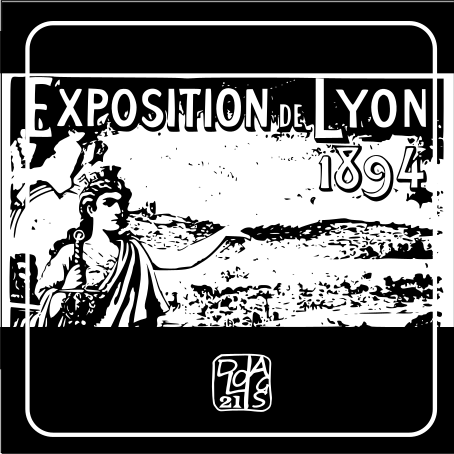
The Lyon Universal, International, and Colonial Exposition was held in 1894 at the Parc de la Tête d’Or. Organized between the Paris World’s Fairs of 1889 and 1900, it aimed to showcase the industrial, scientific, and commercial advances of the time. The event opened on April 29, 1894, and attracted numerous French and foreign exhibitors. Large pavilions were dedicated to industry, agriculture, the arts, and transportation. A major colonial section showcased the territories of the French Empire. Visitors discovered products, technologies, and cultures from around the world. The exposition also served as a venue for entertainment, featuring shows, concerts, and attractions. An electric tram provided transportation within the grounds. Lyon’s infrastructure was modernized to accommodate the millions of visitors expected. Mayor Antoine Gailleton played a key role in organizing the event. Among the exhibitors were the Michelin brothers, André and Édouard Michelin, who showcased their innovations in the field of tires and helped raise awareness of developments in the automobile and cycling industries. The exhibition was a huge popular success, attracting approximately 3.8 million visitors. However, it was marred by a tragic event. On June 24, 1894, the President of the French Republic, Sadi Carnot, was assassinated during an official visit to Lyon.Lire la suiteExposition universelle de Lyon – 1894
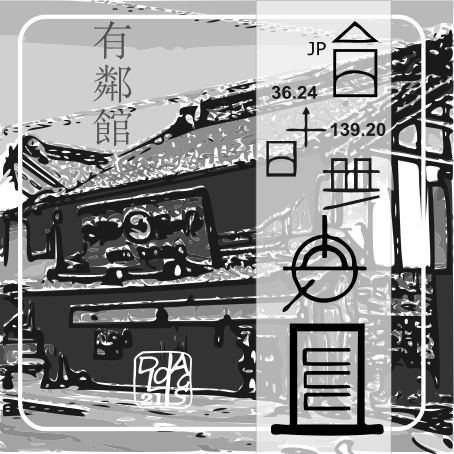
Yurin-kan 有鄰館 is a remarkable complex of historic buildings consisting of former warehouses associated with production and trade. The preserved structures span several periods, from the Edo period to the 20th century. Sake, miso, and soy sauce were once produced here. Today, the site offers an exceptional example of Japanese utilitarian architecture. The thick walls of the warehouses illustrate the importance of storage in pre-industrial and industrial economies. The Yūrinkan serves as a reminder that a textile town does not live by its looms alone. It also depends on networks for the supply, trade, and storage of goods. The buildings demonstrate how local prosperity was embodied in tangible infrastructure. They allow us to observe the connections between food, trade, and industry in a medium-sized Japanese town.Lire la suiteYurin-kan
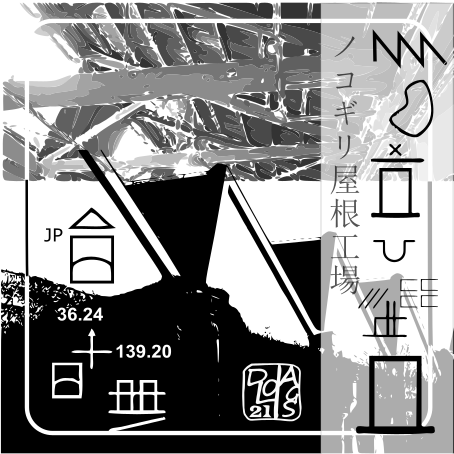
The “sawtooth-roofed factories” (Nokogiri-yane-koujou | ノコギリ屋根工場) are among Kiryu’s architectural landmarks. Their distinctive silhouette is the result of an ingenious adaptation to the needs of the modern textile industry. The north-facing glass walls provide the steady light essential for thread work and fabric inspection. In Kiryu, these buildings became ubiquitous during the period of industrial expansion in the late 19th and early 20th centuries. They embody a convergence of architecture, production, and artisanal craftsmanship. While large chimneys often symbolize Western industry, the sawtooth roofs here represent a different image of modern manufacturing. Their preservation in the urban landscape still allows us today to understand the city’s economic organization. These buildings are to Kiryu what the spinning mills are to Manchester or the canuts to Lyon.Lire la suiteNokogiri-yane-koujou

Created in 1898, Bibendum is Michelin’s mascot and one of the world’s most famous advertising figures. Made up of a stack of tires, this character first appeared at a time when the automobile was still a novelty. His name comes from a Latin expression meaning roughly “one must drink.” In the early posters, Bibendum symbolically “drinks” away the obstacles on the road. Over time, he became much more than an advertising tool. He entered the history of graphic design, design, and popular culture. Few industrial mascots have achieved such longevity. Bibendum demonstrates how modern companies create their own mythologies. Through him, a technical object becomes a character, then a cultural icon. He now belongs as much to the history of art as to that of industry.Lire la suiteBibendum
Fondée en 1808 par Isaac Rodrigues-Henriques, la Philomathique de Bordeaux est le fruit du siècle des Lumières. Initialement, l’école avait pour mission de promouvoir le savoir et de diffuser les connaissances scientifiques et techniques parmi les élites bordelaises. Le nom même de « Philomathique », issu des racines grecques « philo » (aimer) et « mathique » (les sciences), traduit…Lire la suitePhilomathique de Bordeaux
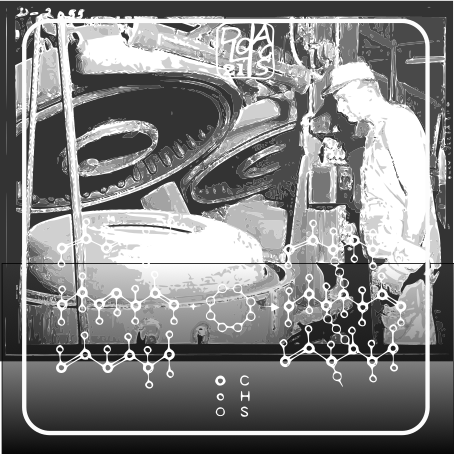
Vulcanization represents one of the major turning points in the history of materials. Before its development, natural rubber had significant limitations: it deformed when exposed to heat and became brittle in cold weather. The addition of sulfur followed by heat treatment creates stable bonds between the material’s molecules. This transformation significantly improves its strength and durability. The term refers to Vulcan, the Roman god of fire and the forge. The choice of this name underscores the idea of a material reshaped by the mastery of heat. Thanks to vulcanization, rubber moved beyond the realm of curiosity to become a leading industrial resource. Tires, gaskets, soles, cables, and thousands of other products benefit from it. Few processes have contributed as much to modern mobility. Vulcanization represents the exemplary convergence of science, industry, and the transformation of the material world.Lire la suitevulcanisation
Vous pouvez compléter, modifier, améliorer cette indéfinition ou en proposer une autre au regard de vos savoirs, langages, pratiques, histoire… qu’elle soit formulée sur un mode scientifique, culturel, poétique… contact@21dialogues21.org
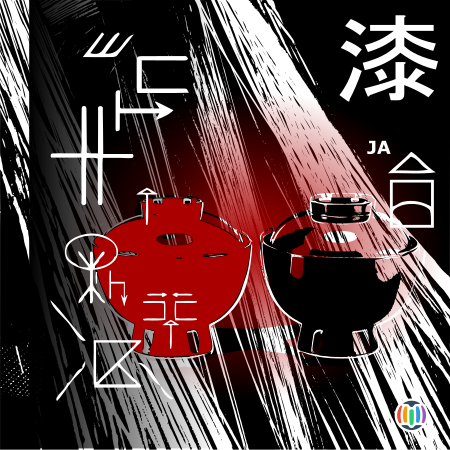
L’urushi 漆 est une laque naturelle traditionnelle au Japon [pratiquée également sous des formes diverses par ex. en Chine ou en Corée]. Elle est produite à partir de la sève de l’arbre d’urushi, également connu sous le nom d’arbre à laque (Toxicodendron vernicifluum). Elle sert à magnifier des bols, des plateaux, des boîtes, des ustensiles de cuisine, des instruments de…Lire la suiteurushi
Vous pouvez compléter, modifier, améliorer cette indéfinition ou en proposer une autre au regard de vos savoirs, langages, pratiques, histoire… qu’elle soit formulée sur un mode scientifique, culturel, poétique… contact@21dialogues21.org
Textile dyeing is the process of coloring a textile material using dyes or pigments. It gives fibers, yarns, or fabrics a durable and uniform color. This technique has been used since ancient times to embellish clothing and upholstery fabrics. Dyes can be of natural origin, such as certain plants or insects, or of synthetic origin. Dyeing can be applied to various fibers, such as cotton, wool, silk, or polyester. The process relies on the penetration and fixation of the dye within the textile material. Several methods exist depending on the nature of the fiber and the desired result. Dyeing can be performed on the fiber, yarn, fabric, or finished garment. It generally requires the use of water, heat, and chemical auxiliaries. The quality of the dyeing is measured by its uniformity and washfastness. It must also be resistant to light, rubbing, and perspiration. The textile industry uses specialized equipment to control the process parameters. Recent innovations aim to reduce water consumption and environmental impacts. Dyeing plays an essential role in the aesthetics and commercial value of textile products. As such, it constitutes a fundamental step in the processing and finishing of textiles.Lire la suiteteinture
Vous pouvez compléter, modifier, améliorer cette indéfinition ou en proposer une autre au regard de vos savoirs, langages, pratiques, histoire… qu’elle soit formulée sur un mode scientifique, culturel, poétique… contact@21dialogues21.org
Tartan (or breacan) – Tartan is a checkered fabric generally associated with Scotland. Its appearance results from the regular interweaving of threads of different colors in the warp and weft. Although checkered fabrics exist in many parts of the world, tartan has taken on a special place in the Scottish imagination. Starting in the 18th century and especially in the 19th century, certain patterns gradually became associated with clans, families, or institutions. This evolution contributed to the construction of a modern national identity. Tartan demonstrates how a textile pattern can become a collective emblem. Its influence extends far beyond traditional clothing. It can be found in fashion, design, cultural movements, and even certain forms of social protest.Lire la suitetartan
Vous pouvez compléter, modifier, améliorer cette indéfinition ou en proposer une autre au regard de vos savoirs, langages, pratiques, histoire… qu’elle soit formulée sur un mode scientifique, culturel, poétique… contact@21dialogues21.org
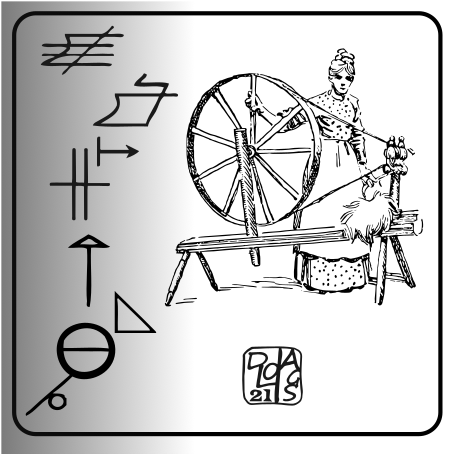
The spinning wheel is a machine designed to transform fibers into continuous thread. Appearing in various forms across Eurasia during the Middle Ages, this invention profoundly transformed textile production capabilities. Before its development, spinning relied primarily on the hand-held spindle. The spinning wheel significantly speeds up the process through a wheel driven by the hand or foot, providing the motion needed to twist the fibers. The spinning wheel thus bridges the worlds of textiles and mechanics. It also holds an important place in European folklore, as evidenced by several famous tales. Its image evokes domestic labor, artisanal patience, and technical innovation.Lire la suiterouet
Vous pouvez compléter, modifier, améliorer cette indéfinition ou en proposer une autre au regard de vos savoirs, langages, pratiques, histoire… qu’elle soit formulée sur un mode scientifique, culturel, poétique… contact@21dialogues21.org