
Dans l’espace himalayen, la médecine ne consiste pas seulement à combattre la maladie. Elle cherche d’abord à préserver l’équilibre de la vie. Cette tradition porte un nom : གསོ་བ་རིག་པ་ (Gso ba Rig pa), Sowa Rigpa, que l’on peut traduire par « la science de la guérison ». Héritière des savoirs médicaux du Tibet, de l’Inde, de la Chine et de…Lire la suiteSowa Rigpa, l’art de soigner en harmonie avec le vivant
Pantopique : science
Quels sont les principes fondamentaux qui guident la démarche scientifique, et comment cette quête incessante de compréhension éclaire-t-elle les mystères du cosmos, des particules subatomiques aux vastes galaxies ? Comment les différentes disciplines scientifiques dialoguent-elles pour tisser une toile complexe de savoir, intégrant la biologie, la physique, la chimie, les sciences de la Terre, et bien d’autres encore ? Quels sont les enjeux éthiques liés aux avancées scientifiques, que ce soit dans le domaine de la génétique, de l’intelligence artificielle ou des technologies émergentes ? Comment la science s’inscrit-elle dans la diversité culturelle du monde, et quel rôle joue-t-elle dans la résolution des défis mondiaux, tels que le changement climatique, les pandémies et les inégalités sociales ? Comment les grandes découvertes scientifiques ont-elles remodelé notre compréhension du monde et de nous-mêmes, et quelles sont les frontières encore inexplorées qui attendent d’être dévoilées ?…
Un pantopique correspond à la réunion de quelques repères, plus ou moins nombreux, que vous pouvez commenter, compléter, étendre, selon vos propres champs d’expériences, de savoirs, d’enquêtes… - contact@21dialogues21.org
Le bruit est discret, presque régulier. Une roue tourne lentement, entraînée par le courant d’un canal de montagne. À l’intérieur d’un petit bâtiment de pierre et de terre, deux meules écrasent patiemment les grains d’orge. Ces moulins traditionnels, appelés འཐག་ཁང་ (‘thag khang), littéralement « maison où l’on moud », ont longtemps constitué l’un des cœurs économiques des villages ladakhis. Leur…Lire la suitethag khang
Vous pouvez compléter, modifier, améliorer cette indéfinition ou en proposer une autre au regard de vos savoirs, langages, pratiques, histoire… qu’elle soit formulée sur un mode scientifique, culturel, poétique… contact@21dialogues21.org
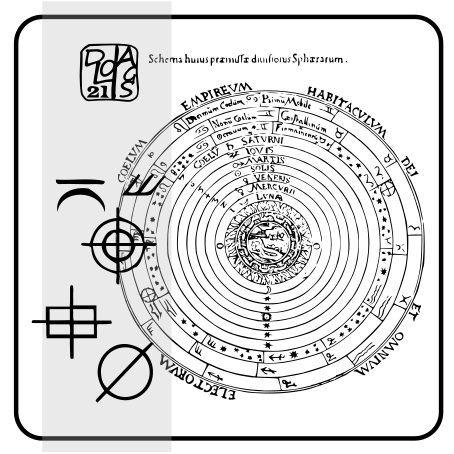
In many civilizations, the movement of the stars has been represented in a circular form. Celestial maps, astrolabes, and astronomical clocks translate the rhythms of the sky into the movements of wheels and circles. This association is based on a fundamental observation: the stars, the Sun, and the planets appear to follow regular paths around the Earth. The wheel thus becomes a model of the cosmos itself. In Mesopotamian, Greek, Chinese, and Islamic traditions, circular representations of the sky play a major role in the organization of knowledge. They enable the measurement of time, the prediction of seasons, and the ordering of space. The astronomical wheel demonstrates that circular motion belongs as much to the history of ideas as to that of machines. It connects observational techniques, worldviews, and the search for a universal order.Lire la suiteroue astronomique
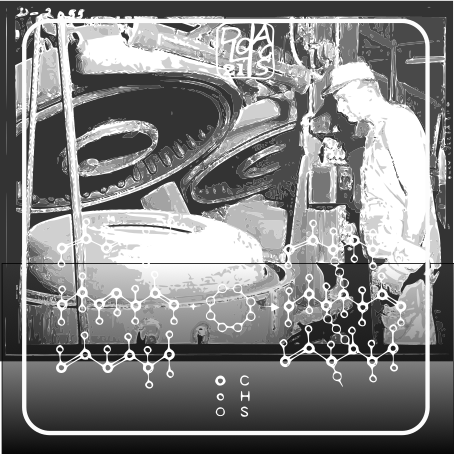
Charles Goodyear est connu pour avoir découvert la vulcanisation du caoutchouc, une avancée majeure qui a transformé l’industrie moderne. Au début du XIXᵉ siècle, le caoutchouc naturel présentait de graves défauts : il devenait collant sous l’effet de la chaleur et cassant lorsqu’il faisait froid. Ces limites empêchaient son utilisation à grande échelle malgré ses propriétés prometteuses. Passionné par ce…Lire la suitePetite histoire de vulcanisation
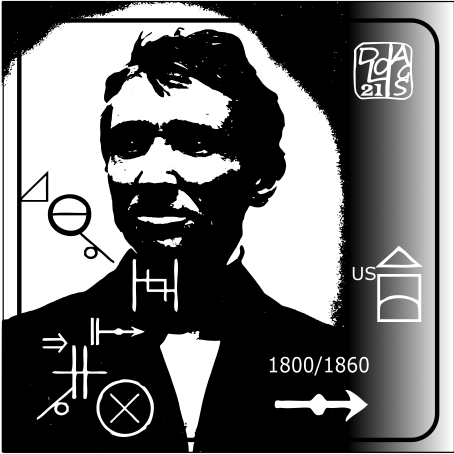
Charles Goodyear (1800–1860) was an American inventor whose name remains closely associated with one of the most important discoveries in the history of materials: the vulcanization of rubber. By the early 19th century, natural rubber had already attracted the interest of industrialists, but its use remained limited. Indeed, it became sticky and soft when exposed to heat, while it hardened and cracked in cold weather. These flaws prevented its widespread use. Convinced of the material’s potential, Goodyear devoted many years to experimenting with different methods to improve its properties. After numerous failures and significant financial difficulties, he discovered in 1839 that by heating rubber in the presence of sulfur, it was possible to make it much more stable, elastic, and durable. This process was subsequently named “vulcanization,” in reference to Vulcan, the Roman god of fire and the forge. This invention profoundly transformed modern industry. Thanks to vulcanization, rubber could be used in the manufacture of tires, gaskets, drive belts, electrical cables, and many everyday objects. It thus paved the way for the development of modern transportation and numerous industrial innovations. Paradoxically, despite the importance of his discovery, Charles Goodyear never achieved true financial prosperity. He spent much of his life in debt and died before he could see the full extent of his invention’s industrial success.Lire la suiteCharles Goodyear
Fondée en 1808 par Isaac Rodrigues-Henriques, la Philomathique de Bordeaux est le fruit du siècle des Lumières. Initialement, l’école avait pour mission de promouvoir le savoir et de diffuser les connaissances scientifiques et techniques parmi les élites bordelaises. Le nom même de « Philomathique », issu des racines grecques « philo » (aimer) et « mathique » (les sciences), traduit…Lire la suitePhilomathique de Bordeaux
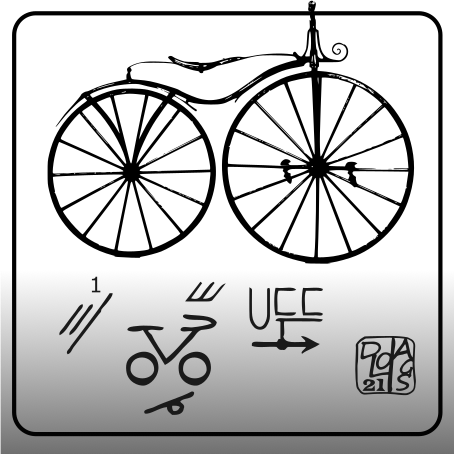
The term “velocipede” refers to several early types of bicycles developed in the 19th century. These machines represent a decisive milestone in the history of personal transportation. For the first time, a rider could cover significant distances using only their own muscle power, while benefiting from the mechanical efficiency of the wheels. The earliest models were often uncomfortable and difficult to handle, but they opened up a vast field of innovation. The velocipede contributed to the transformation of cities, leisure activities, and conceptions of movement. It also fostered a new relationship between the body and speed. Even before the automobile, it offered a modern experience of personal mobility. Its development spurred advances in metallurgy, bearings, tires, and road infrastructure. Through it, a culture of movement emerged that would profoundly shape the 19th and 20th centuries. The velocipede is thus one of the direct ancestors of the contemporary world of transportation.Lire la suitevélocipède
Vous pouvez compléter, modifier, améliorer cette indéfinition ou en proposer une autre au regard de vos savoirs, langages, pratiques, histoire… qu’elle soit formulée sur un mode scientifique, culturel, poétique… contact@21dialogues21.org
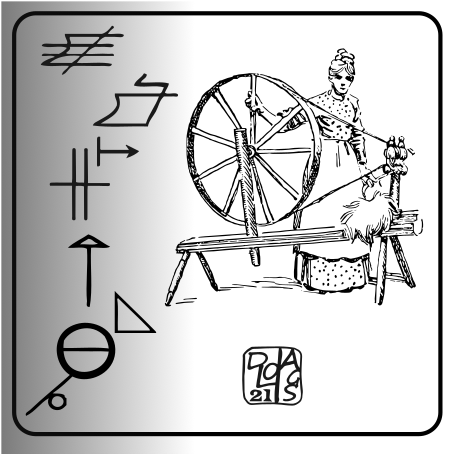
The spinning wheel is a machine designed to transform fibers into continuous thread. Appearing in various forms across Eurasia during the Middle Ages, this invention profoundly transformed textile production capabilities. Before its development, spinning relied primarily on the hand-held spindle. The spinning wheel significantly speeds up the process through a wheel driven by the hand or foot, providing the motion needed to twist the fibers. The spinning wheel thus bridges the worlds of textiles and mechanics. It also holds an important place in European folklore, as evidenced by several famous tales. Its image evokes domestic labor, artisanal patience, and technical innovation.Lire la suiterouet
Vous pouvez compléter, modifier, améliorer cette indéfinition ou en proposer une autre au regard de vos savoirs, langages, pratiques, histoire… qu’elle soit formulée sur un mode scientifique, culturel, poétique… contact@21dialogues21.org

The waterwheel is one of the great inventions that enabled human societies to harness the forces of nature. Known in ancient times but widely developed during the Middle Ages, it converts the energy of water into mechanical motion. Installed on rivers and canals, it powers mills, hammers, sawmills, and irrigation systems. Its significance extends far beyond mere technology. It reshapes the organization of labor, fosters the growth of certain regions, and indirectly paves the way for subsequent industrial revolutions. The waterwheel illustrates a moment when societies learned to delegate physical labor to mechanical devices. It belongs to a long line of technologies based on rotation. In many European and Asian landscapes, it also became a familiar feature of the cultural environment. Its history shows that major innovations do not always originate in factories; they can emerge along the banks of a river.Lire la suiteroue hydraulique
Vous pouvez compléter, modifier, améliorer cette indéfinition ou en proposer une autre au regard de vos savoirs, langages, pratiques, histoire… qu’elle soit formulée sur un mode scientifique, culturel, poétique… contact@21dialogues21.org
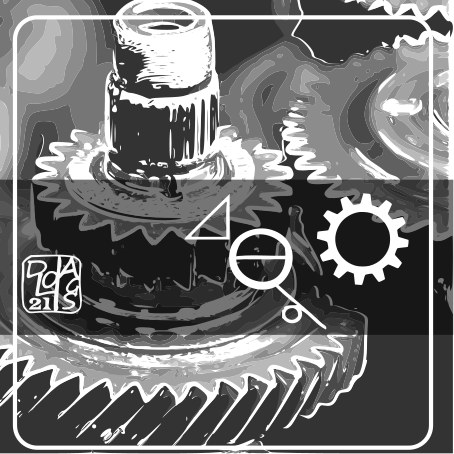
The gear represents a fundamental step in the evolution of technology. Unlike the simple wheel, which is used primarily for movement, the gear enables the transmission and transformation of motion. When several gears mesh together, they alter the speed, direction, or power of a mechanism. Clocks, mills, mechanical looms, and industrial machines rely heavily on this principle. The gear marks a decisive turning point in the history of mechanics: movements cease to be isolated and instead form organized systems. Studying it helps us understand how human societies gradually learned to coordinate complex operations. The image of the gear has also become a metaphor for collective work. Each wheel depends on the others to function.Lire la suiteroue dentée
Vous pouvez compléter, modifier, améliorer cette indéfinition ou en proposer une autre au regard de vos savoirs, langages, pratiques, histoire… qu’elle soit formulée sur un mode scientifique, culturel, poétique… contact@21dialogues21.org
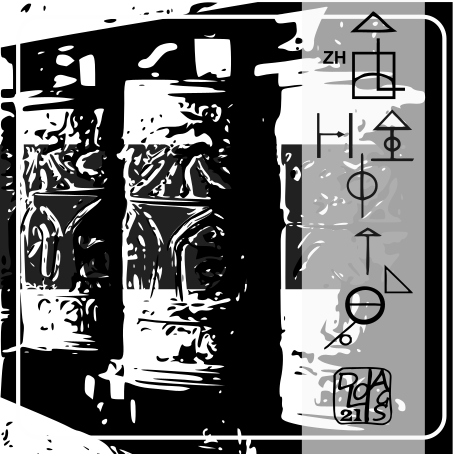
The Tibetan prayer wheel combines mechanical movement with spiritual practice. A cylinder mounted on an axle, it typically contains sacred texts or mantras inscribed on paper. By turning it, the devotee symbolically recites the prayers it contains. The circular motion thus becomes a form of religious action. The circle and rotation are associated with the continuity of the world and the circulation of teachings. This object also allows us to explore the connections between artisanal techniques, devotional practices, and cosmological representations.Lire la suiteroue de prière (tibétaine)
Vous pouvez compléter, modifier, améliorer cette indéfinition ou en proposer une autre au regard de vos savoirs, langages, pratiques, histoire… qu’elle soit formulée sur un mode scientifique, culturel, poétique… contact@21dialogues21.org
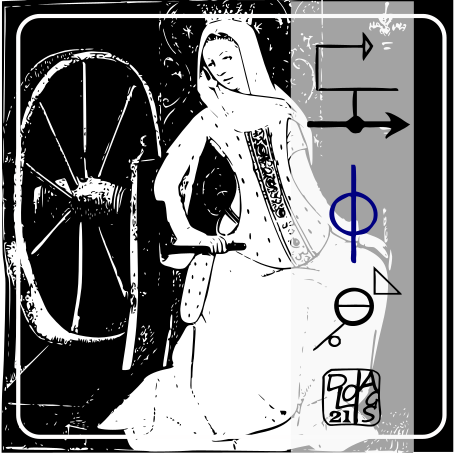
The Wheel of Fortune is one of the most powerful images in medieval European culture. Inherited from antiquity and popularized by the writings of Boethius, it represents the instability of the human condition. People rise and fall with the turns of the goddess Fortune, never able to control their destiny for long. In manuscripts, cathedrals, and literary works, this wheel depicts kings becoming beggars and the humble rising to power. The image is based on a fundamental observation: any circular motion implies a change in position. The wheel thus becomes a metaphor for time, chance, and the fragility of human achievements. Unlike transport wheels, which allow us to control movement, the Wheel of Fortune reminds us of what lies beyond our control. Its influence spans the centuries and continues to appear in games, performances, and everyday expressions. It demonstrates how a technical object can become a tool for philosophical reflection. The wheel is no longer merely a material instrument; it becomes a way of thinking about the world.Lire la suiteroue de Fortune
Vous pouvez compléter, modifier, améliorer cette indéfinition ou en proposer une autre au regard de vos savoirs, langages, pratiques, histoire… qu’elle soit formulée sur un mode scientifique, culturel, poétique… contact@21dialogues21.org
The wheel is a circular mechanical device that rotates around an axis to facilitate the movement of people, animals, and loads. It is considered one of the most important inventions in human history. The first known wheels appeared around 3500 B.C. in Mesopotamia, where they were initially used on potter’s wheels before being adapted for transportation. This invention marked a decisive step in the development of societies, as it made it possible to move much heavier loads with less effort. Thanks to the wheel, trade expanded, distances became easier to travel, and economic activities became more efficient. Its use gradually spread to many civilizations around the world. Over the centuries, the wheel underwent numerous improvements: solid wooden wheels, spoked wheels, metal-rimmed wheels, and eventually wheels fitted with tires. Its importance is not limited to transportation. It also gave rise to numerous technical mechanisms, such as mills, gears, clocks, industrial machinery, and many tools. The wheel thus plays an essential role in the fields of agriculture, crafts, industry, and transportation.Lire la suiteroue
Vous pouvez compléter, modifier, améliorer cette indéfinition ou en proposer une autre au regard de vos savoirs, langages, pratiques, histoire… qu’elle soit formulée sur un mode scientifique, culturel, poétique… contact@21dialogues21.org
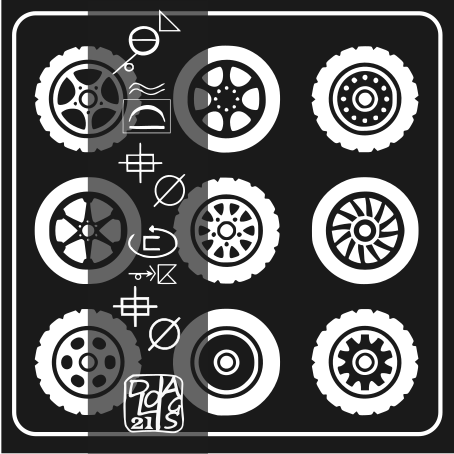
A tire is a rubber ring mounted around a wheel to provide contact between the vehicle and the ground. Its main functions are to support the vehicle’s weight, provide traction, transmit braking and acceleration forces, and absorb some of the road’s unevenness. The invention of the pneumatic tire dates back to 1845, when Robert William Thomson filed a patent for a wheel equipped with an air-filled casing. However, this innovation saw little use until 1888, when John Boyd Dunlop developed an inflatable tire for bicycles. The success of this invention led to its adoption on early automobiles. In 1891, Michelin developed the removable tire, making it easier to replace and repair. Throughout the 20th century, tires underwent numerous advancements thanks to the use of new materials, the introduction of the radial tire, and improvements in manufacturing processes. Today, they offer better traction, longer life, reduced fuel consumption, and enhanced safety. Current research focuses on tires that are more environmentally friendly, connected, and adapted to new transportation technologies.Lire la suitepneu
Vous pouvez compléter, modifier, améliorer cette indéfinition ou en proposer une autre au regard de vos savoirs, langages, pratiques, histoire… qu’elle soit formulée sur un mode scientifique, culturel, poétique… contact@21dialogues21.org
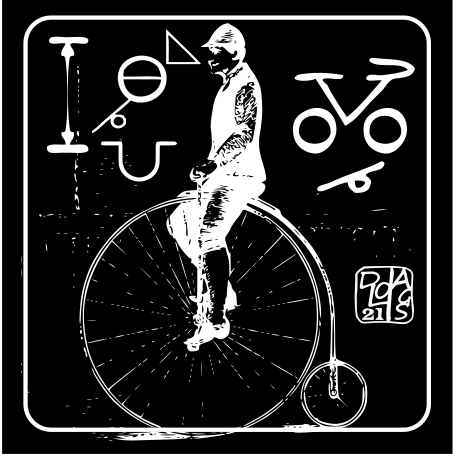
The penny-farthing, sometimes called a “high-wheeler,” is one of the most recognizable vehicles in the history of transportation. Its enormous front wheel and small rear wheel give it a spectacular silhouette. Its name comes from two British coins whose dimensions resembled the vehicle’s proportions. This configuration was driven by technical logic: before the invention of modern drivetrains, increasing the wheel’s diameter allowed for greater distance covered with each pedal stroke. The grand-bi represents a phase of intense experimentation in the history of the bicycle. It bears witness to an era when engineers were still searching for the most efficient forms of individual mobility. Riding it requires skill, balance, and courage. Despite its limitations, it helped popularize travel on two wheels. Even today, it remains a visual icon of 19th-century mechanical ingenuity. It serves as a reminder that the most familiar technologies are often the result of numerous trials and detours.Lire la suitepenny-farthing
Vous pouvez compléter, modifier, améliorer cette indéfinition ou en proposer une autre au regard de vos savoirs, langages, pratiques, histoire… qu’elle soit formulée sur un mode scientifique, culturel, poétique… contact@21dialogues21.org
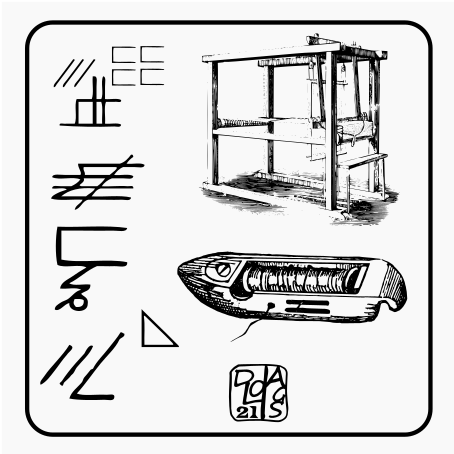
The shuttle is one of the most important tools in the history of weaving. Its role is to carry the weft thread from one side of the loom to the other. This movement, repeated thousands of times, gradually produces the fabric. Behind its apparent simplicity lies a fundamental invention. The shuttle transforms a series of individual threads into a coherent and durable surface. In several languages, its name evokes the idea of movement or back-and-forth motion. Improvements to the shuttle played a decisive role in increasing textile productivity in the modern era.Lire la suitenavette
Vous pouvez compléter, modifier, améliorer cette indéfinition ou en proposer une autre au regard de vos savoirs, langages, pratiques, histoire… qu’elle soit formulée sur un mode scientifique, culturel, poétique… contact@21dialogues21.org
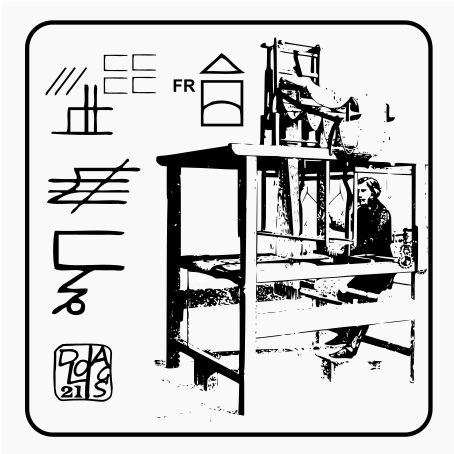
The Jacquard loom, developed in the early 19th century by Joseph Marie Jacquard, marked a major revolution in the history of textiles. His innovation relied on the use of punch cards to automatically control the woven patterns. Thanks to this system, complex designs could be reproduced with unprecedented precision. The Jacquard loom profoundly transformed European textile industries and also influenced Asian production centers. Its significance, however, extends beyond the realm of textiles. The punch cards would later inspire several pioneers of computer science. The Jacquard loom is thus often presented as a forerunner of modern programmable systems. It demonstrates how an innovation born in the world of thread can alter the history of machinery. This convergence of craftsmanship, automation, and information remains one of the most fascinating episodes in industrial history. Here, textiles become a technological laboratory.Lire la suitemétier Jacquard
Vous pouvez compléter, modifier, améliorer cette indéfinition ou en proposer une autre au regard de vos savoirs, langages, pratiques, histoire… qu’elle soit formulée sur un mode scientifique, culturel, poétique… contact@21dialogues21.org
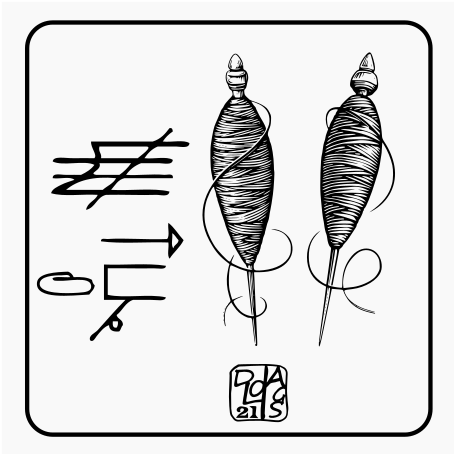
The spindle is one of the oldest tools in the history of textiles. Long before the spinning wheel or industrial machines were invented, it was used to transform plant or animal fibers into continuous thread. Its operation is based on the principle of rotation. By spinning rapidly on its own axis, it twists the fibers and gives them the strength needed to make fabric. Found in countless civilizations, it has been part of the history of clothing since prehistoric times. The spindle also plays an important role in mythology and folk tales. In several European traditions, spinners have become figures associated with destiny and the passage of time.Lire la suitefuseau
Vous pouvez compléter, modifier, améliorer cette indéfinition ou en proposer une autre au regard de vos savoirs, langages, pratiques, histoire… qu’elle soit formulée sur un mode scientifique, culturel, poétique… contact@21dialogues21.org
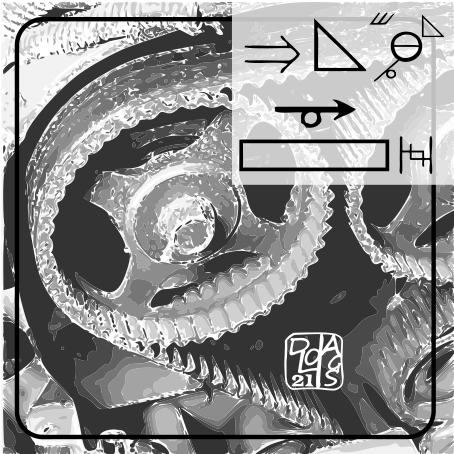
A belt is a flexible strip, formerly made of leather or reinforced fabric, and today most often made of rubber or synthetic materials. It is used to transmit motion and mechanical power between two or more wheels, pulleys, or drive shafts. Its principle relies on the friction between the belt and the components it connects, thereby enabling the transfer of energy from one mechanism to another. In the 19th century, with the development of industry, belts played an essential role in factories: vast transmission networks distributed the energy produced by a central machine—often a steam engine—to all the workshops and production machines. Thanks to this system, motion could be conveyed over long distances within a building and simultaneously power numerous pieces of equipment. The belt is thus a fundamental element in the history of mechanization and industrial organization. Its operation illustrates the combination of flexibility and rotation, of connection and movement, allowing energy to be transmitted efficiently while absorbing certain vibrations and irregularities. Even today, belts are widely used in engines, industrial machinery, and numerous mechanical devices, attesting to the simplicity and enduring efficiency of this device.Lire la suitecourroie
Vous pouvez compléter, modifier, améliorer cette indéfinition ou en proposer une autre au regard de vos savoirs, langages, pratiques, histoire… qu’elle soit formulée sur un mode scientifique, culturel, poétique… contact@21dialogues21.org
The inner tube is one of the major innovations that has made modern transportation comfortable. Placed inside the tire, it contains compressed air that absorbs bumps in the road. Before its invention, vehicles with solid wheels transmitted shocks directly to passengers. Air thus became a technical material in its own right. Invisible yet essential, it plays a role in the overall functioning of the system. The inner tube transforms the travel experience by reducing vibrations and improving traction. Its development went hand in hand with that of the bicycle and later the automobile.Lire la suitechambre à air
Vous pouvez compléter, modifier, améliorer cette indéfinition ou en proposer une autre au regard de vos savoirs, langages, pratiques, histoire… qu’elle soit formulée sur un mode scientifique, culturel, poétique… contact@21dialogues21.org