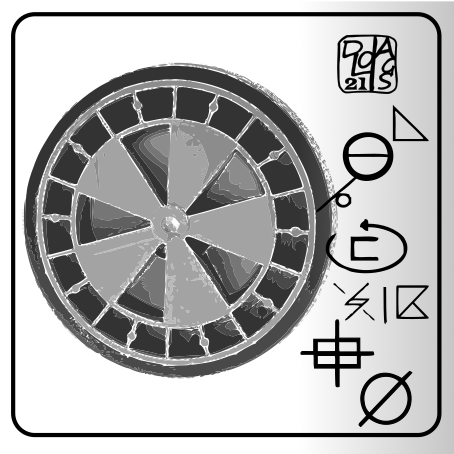
A wheel tyre (or wheel band) is a protective layer fitted around the rim of a wheel to strengthen it and improve its contact with the ground. Before the invention of the modern pneumatic tyre, wheels were commonly equipped with bands made of wood, leather, or metal. Their main purpose was to reinforce the wheel and reduce wear on rough roads. In horse-drawn vehicles such as carts and coaches, wooden wheels were often surrounded by a heated iron ring. As the metal cooled, it contracted and tightly secured the wheel, greatly increasing its resistance to shocks and friction. This innovation played a key role in improving the transport of goods and passengers. During the Industrial Revolution, new materials were introduced to enhance performance and comfort. Rubber bands were adopted on various vehicles and machines to reduce noise and vibration, and were widely used on bicycles and early industrial equipment. The wheel band marked an important stage in the evolution of rolling systems and paved the way for the pneumatic tyre, which provided better grip and comfort. Although largely replaced by modern tyres, wheel bands are still used on trains, cranes, and industrial machinery, remaining an important milestone in the history of transport and mechanics.Lire la suitebandage de roue
Vous pouvez compléter, modifier, améliorer cette indéfinition ou en proposer une autre au regard de vos savoirs, langages, pratiques, histoire… qu’elle soit formulée sur un mode scientifique, culturel, poétique… contact@21dialogues21.org