Catégories
Indéfinition

indigo

repère(s) :

Indigo is one of the most important dyes in the history of textiles worldwide. Derived from various plants depending on the region, it produces a deep blue hue that has shaped the clothing traditions of many societies. It can be found in Japanese fabrics as well as in textiles from West Africa, India, and Europe. Its trade has long fueled international exchange networks comparable to those of silk or spices. The preparation of indigo requires complex expertise combining botany, empirical chemistry, and mastery of dyeing. Its spread reflects the global circulation of techniques and tastes. Indigo thus helps us understand how a single color can connect regions far apart. Behind the blue of the fabrics lies a global history of cultural exchange.Lire la suiteindigo

Vous pouvez compléter, modifier, améliorer cette indéfinition ou en proposer une autre au regard de vos savoirs, langages, pratiques, histoire… qu’elle soit formulée sur un mode scientifique, culturel, poétique… contact@21dialogues21.org
Catégories
Indéfinition

fuseau

repère(s) :

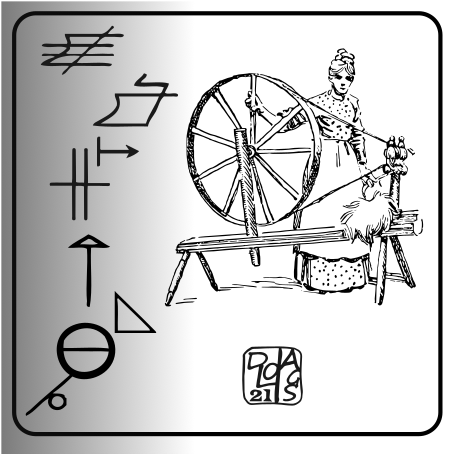
The spindle is one of the oldest tools in the history of textiles. Long before the spinning wheel or industrial machines were invented, it was used to transform plant or animal fibers into continuous thread. Its operation is based on the principle of rotation. By spinning rapidly on its own axis, it twists the fibers and gives them the strength needed to make fabric. Found in countless civilizations, it has been part of the history of clothing since prehistoric times. The spindle also plays an important role in mythology and folk tales. In several European traditions, spinners have become figures associated with destiny and the passage of time.Lire la suitefuseau

Vous pouvez compléter, modifier, améliorer cette indéfinition ou en proposer une autre au regard de vos savoirs, langages, pratiques, histoire… qu’elle soit formulée sur un mode scientifique, culturel, poétique… contact@21dialogues21.org
Catégories
Indéfinition

cummerbund

repère(s) :Royaume-Uni

A cummerbund is a wide fabric sash worn around the waist with certain men’s evening wear, particularly a tuxedo. Its origins can be traced directly to the Persian kamarband, which was adopted and adapted by the British during their presence on the Indian subcontinent in the 18th and 19th centuries. The English word “cummerbund” is derived from the Persian term via South Asian languages. Originally, this lightweight fabric band served a practical purpose: it was a convenient alternative to the European waistcoat in hot climates. Gradually, it became a codified element of Western elegance. Traditionally made of silk or satin, the cummerbund is worn with the pleats facing upward, a detail that has given rise to numerous explanations, some practical, others more anecdotal. Its function is as much aesthetic as it is sartorial: it ensures a harmonious transition between the shirt and the trousers while accentuating the silhouette. The cummerbund is a remarkable example of cultural circulation. Born in the world of Persian dress, transformed in India, adopted by British officers, and then integrated into Western formal fashion, it illustrates how garments cross borders, reinvent themselves, and retain the discreet memory of their journeys.Lire la suitecummerbund

Vous pouvez compléter, modifier, améliorer cette indéfinition ou en proposer une autre au regard de vos savoirs, langages, pratiques, histoire… qu’elle soit formulée sur un mode scientifique, culturel, poétique… contact@21dialogues21.org
Catégories
Indéfinition

courroie

repère(s) :

A belt is a flexible strip, formerly made of leather or reinforced fabric, and today most often made of rubber or synthetic materials. It is used to transmit motion and mechanical power between two or more wheels, pulleys, or drive shafts. Its principle relies on the friction between the belt and the components it connects, thereby enabling the transfer of energy from one mechanism to another. In the 19th century, with the development of industry, belts played an essential role in factories: vast transmission networks distributed the energy produced by a central machine—often a steam engine—to all the workshops and production machines. Thanks to this system, motion could be conveyed over long distances within a building and simultaneously power numerous pieces of equipment. The belt is thus a fundamental element in the history of mechanization and industrial organization. Its operation illustrates the combination of flexibility and rotation, of connection and movement, allowing energy to be transmitted efficiently while absorbing certain vibrations and irregularities. Even today, belts are widely used in engines, industrial machinery, and numerous mechanical devices, attesting to the simplicity and enduring efficiency of this device.Lire la suitecourroie

Vous pouvez compléter, modifier, améliorer cette indéfinition ou en proposer une autre au regard de vos savoirs, langages, pratiques, histoire… qu’elle soit formulée sur un mode scientifique, culturel, poétique… contact@21dialogues21.org
Catégories
Indéfinition

cingulum

repère(s) :Rome antique

The cingulum is the belt worn by soldiers in ancient Rome. Much more than a mere fashion accessory, it served as a visible sign of membership in the Roman army. Often made of leather and embellished with metal elements, it served to hold certain pieces of equipment in place while clearly distinguishing the soldier from civilians. The decorations adorning it could indicate the wearer’s rank, experience, or prestige. In sculptural depictions, the cingulum contributes to the image of discipline and authority associated with Rome. Its symbolic importance is such that the loss of the belt could be perceived as a humiliation. This identity-defining function links the cingulum to many ceremonial or professional belts found in other cultures. It serves as a reminder that wrapping a belt around the waist is not merely a matter of holding up a garment, but also of displaying one’s position within the social order. The study of the cingulum allows us to explore the relationships between the body, power, and political organization. Through a simple leather object, an entire conception of imperial citizenship becomes visible. The belt thus appears as a shifting boundary between the individual and the institution.Lire la suitecingulum

Vous pouvez compléter, modifier, améliorer cette indéfinition ou en proposer une autre au regard de vos savoirs, langages, pratiques, histoire… qu’elle soit formulée sur un mode scientifique, culturel, poétique… contact@21dialogues21.org
Catégories
Indéfinition

ceinture wampun

Wampum belts play a vital role in certain Indigenous societies of northeastern North America. Composed of beads made from carefully crafted shells, they are not primarily used as clothing ornaments. Their function is above all political, diplomatic, and commemorative. The patterns woven into the beads record alliances, treaties, or significant historical events. Each design holds a meaning known to the communities that pass it down. The belts thus become veritable archives. They help demonstrate that material objects can serve as vessels of collective memory. Wampum belts offer a rich way to explore the concepts of narrative, transmission, and heritage.Lire la suiteceinture wampun

Vous pouvez compléter, modifier, améliorer cette indéfinition ou en proposer une autre au regard de vos savoirs, langages, pratiques, histoire… qu’elle soit formulée sur un mode scientifique, culturel, poétique… contact@21dialogues21.org
Catégories
Indéfinition

ceinture de sécurité

repère(s) :

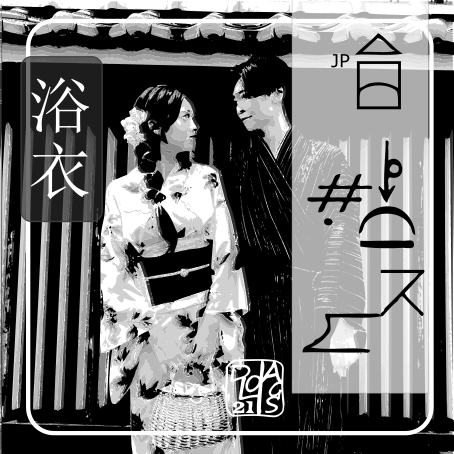
The seat belt is one of the innovations that has contributed most to reducing the consequences of traffic accidents. Attached to the vehicle seat, it restrains the body during sudden decelerations and limits the risk of serious injury. Its history reveals an interesting paradox. It illustrates how a voluntary constraint can become a prerequisite for freedom of movement. Without it, modern forms of rapid mobility would be far more dangerous. The seat belt is thus part of a long history of body protection devices. It also offers a lens through which to examine the relationships between technology, individual responsibility, and public policy. A mundane object of daily life, it nonetheless bears witness to a profound transformation in the culture of travel during the 20th century.Lire la suiteceinture de sécurité

Vous pouvez compléter, modifier, améliorer cette indéfinition ou en proposer une autre au regard de vos savoirs, langages, pratiques, histoire… qu’elle soit formulée sur un mode scientifique, culturel, poétique… contact@21dialogues21.org
Catégories
Indéfinition

ceinture

repère(s) :communication

A belt is an item designed to wrap around the body, usually at the waist, to hold up a garment, adjust an outfit, or support certain movements. Made of leather, fabric, plant fibers, or more modern materials, it is one of the oldest and most universally used accessories in human history. Its primary function is practical: it connects different parts of a garment and establishes a link between the body and what covers it. Yet behind this apparent simplicity lies a wide variety of forms, techniques, and uses. In many societies, the belt quickly transcends its utilitarian function. It becomes a sign of social distinction, a marker of belonging, a symbol of authority, or a vehicle for aesthetic expression. The Japanese obi, the Persian kamarband, the Quebecois ceinture fléchée, and the Roman cingulum each reflect a unique way of connecting the individual to their community. The materials used, the patterns, the colors, or the way a belt is tied often reflect local craftsmanship, cultural traditions, and conceptions of the body specific to each society. | The belt also invites us to broaden its meaning, for beyond being a fashion accessory, it can be understood as a symbol of connection and unity. It links separate elements, maintaining a coherent whole and creating passages between different realities.Lire la suiteceinture

Vous pouvez compléter, modifier, améliorer cette indéfinition ou en proposer une autre au regard de vos savoirs, langages, pratiques, histoire… qu’elle soit formulée sur un mode scientifique, culturel, poétique… contact@21dialogues21.org

Catégories
Indéfinition

batik

repère(s) :Indonésie

Batik is a dyeing technique that developed primarily in the Indonesian archipelago. The process involves applying wax to certain parts of the fabric to prevent the dye from penetrating during the dyeing process. A single piece of fabric can thus be treated with several successive layers of wax and pigments. The result is often visually striking. Batik patterns reflect multiple influences: local beliefs, Asian trade, Islamic traditions, and colonial legacies. Batik is a remarkable example of technical specialization. It requires patience, precision, and in-depth knowledge of materials. In some regions, the designs were once reserved for specific social groups. The textile thus became a visible marker of hierarchy and social status. Even today, batik remains an important symbol of Indonesia’s cultural heritage and its historical openness to the world.Lire la suitebatik

Vous pouvez compléter, modifier, améliorer cette indéfinition ou en proposer une autre au regard de vos savoirs, langages, pratiques, histoire… qu’elle soit formulée sur un mode scientifique, culturel, poétique… contact@21dialogues21.org
Catégories
Indéfinition

bandage de roue

repère(s) :

A wheel tyre (or wheel band) is a protective layer fitted around the rim of a wheel to strengthen it and improve its contact with the ground. Before the invention of the modern pneumatic tyre, wheels were commonly equipped with bands made of wood, leather, or metal. Their main purpose was to reinforce the wheel and reduce wear on rough roads. In horse-drawn vehicles such as carts and coaches, wooden wheels were often surrounded by a heated iron ring. As the metal cooled, it contracted and tightly secured the wheel, greatly increasing its resistance to shocks and friction. This innovation played a key role in improving the transport of goods and passengers. During the Industrial Revolution, new materials were introduced to enhance performance and comfort. Rubber bands were adopted on various vehicles and machines to reduce noise and vibration, and were widely used on bicycles and early industrial equipment. The wheel band marked an important stage in the evolution of rolling systems and paved the way for the pneumatic tyre, which provided better grip and comfort. Although largely replaced by modern tyres, wheel bands are still used on trains, cranes, and industrial machinery, remaining an important milestone in the history of transport and mechanics.Lire la suitebandage de roue

Vous pouvez compléter, modifier, améliorer cette indéfinition ou en proposer une autre au regard de vos savoirs, langages, pratiques, histoire… qu’elle soit formulée sur un mode scientifique, culturel, poétique… contact@21dialogues21.org
Catégories
Piste
repère(s) :

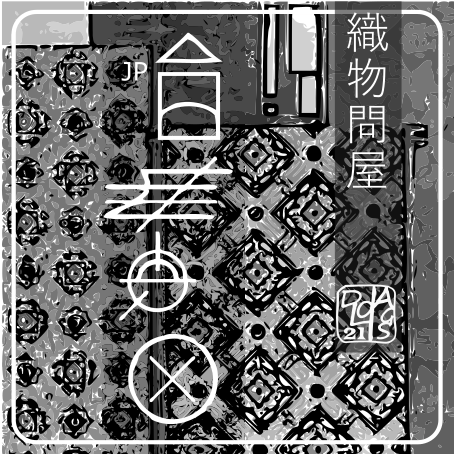
The dyeing techniques used in Japan demonstrate a remarkable understanding of pigments, fibers, and color-fixing processes. In textile-producing regions such as Kiryu, mastery of dyeing has long been a decisive economic advantage. Colors are not merely a matter of aesthetics. They often carry social, seasonal, or symbolic meanings. Certain hues were once reserved for specific social classes. Others were sought after for their rarity or prestige.Lire la suite

Catégories
Piste

ceinture fléchée

repère(s) :

The arrowhead sash is one of the most recognizable symbols of Quebec’s cultural heritage. Handwoven from colored wool yarn, it is characterized by its geometric arrow-shaped patterns. Originally, it served practical purposes: to hold winter clothing in place and protect the back while traveling. It is particularly associated with travelers, coureurs des bois, and fur traders. Its production requires special technical skill since it is made without a traditional loom. Over time, it has become a sign of cultural belonging and identity. Its aesthetic stems from the intersection of European traditions and North American realities. Like other belts around the world, it transcends its utilitarian function to become a collective emblem. It serves as a reminder that textile objects are often living archives of social history. The arrowhead belt is thus a woven narrative as much as it is a garment.Lire la suiteceinture fléchée

Catégories
Piste

ceinture (arts martiaux)

repère(s) :

The martial arts belt retains its practical function of holding the uniform in place, while also taking on educational and symbolic significance. In disciplines such as judo, karate, and aikido, the color of the belt indicates the practitioner’s level of progress. This relatively recent system has become one of the most recognizable symbols of the transmission of martial arts knowledge. The belt represents a journey rather than a definitive status. It serves as a reminder that knowledge is built step by step, within the relationship between teacher and student. Its significance extends far beyond the realm of sports. In many countries, it has become a universal symbol of learning grounded in effort, discipline, and perseverance. The martial arts belt thus demonstrates how a simple piece of fabric can become a visible sign of inner transformation.Lire la suiteceinture (arts martiaux)

Catégories
Indéfinition

mahâtmâ

repère(s) :croire

Le terme « mahâtmâ » महात्मा est d’origine sanskrite et est généralement associé au Mahâtmâ Gandhi. Il signifie « grande âme » ou « noble esprit ». Le Mahâtmâ Gandhi est peut-être la figure la plus connue associée à ce titre. On dit que c’est Rabindranath Tagore qui lui a donné ce titre pour la première fois, peut-être pour répondre de manière légèrement ironique à un…Lire la suitemahâtmâ

Vous pouvez compléter, modifier, améliorer cette indéfinition ou en proposer une autre au regard de vos savoirs, langages, pratiques, histoire… qu’elle soit formulée sur un mode scientifique, culturel, poétique… contact@21dialogues21.org
Catégories
Articles

Walter Lippmann

Walter Lippmann (1889-1974) est un journaliste et penseur politique américain. Il est connu pour ses travaux sur l’opinion publique et les médias. Selon lui, les individus n’accèdent pas directement à la réalité sociale mais à des représentations simplifiées. Il introduit la notion de stéréotype pour désigner ces images mentales préconstruites. Ces représentations facilitent la compréhension du monde mais peuvent aussi…Lire la suiteWalter Lippmann

Catégories
Articles

Burdigala

repère(s) :nom

Burdigala est le nom antique de Bordeaux, fondée au Ier siècle av. J.-C. par les Bituriges Vivisques. Elle devient une cité gallo-romaine prospère, grâce à sa position sur la Garonne et son commerce de vin et d’étain. Sous l’empereur Auguste, elle est intégrée à la province d’Aquitaine. Le poète Ausone y vit et y enseigne la rhétorique au IVe siècle,…Lire la suiteBurdigala

Catégories
Articles

Comment nommer Gandhi

repère(s) :communication

Si le terme de « Mahatma » महात्मा est l’un des plus utilisés : le « Mahâtmâ Gandhi », bien d’autres appellations furent ou sont employés pour désigner Gandhi. L’une d’elles est « Bapu » ce qui, en gujarati comme en diverses langues indiennes, signifie « père » ou « papa », reflétant son rôle de figure paternelle et guide…Lire la suiteComment nommer Gandhi

Catégories
Articles

Les langues pratiquées par Gandhi

repère(s) :langue

Etant né au Gujarat, Gandhi pratiquait la langue maternelle de cet État, à savoir le gujarati, langue indo-aryenne. Celle-ci se transcrit au moyen d’une écriture spécifique, dite elle-même gujarati. Il resta fidèle à cette langue toute sa vie et c’est à travers elle qu’il écrivit des œuvres majeures comme Sarvodaya en 1908, titre qu’il donna à la traduction de Unto…Lire la suiteLes langues pratiquées par Gandhi

Catégories
Articles

Lettre à un Hindou

repère(s) :penser

Parmi les figures qui ont influencé Gandhi, on notera l’écrivain russe Léon Tolstoï (1828-1910) lequel, outre sa production romanesque, fut très critique des pouvoirs civils et ecclésiastiques. Une correspondance le relia à Gandhi vers la fin de sa vie, en particulier autour d’un texte : Lettre à un Hindou que Tolstoï publia en 1908.Lire la suiteLettre à un Hindou

Catégories
Articles

L’ami des démunis

repère(s) :partager

Parmi les personnes qui ont approché Gandhi de près, dès l’Afrique du Sud, l’on peut compter Charles Freer Andrews (1871-1940), un missionnaire anglican britannique. Gandhi avec lequel il lui arrivait d’avoir quelques désaccords mineurs, le nommait Deenabandhu (« l’ami des démunis ») ou encore « l’apôtre fidèle du Christ » [Christ’s Faithful Apostle, ce qui par amusement, correspond à ses…Lire la suiteL’ami des démunis