Catégories
Articles

roue astronomique

repère(s) :

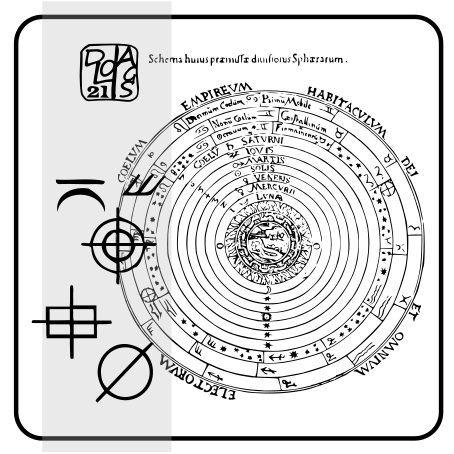
In many civilizations, the movement of the stars has been represented in a circular form. Celestial maps, astrolabes, and astronomical clocks translate the rhythms of the sky into the movements of wheels and circles. This association is based on a fundamental observation: the stars, the Sun, and the planets appear to follow regular paths around the Earth. The wheel thus becomes a model of the cosmos itself. In Mesopotamian, Greek, Chinese, and Islamic traditions, circular representations of the sky play a major role in the organization of knowledge. They enable the measurement of time, the prediction of seasons, and the ordering of space. The astronomical wheel demonstrates that circular motion belongs as much to the history of ideas as to that of machines. It connects observational techniques, worldviews, and the search for a universal order.Lire la suiteroue astronomique

Catégories
Articles

Charles Goodyear

repère(s) :

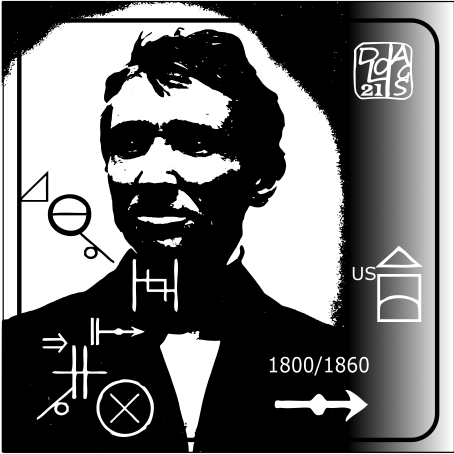
Charles Goodyear (1800–1860) was an American inventor whose name remains closely associated with one of the most important discoveries in the history of materials: the vulcanization of rubber. By the early 19th century, natural rubber had already attracted the interest of industrialists, but its use remained limited. Indeed, it became sticky and soft when exposed to heat, while it hardened and cracked in cold weather. These flaws prevented its widespread use. Convinced of the material’s potential, Goodyear devoted many years to experimenting with different methods to improve its properties. After numerous failures and significant financial difficulties, he discovered in 1839 that by heating rubber in the presence of sulfur, it was possible to make it much more stable, elastic, and durable. This process was subsequently named “vulcanization,” in reference to Vulcan, the Roman god of fire and the forge. This invention profoundly transformed modern industry. Thanks to vulcanization, rubber could be used in the manufacture of tires, gaskets, drive belts, electrical cables, and many everyday objects. It thus paved the way for the development of modern transportation and numerous industrial innovations. Paradoxically, despite the importance of his discovery, Charles Goodyear never achieved true financial prosperity. He spent much of his life in debt and died before he could see the full extent of his invention’s industrial success.Lire la suiteCharles Goodyear

Catégories
Indéfinition

vélocipède

repère(s) :

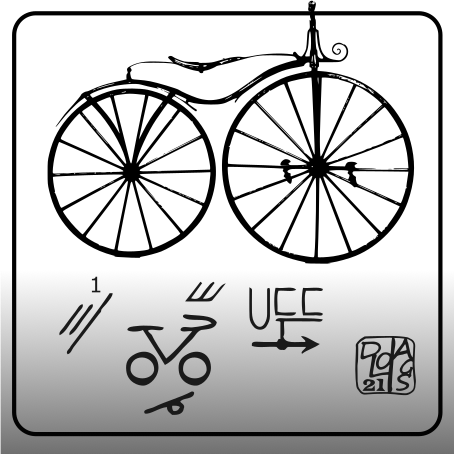
The term “velocipede” refers to several early types of bicycles developed in the 19th century. These machines represent a decisive milestone in the history of personal transportation. For the first time, a rider could cover significant distances using only their own muscle power, while benefiting from the mechanical efficiency of the wheels. The earliest models were often uncomfortable and difficult to handle, but they opened up a vast field of innovation. The velocipede contributed to the transformation of cities, leisure activities, and conceptions of movement. It also fostered a new relationship between the body and speed. Even before the automobile, it offered a modern experience of personal mobility. Its development spurred advances in metallurgy, bearings, tires, and road infrastructure. Through it, a culture of movement emerged that would profoundly shape the 19th and 20th centuries. The velocipede is thus one of the direct ancestors of the contemporary world of transportation.Lire la suitevélocipède

Vous pouvez compléter, modifier, améliorer cette indéfinition ou en proposer une autre au regard de vos savoirs, langages, pratiques, histoire… qu’elle soit formulée sur un mode scientifique, culturel, poétique… contact@21dialogues21.org

Catégories
Indéfinition

roue hydraulique

repère(s) :

The waterwheel is one of the great inventions that enabled human societies to harness the forces of nature. Known in ancient times but widely developed during the Middle Ages, it converts the energy of water into mechanical motion. Installed on rivers and canals, it powers mills, hammers, sawmills, and irrigation systems. Its significance extends far beyond mere technology. It reshapes the organization of labor, fosters the growth of certain regions, and indirectly paves the way for subsequent industrial revolutions. The waterwheel illustrates a moment when societies learned to delegate physical labor to mechanical devices. It belongs to a long line of technologies based on rotation. In many European and Asian landscapes, it also became a familiar feature of the cultural environment. Its history shows that major innovations do not always originate in factories; they can emerge along the banks of a river.Lire la suiteroue hydraulique

Vous pouvez compléter, modifier, améliorer cette indéfinition ou en proposer une autre au regard de vos savoirs, langages, pratiques, histoire… qu’elle soit formulée sur un mode scientifique, culturel, poétique… contact@21dialogues21.org
Catégories
Indéfinition

roue dentée

repère(s) :

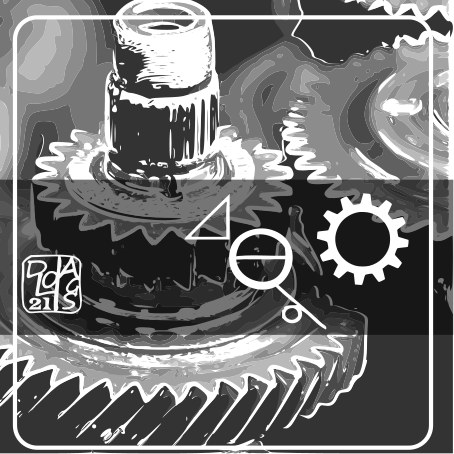
The gear represents a fundamental step in the evolution of technology. Unlike the simple wheel, which is used primarily for movement, the gear enables the transmission and transformation of motion. When several gears mesh together, they alter the speed, direction, or power of a mechanism. Clocks, mills, mechanical looms, and industrial machines rely heavily on this principle. The gear marks a decisive turning point in the history of mechanics: movements cease to be isolated and instead form organized systems. Studying it helps us understand how human societies gradually learned to coordinate complex operations. The image of the gear has also become a metaphor for collective work. Each wheel depends on the others to function.Lire la suiteroue dentée

Vous pouvez compléter, modifier, améliorer cette indéfinition ou en proposer une autre au regard de vos savoirs, langages, pratiques, histoire… qu’elle soit formulée sur un mode scientifique, culturel, poétique… contact@21dialogues21.org
Catégories
Indéfinition

roue de prière (tibétaine)

repère(s) :Tibet

The Tibetan prayer wheel combines mechanical movement with spiritual practice. A cylinder mounted on an axle, it typically contains sacred texts or mantras inscribed on paper. By turning it, the devotee symbolically recites the prayers it contains. The circular motion thus becomes a form of religious action. The circle and rotation are associated with the continuity of the world and the circulation of teachings. This object also allows us to explore the connections between artisanal techniques, devotional practices, and cosmological representations.Lire la suiteroue de prière (tibétaine)

Vous pouvez compléter, modifier, améliorer cette indéfinition ou en proposer une autre au regard de vos savoirs, langages, pratiques, histoire… qu’elle soit formulée sur un mode scientifique, culturel, poétique… contact@21dialogues21.org
Catégories
Indéfinition

roue de Fortune

repère(s) :EuropeMoyen Âge

The Wheel of Fortune is one of the most powerful images in medieval European culture. Inherited from antiquity and popularized by the writings of Boethius, it represents the instability of the human condition. People rise and fall with the turns of the goddess Fortune, never able to control their destiny for long. In manuscripts, cathedrals, and literary works, this wheel depicts kings becoming beggars and the humble rising to power. The image is based on a fundamental observation: any circular motion implies a change in position. The wheel thus becomes a metaphor for time, chance, and the fragility of human achievements. Unlike transport wheels, which allow us to control movement, the Wheel of Fortune reminds us of what lies beyond our control. Its influence spans the centuries and continues to appear in games, performances, and everyday expressions. It demonstrates how a technical object can become a tool for philosophical reflection. The wheel is no longer merely a material instrument; it becomes a way of thinking about the world.Lire la suiteroue de Fortune

Vous pouvez compléter, modifier, améliorer cette indéfinition ou en proposer une autre au regard de vos savoirs, langages, pratiques, histoire… qu’elle soit formulée sur un mode scientifique, culturel, poétique… contact@21dialogues21.org

Catégories
Indéfinition

roue

repère(s) :savoir

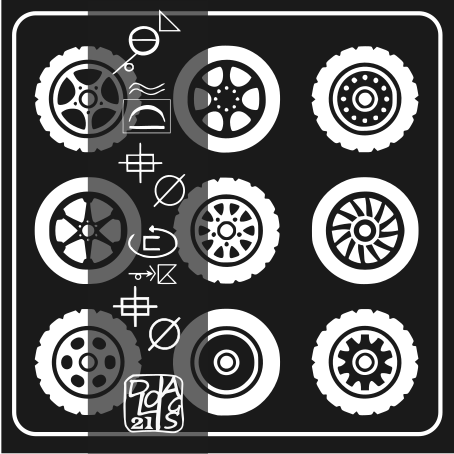
The wheel is a circular mechanical device that rotates around an axis to facilitate the movement of people, animals, and loads. It is considered one of the most important inventions in human history. The first known wheels appeared around 3500 B.C. in Mesopotamia, where they were initially used on potter’s wheels before being adapted for transportation. This invention marked a decisive step in the development of societies, as it made it possible to move much heavier loads with less effort. Thanks to the wheel, trade expanded, distances became easier to travel, and economic activities became more efficient. Its use gradually spread to many civilizations around the world. Over the centuries, the wheel underwent numerous improvements: solid wooden wheels, spoked wheels, metal-rimmed wheels, and eventually wheels fitted with tires. Its importance is not limited to transportation. It also gave rise to numerous technical mechanisms, such as mills, gears, clocks, industrial machinery, and many tools. The wheel thus plays an essential role in the fields of agriculture, crafts, industry, and transportation.Lire la suiteroue

Vous pouvez compléter, modifier, améliorer cette indéfinition ou en proposer une autre au regard de vos savoirs, langages, pratiques, histoire… qu’elle soit formulée sur un mode scientifique, culturel, poétique… contact@21dialogues21.org
Catégories
Indéfinition

pneu

repère(s) :

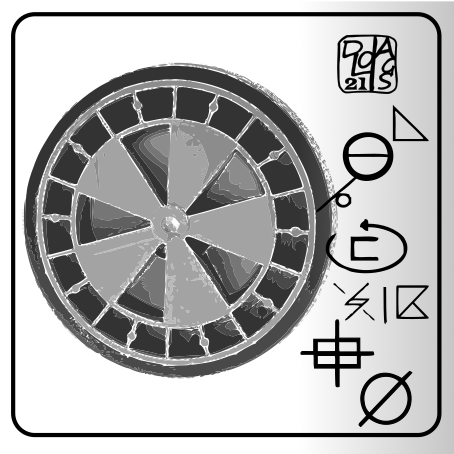
A tire is a rubber ring mounted around a wheel to provide contact between the vehicle and the ground. Its main functions are to support the vehicle’s weight, provide traction, transmit braking and acceleration forces, and absorb some of the road’s unevenness. The invention of the pneumatic tire dates back to 1845, when Robert William Thomson filed a patent for a wheel equipped with an air-filled casing. However, this innovation saw little use until 1888, when John Boyd Dunlop developed an inflatable tire for bicycles. The success of this invention led to its adoption on early automobiles. In 1891, Michelin developed the removable tire, making it easier to replace and repair. Throughout the 20th century, tires underwent numerous advancements thanks to the use of new materials, the introduction of the radial tire, and improvements in manufacturing processes. Today, they offer better traction, longer life, reduced fuel consumption, and enhanced safety. Current research focuses on tires that are more environmentally friendly, connected, and adapted to new transportation technologies.Lire la suitepneu

Vous pouvez compléter, modifier, améliorer cette indéfinition ou en proposer une autre au regard de vos savoirs, langages, pratiques, histoire… qu’elle soit formulée sur un mode scientifique, culturel, poétique… contact@21dialogues21.org

Catégories
Indéfinition

penny-farthing

repère(s) :

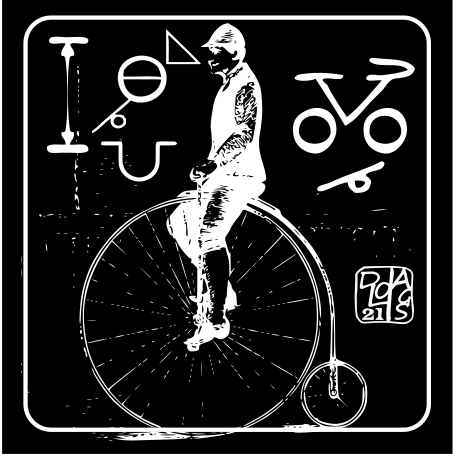
The penny-farthing, sometimes called a “high-wheeler,” is one of the most recognizable vehicles in the history of transportation. Its enormous front wheel and small rear wheel give it a spectacular silhouette. Its name comes from two British coins whose dimensions resembled the vehicle’s proportions. This configuration was driven by technical logic: before the invention of modern drivetrains, increasing the wheel’s diameter allowed for greater distance covered with each pedal stroke. The grand-bi represents a phase of intense experimentation in the history of the bicycle. It bears witness to an era when engineers were still searching for the most efficient forms of individual mobility. Riding it requires skill, balance, and courage. Despite its limitations, it helped popularize travel on two wheels. Even today, it remains a visual icon of 19th-century mechanical ingenuity. It serves as a reminder that the most familiar technologies are often the result of numerous trials and detours.Lire la suitepenny-farthing

Vous pouvez compléter, modifier, améliorer cette indéfinition ou en proposer une autre au regard de vos savoirs, langages, pratiques, histoire… qu’elle soit formulée sur un mode scientifique, culturel, poétique… contact@21dialogues21.org

Catégories
Indéfinition

chambre à air

repère(s) :

The inner tube is one of the major innovations that has made modern transportation comfortable. Placed inside the tire, it contains compressed air that absorbs bumps in the road. Before its invention, vehicles with solid wheels transmitted shocks directly to passengers. Air thus became a technical material in its own right. Invisible yet essential, it plays a role in the overall functioning of the system. The inner tube transforms the travel experience by reducing vibrations and improving traction. Its development went hand in hand with that of the bicycle and later the automobile.Lire la suitechambre à air

Vous pouvez compléter, modifier, améliorer cette indéfinition ou en proposer une autre au regard de vos savoirs, langages, pratiques, histoire… qu’elle soit formulée sur un mode scientifique, culturel, poétique… contact@21dialogues21.org
Catégories
Indéfinition

bandage de roue

repère(s) :

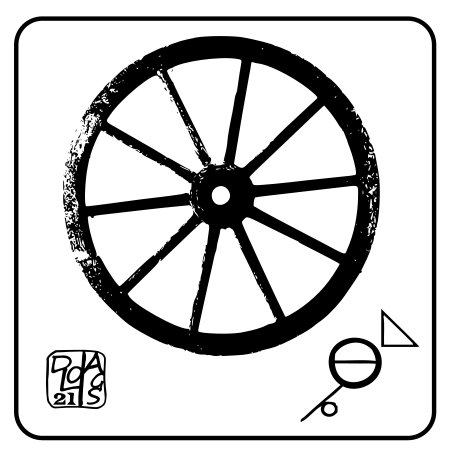
A wheel tyre (or wheel band) is a protective layer fitted around the rim of a wheel to strengthen it and improve its contact with the ground. Before the invention of the modern pneumatic tyre, wheels were commonly equipped with bands made of wood, leather, or metal. Their main purpose was to reinforce the wheel and reduce wear on rough roads. In horse-drawn vehicles such as carts and coaches, wooden wheels were often surrounded by a heated iron ring. As the metal cooled, it contracted and tightly secured the wheel, greatly increasing its resistance to shocks and friction. This innovation played a key role in improving the transport of goods and passengers. During the Industrial Revolution, new materials were introduced to enhance performance and comfort. Rubber bands were adopted on various vehicles and machines to reduce noise and vibration, and were widely used on bicycles and early industrial equipment. The wheel band marked an important stage in the evolution of rolling systems and paved the way for the pneumatic tyre, which provided better grip and comfort. Although largely replaced by modern tyres, wheel bands are still used on trains, cranes, and industrial machinery, remaining an important milestone in the history of transport and mechanics.Lire la suitebandage de roue

Vous pouvez compléter, modifier, améliorer cette indéfinition ou en proposer une autre au regard de vos savoirs, langages, pratiques, histoire… qu’elle soit formulée sur un mode scientifique, culturel, poétique… contact@21dialogues21.org