
Catégories
Indéfinition

teinture

repère(s) :

Textile dyeing is the process of coloring a textile material using dyes or pigments. It gives fibers, yarns, or fabrics a durable and uniform color. This technique has been used since ancient times to embellish clothing and upholstery fabrics. Dyes can be of natural origin, such as certain plants or insects, or of synthetic origin. Dyeing can be applied to various fibers, such as cotton, wool, silk, or polyester. The process relies on the penetration and fixation of the dye within the textile material. Several methods exist depending on the nature of the fiber and the desired result. Dyeing can be performed on the fiber, yarn, fabric, or finished garment. It generally requires the use of water, heat, and chemical auxiliaries. The quality of the dyeing is measured by its uniformity and washfastness. It must also be resistant to light, rubbing, and perspiration. The textile industry uses specialized equipment to control the process parameters. Recent innovations aim to reduce water consumption and environmental impacts. Dyeing plays an essential role in the aesthetics and commercial value of textile products. As such, it constitutes a fundamental step in the processing and finishing of textiles.Lire la suiteteinture

Vous pouvez compléter, modifier, améliorer cette indéfinition ou en proposer une autre au regard de vos savoirs, langages, pratiques, histoire… qu’elle soit formulée sur un mode scientifique, culturel, poétique… contact@21dialogues21.org
Catégories
Indéfinition

roue de Fortune

repère(s) :EuropeMoyen Âge

The Wheel of Fortune is one of the most powerful images in medieval European culture. Inherited from antiquity and popularized by the writings of Boethius, it represents the instability of the human condition. People rise and fall with the turns of the goddess Fortune, never able to control their destiny for long. In manuscripts, cathedrals, and literary works, this wheel depicts kings becoming beggars and the humble rising to power. The image is based on a fundamental observation: any circular motion implies a change in position. The wheel thus becomes a metaphor for time, chance, and the fragility of human achievements. Unlike transport wheels, which allow us to control movement, the Wheel of Fortune reminds us of what lies beyond our control. Its influence spans the centuries and continues to appear in games, performances, and everyday expressions. It demonstrates how a technical object can become a tool for philosophical reflection. The wheel is no longer merely a material instrument; it becomes a way of thinking about the world.Lire la suiteroue de Fortune

Vous pouvez compléter, modifier, améliorer cette indéfinition ou en proposer une autre au regard de vos savoirs, langages, pratiques, histoire… qu’elle soit formulée sur un mode scientifique, culturel, poétique… contact@21dialogues21.org
Catégories
Indéfinition

roue

repère(s) :savoir

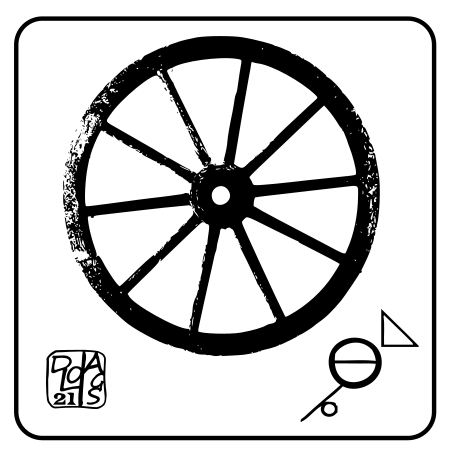
The wheel is a circular mechanical device that rotates around an axis to facilitate the movement of people, animals, and loads. It is considered one of the most important inventions in human history. The first known wheels appeared around 3500 B.C. in Mesopotamia, where they were initially used on potter’s wheels before being adapted for transportation. This invention marked a decisive step in the development of societies, as it made it possible to move much heavier loads with less effort. Thanks to the wheel, trade expanded, distances became easier to travel, and economic activities became more efficient. Its use gradually spread to many civilizations around the world. Over the centuries, the wheel underwent numerous improvements: solid wooden wheels, spoked wheels, metal-rimmed wheels, and eventually wheels fitted with tires. Its importance is not limited to transportation. It also gave rise to numerous technical mechanisms, such as mills, gears, clocks, industrial machinery, and many tools. The wheel thus plays an essential role in the fields of agriculture, crafts, industry, and transportation.Lire la suiteroue

Vous pouvez compléter, modifier, améliorer cette indéfinition ou en proposer une autre au regard de vos savoirs, langages, pratiques, histoire… qu’elle soit formulée sur un mode scientifique, culturel, poétique… contact@21dialogues21.org
Catégories
Indéfinition

métier Jacquard

repère(s) :France

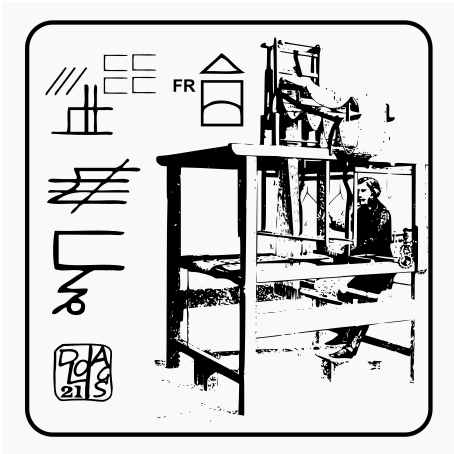
The Jacquard loom, developed in the early 19th century by Joseph Marie Jacquard, marked a major revolution in the history of textiles. His innovation relied on the use of punch cards to automatically control the woven patterns. Thanks to this system, complex designs could be reproduced with unprecedented precision. The Jacquard loom profoundly transformed European textile industries and also influenced Asian production centers. Its significance, however, extends beyond the realm of textiles. The punch cards would later inspire several pioneers of computer science. The Jacquard loom is thus often presented as a forerunner of modern programmable systems. It demonstrates how an innovation born in the world of thread can alter the history of machinery. This convergence of craftsmanship, automation, and information remains one of the most fascinating episodes in industrial history. Here, textiles become a technological laboratory.Lire la suitemétier Jacquard

Vous pouvez compléter, modifier, améliorer cette indéfinition ou en proposer une autre au regard de vos savoirs, langages, pratiques, histoire… qu’elle soit formulée sur un mode scientifique, culturel, poétique… contact@21dialogues21.org

Catégories
Indéfinition

indigo

repère(s) :

Indigo is one of the most important dyes in the history of textiles worldwide. Derived from various plants depending on the region, it produces a deep blue hue that has shaped the clothing traditions of many societies. It can be found in Japanese fabrics as well as in textiles from West Africa, India, and Europe. Its trade has long fueled international exchange networks comparable to those of silk or spices. The preparation of indigo requires complex expertise combining botany, empirical chemistry, and mastery of dyeing. Its spread reflects the global circulation of techniques and tastes. Indigo thus helps us understand how a single color can connect regions far apart. Behind the blue of the fabrics lies a global history of cultural exchange.Lire la suiteindigo

Vous pouvez compléter, modifier, améliorer cette indéfinition ou en proposer une autre au regard de vos savoirs, langages, pratiques, histoire… qu’elle soit formulée sur un mode scientifique, culturel, poétique… contact@21dialogues21.org

Catégories
Indéfinition

cummerbund

repère(s) :Royaume-Uni

A cummerbund is a wide fabric sash worn around the waist with certain men’s evening wear, particularly a tuxedo. Its origins can be traced directly to the Persian kamarband, which was adopted and adapted by the British during their presence on the Indian subcontinent in the 18th and 19th centuries. The English word “cummerbund” is derived from the Persian term via South Asian languages. Originally, this lightweight fabric band served a practical purpose: it was a convenient alternative to the European waistcoat in hot climates. Gradually, it became a codified element of Western elegance. Traditionally made of silk or satin, the cummerbund is worn with the pleats facing upward, a detail that has given rise to numerous explanations, some practical, others more anecdotal. Its function is as much aesthetic as it is sartorial: it ensures a harmonious transition between the shirt and the trousers while accentuating the silhouette. The cummerbund is a remarkable example of cultural circulation. Born in the world of Persian dress, transformed in India, adopted by British officers, and then integrated into Western formal fashion, it illustrates how garments cross borders, reinvent themselves, and retain the discreet memory of their journeys.Lire la suitecummerbund

Vous pouvez compléter, modifier, améliorer cette indéfinition ou en proposer une autre au regard de vos savoirs, langages, pratiques, histoire… qu’elle soit formulée sur un mode scientifique, culturel, poétique… contact@21dialogues21.org

Catégories
Indéfinition

batik

repère(s) :Indonésie

Batik is a dyeing technique that developed primarily in the Indonesian archipelago. The process involves applying wax to certain parts of the fabric to prevent the dye from penetrating during the dyeing process. A single piece of fabric can thus be treated with several successive layers of wax and pigments. The result is often visually striking. Batik patterns reflect multiple influences: local beliefs, Asian trade, Islamic traditions, and colonial legacies. Batik is a remarkable example of technical specialization. It requires patience, precision, and in-depth knowledge of materials. In some regions, the designs were once reserved for specific social groups. The textile thus became a visible marker of hierarchy and social status. Even today, batik remains an important symbol of Indonesia’s cultural heritage and its historical openness to the world.Lire la suitebatik

Vous pouvez compléter, modifier, améliorer cette indéfinition ou en proposer une autre au regard de vos savoirs, langages, pratiques, histoire… qu’elle soit formulée sur un mode scientifique, culturel, poétique… contact@21dialogues21.org

Catégories
Piste
repère(s) :

The dyeing techniques used in Japan demonstrate a remarkable understanding of pigments, fibers, and color-fixing processes. In textile-producing regions such as Kiryu, mastery of dyeing has long been a decisive economic advantage. Colors are not merely a matter of aesthetics. They often carry social, seasonal, or symbolic meanings. Certain hues were once reserved for specific social classes. Others were sought after for their rarity or prestige.Lire la suite

Catégories
Indéfinition

initiation

repère(s) :

L’initiation désigne le processus par lequel une personne accède à un nouvel état, un nouveau savoir ou un nouveau statut. Elle marque un passage qui, dans le contexte pédagogique, constitue l’accession à un palier de savoir ou de savoir-faire, généralement accompagné par un encadrement, des maîtres, des éducateurs, etc. L’initiation suppose souvent une évolution majeure, parfois une rupture avec l’ancien…Lire la suiteinitiation

Vous pouvez compléter, modifier, améliorer cette indéfinition ou en proposer une autre au regard de vos savoirs, langages, pratiques, histoire… qu’elle soit formulée sur un mode scientifique, culturel, poétique… contact@21dialogues21.org

Catégories
Articles

Niklas Luhmann

repère(s) :Allemagne

Niklas Luhmann (1927-1998) est un sociologue allemand connu pour sa théorie des systèmes sociaux. Il considère la société comme un ensemble de systèmes autonomes : politique, droit, économie, médias, science, etc. Chaque système fonctionne selon sa logique propre. Pour lui, la communication constitue l’élément fondamental de la société. Les individus n’occupent pas la place centrale : ce sont les processus…Lire la suiteNiklas Luhmann

Catégories
Articles

Henri Tajfel

repère(s) :Pologne

Henri Tajfel (1919-1982) est un psychologue social connu pour la théorie de l’identité sociale. Il étudie la manière dont les individus se définissent par leur appartenance à des groupes. Selon lui, chacun cherche une identité sociale positive. Les individus ont tendance à favoriser leur propre groupe et à différencier les autres groupes. Ses expériences montrent que des distinctions arbitraires suffisent…Lire la suiteHenri Tajfel

Catégories
Articles

Howard Becker

Howard Becker (1928-2023) est un sociologue américain lié à l’école interactionniste. Il est surtout connu pour sa théorie de l’étiquetage. Selon lui, la déviance n’est pas une qualité intrinsèque d’un acte mais le résultat d’un jugement social. Un comportement devient déviant lorsqu’un groupe social le définit comme tel. Becker s’intéresse aux processus par lesquels certaines personnes sont étiquetées comme marginales.…Lire la suiteHoward Becker

Catégories
Articles

Walter Lippmann

Walter Lippmann (1889-1974) est un journaliste et penseur politique américain. Il est connu pour ses travaux sur l’opinion publique et les médias. Selon lui, les individus n’accèdent pas directement à la réalité sociale mais à des représentations simplifiées. Il introduit la notion de stéréotype pour désigner ces images mentales préconstruites. Ces représentations facilitent la compréhension du monde mais peuvent aussi…Lire la suiteWalter Lippmann

Catégories
Articles

Judith Butler

Judith Butler (1956-) est une philosophe américaine majeure des études de genre. Elle critique l’idée selon laquelle le genre serait une réalité naturelle. Selon elle, le genre est une construction sociale produite par des pratiques répétées. Elle développe le concept de performativité du genre. Les comportements masculins ou féminins ne reflètent pas une essence stable ; ils sont continuellement reproduits…Lire la suiteJudith Butler

Catégories
Articles

Eric Berne

Eric Berne (1910-1970) est un psychiatre américain connu pour avoir créé l’analyse transactionnelle. Cette théorie cherche à comprendre les interactions humaines. Berne affirme que notre personnalité fonctionne selon trois états du moi : Parent, Adulte et Enfant. Ces états influencent notre manière de communiquer. Une transaction correspond à un échange entre deux personnes. Certains échanges sont harmonieux, d’autres créent des…Lire la suiteEric Berne

Catégories
Articles

Geert Hofstede

repère(s) :Pays-Bas

Geert Hofstede (1928-2020) est un psychologue et chercheur néerlandais spécialisé dans l’étude comparative des cultures. Il a élaboré un modèle de dimensions culturelles permettant de comparer les sociétés. Parmi celles-ci figurent la distance hiérarchique, l’individualisme, le contrôle de l’incertitude ou l’orientation à long terme. Son travail repose sur des enquêtes internationales menées au sein d’entreprises. Hofstede montre que les valeurs…Lire la suiteGeert Hofstede

Catégories
Articles

Victor Turner

repère(s) :Royaume-Uni

Victor Turner (1920-1983) est un anthropologue britannique spécialiste des rituels et des symboles. Il a étudié les rites de passage dans différentes sociétés. Son concept majeur est celui de liminalité : phase intermédiaire d’un rituel où l’individu n’appartient plus à son ancien statut sans avoir encore acquis le nouveau. Cette période produit souvent une situation particulière de transition sociale. Turner…Lire la suiteVictor Turner

Catégories
Articles

Erving Goffman

Erving Goffman (1922-1982) est un sociologue américano-canadien associé à l’interactionnisme symbolique. Il étudie les interactions quotidiennes entre individus. Son approche compare la vie sociale à une représentation théâtrale. Dans son ouvrage La mise en scène de la vie quotidienne, il explique que les individus jouent des rôles sociaux selon les situations. Ils cherchent à maîtriser l’image qu’ils donnent aux autres.…Lire la suiteErving Goffman

Catégories
Articles

Edward T. Hall

Edward T. Hall (1914-2009) est un anthropologue américain considéré comme l’un des pionniers de la communication interculturelle. Ses travaux portent sur les dimensions culturelles invisibles qui influencent les interactions humaines. Il a montré que les comportements sociaux dépendent fortement du contexte culturel. Hall distingue notamment les cultures à contexte fort et à contexte faible. Dans les cultures à contexte fort,…Lire la suiteEdward T. Hall

Catégories
Articles

Basil Bernstein

repère(s) :Royaume-Uni

Basil Bernstein (1924-2000) est un sociologue britannique connu pour ses travaux sur le langage et les inégalités scolaires. Il a développé la théorie des codes linguistiques. Selon lui, les groupes sociaux transmettent des formes particulières de langage influençant la réussite scolaire. Il distingue le code restreint et le code élaboré. Le code restreint est fortement lié au contexte et fréquent…Lire la suiteBasil Bernstein