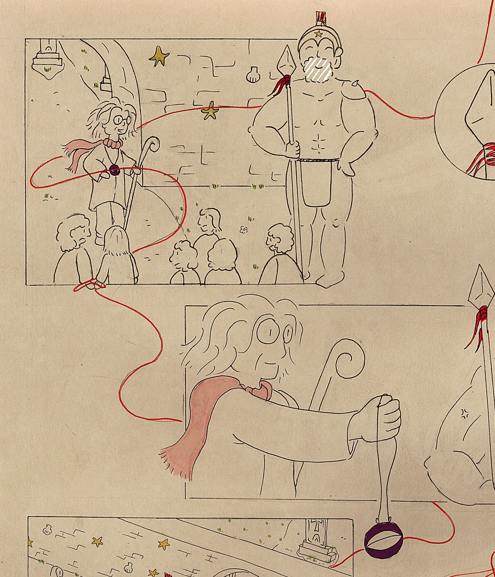

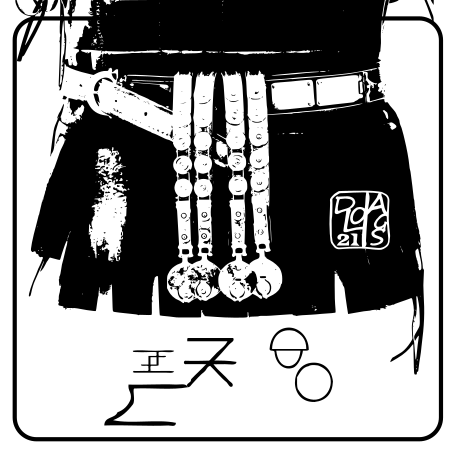
The cingulum is the belt worn by soldiers in ancient Rome. Much more than a mere fashion accessory, it served as a visible sign of membership in the Roman army. Often made of leather and embellished with metal elements, it served to hold certain pieces of equipment in place while clearly distinguishing the soldier from civilians. The decorations adorning it could indicate the wearer’s rank, experience, or prestige. In sculptural depictions, the cingulum contributes to the image of discipline and authority associated with Rome. Its symbolic importance is such that the loss of the belt could be perceived as a humiliation. This identity-defining function links the cingulum to many ceremonial or professional belts found in other cultures. It serves as a reminder that wrapping a belt around the waist is not merely a matter of holding up a garment, but also of displaying one’s position within the social order. The study of the cingulum allows us to explore the relationships between the body, power, and political organization. Through a simple leather object, an entire conception of imperial citizenship becomes visible. The belt thus appears as a shifting boundary between the individual and the institution.Lire la suitecingulum
Vous pouvez compléter, modifier, améliorer cette indéfinition ou en proposer une autre au regard de vos savoirs, langages, pratiques, histoire… qu’elle soit formulée sur un mode scientifique, culturel, poétique… contact@21dialogues21.org