
À l’extrême est du Ladakh, sur les immenses hauts plateaux du Byang thang (བྱང་ཐང་, Changthang, « les plaines du Nord »), vivent les Changpa བྱང་པ་, Byang pa, littéralement « gens du Nord ». Ici, à plus de 4 500 mètres d’altitude, la vie suit un rythme imposé par les saisons, les troupeaux et les ressources en eau. Les Changpa sont…Lire la suiteLes Changpa, nomades du Changthang
Pantopique : humain
Un pantopique correspond à la réunion de quelques repères, plus ou moins nombreux, que vous pouvez commenter, compléter, étendre, selon vos propres champs d’expériences, de savoirs, d’enquêtes… - contact@21dialogues21.org
À l’ouest du Ladakh, dans les vallées de Dah, Hanu, Garkon et quelques villages voisins, vit une communauté qui intrigue depuis longtemps voyageurs et chercheurs : les བྲོག་པ་ Brokpa, littéralement « les habitants des pâturages » ou « les gens des hautes terres ». Appartenant au monde culturel dardique, ils représentent l’une des composantes les plus anciennes et les plus…Lire la suiteLes Brokpa, les « gens des pâturages »
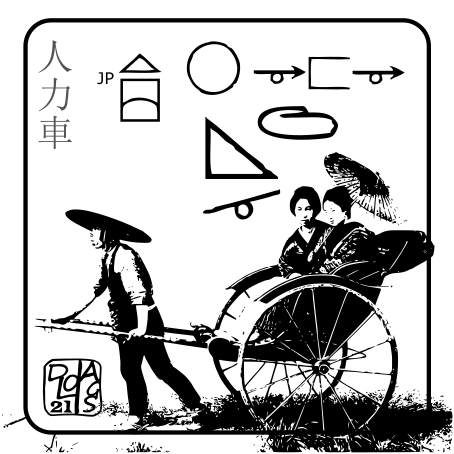
The Japanese word jinrikisha 人力車 literally means “human-powered vehicle.” First appearing in 19th-century Japan, this invention combines two major traditions: human traction and the modern lightweight wheel. The vehicle is pulled or pushed by a person while one or more passengers sit in the back. Its development coincided with the rapid modernization of Japanese cities during the Meiji era. The jinrikisha offered relatively fast mobility in urban areas where motorized infrastructure was still limited. It quickly became a symbol of Asian urban life before spreading to other parts of the world. Its history also raises social questions. Passenger comfort depends directly on the driver’s effort. The vehicle thus reveals economic hierarchies and changes in the nature of work within industrializing societies. Straddling tradition and modernity, the jinrikisha occupies a unique place in the global history of mobility.Lire la suitejinrikisha
Vous pouvez compléter, modifier, améliorer cette indéfinition ou en proposer une autre au regard de vos savoirs, langages, pratiques, histoire… qu’elle soit formulée sur un mode scientifique, culturel, poétique… contact@21dialogues21.org
Victor Turner (1920-1983) est un anthropologue britannique spécialiste des rituels et des symboles. Il a étudié les rites de passage dans différentes sociétés. Son concept majeur est celui de liminalité : phase intermédiaire d’un rituel où l’individu n’appartient plus à son ancien statut sans avoir encore acquis le nouveau. Cette période produit souvent une situation particulière de transition sociale. Turner…Lire la suiteVictor Turner
Edward T. Hall (1914-2009) est un anthropologue américain considéré comme l’un des pionniers de la communication interculturelle. Ses travaux portent sur les dimensions culturelles invisibles qui influencent les interactions humaines. Il a montré que les comportements sociaux dépendent fortement du contexte culturel. Hall distingue notamment les cultures à contexte fort et à contexte faible. Dans les cultures à contexte fort,…Lire la suiteEdward T. Hall

Depuis l’Antiquité, Bordeaux fut un port de commerce ouvert sur le monde, propice aux migrations. À l’époque romaine, des navigateurs et marchands méditerranéens s’installent à Burdigala. Au Moyen Âge et à l’époque moderne, des juifs séfarades fuyant l’Inquisition s’établissent à Bordeaux, notamment dans la rue Judaïque. Les XVIIIe et XIXe siècles voient l’arrivée de négociants étrangers, d’esclaves affranchis des colonies,…Lire la suitePetite histoire des flux migratoires à Bordeaux
Les Bituriges Cubes étaient une tribu gauloise de l’Antiquité, située dans la région qui correspond aujourd’hui à une grande partie du département du Cher, ainsi que quelques zones des départements voisins. Ils faisaient partie des tribus celtiques de la Gaule et étaient intégrés à la culture gauloise. Leur capitale était Avaricum (l’actuelle Bourges), qui était un important centre économique et…Lire la suiteBituriges Vivisques
Vous ne devez pas perdre espoir en l’humanité. L’Humanité est un océan : même si quelques gouttes sont souillées, l’océan ne le devient pas.Lire la suiteL’Humanité est un océan
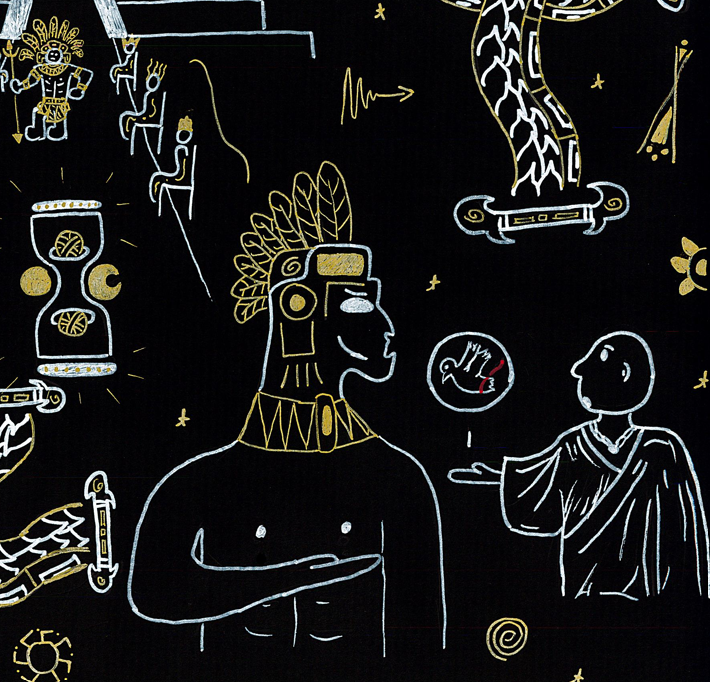
« Je dis, dieu de la guerre, l’interrompit le visiteur, que je remercie cette cité de m’avoir tant appris. Je dis, mes amis, que les Hommes ne sont pas encore prêts à se servir de ce fil pour un amour qu’ils ne veulent pas tous entendre. Mais une étape intermédiaire pourrait cependant leur permettre d’y accéder car vous nous permettez…Lire la suite43. Les Hommes ne sont pas encore prêts…
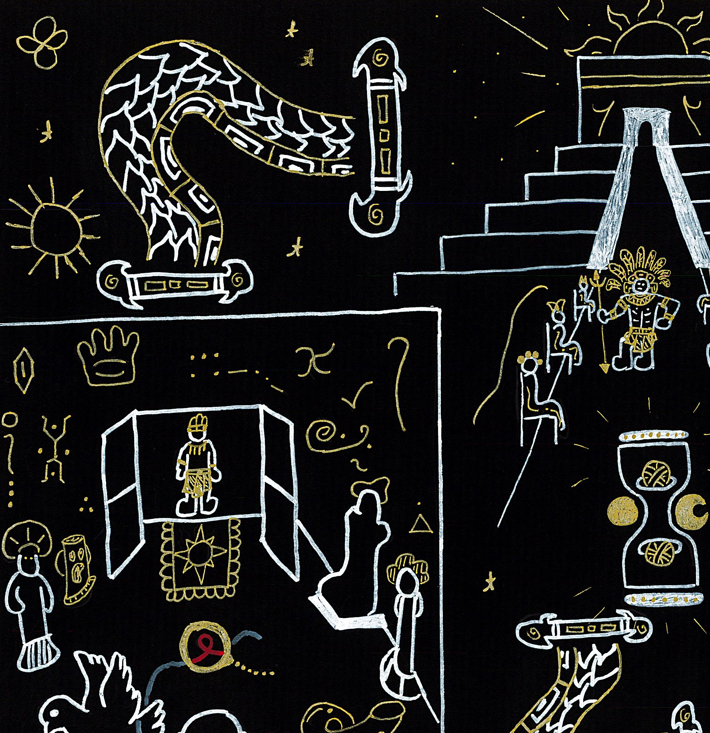
Hélas chacun savait que le temps d’Homme est compté, et qu’il lui faudrait très bientôt repartir s’il voulait reposer parmi les siens. Le chef du conseil drapé de son prestige ouvrit la réunion : « Visiteur, tu es homme en vérité. Pourtant nous n’avons eu durant ton séjour qu’à nous louer de ta présence.Lire la suite19. Le temps d’Homme est compté…

Le visiteur informa alors ses hôtes de son désir de quitter la Cité à l’aube du troisième jour. Chacun se mit à observer cet homme à la présence duquel on s’était accoutumé. Le visiteur quitterait la Cité à l’aube du troisième jour, telle était sa parole. Nul ne songerait à s’y opposer.Lire la suite15. A l’aube du troisième jour…




À 42 km au sud-ouest de Pékin, le site, dont l’exploitation scientifique continue, a permis notamment de découvrir, accompagnés d’objets variés, les restes de Sinanthropus pekinensis, qui vivait au pléistocène moyen, puis des restes d’Homo sapiens sapiens, datables de -18 000 à -11 000. Le site n’apporte pas seulement un témoignage exceptionnel sur les sociétés humaines du continent asiatique à une époque très reculée, mais illustre aussi le processus de l’évolution.Lire la suiteSite de l’homme de Pékin à Zhoukoudian




La trilogie épique kirghize de Manas, Semetey et Seitek décrit la façon dont les tribus dispersées ont été unifiées pour former une seule nation. La trilogie témoigne de la mémoire historique du peuple kirghize et doit sa survie à une communauté de conteurs épiques qui se compose d’hommes et de femmes de tous âges. Les narrateurs acceptent leur mission après avoir reçu un rêve prophétique considéré comme un signe des héros des récits. Pendant les représentations, ils entrent dans un état proche de la transe et se servent de formes narratives, de rythmes, de tons et de gestes variés pour recréer l’atmosphère historique de l’épopée. La narration de la trilogie peut durer treize heures en continu. Les représentations ont lieu à diverses occasions publiques, des fêtes de village aux célébrations et fêtes nationales Les conteurs épiques offrent également un soutien moral et spirituel aux communautés locales et aux individus lors d’événements sociaux, de conflits ou de catastrophes… (…)Lire la suiteManas, Semetey, Seitek : trilogie épique kirghize
Catégories
Grottes et l’art de la période glaciaire dans le Jura souabe




2017
[allemand : Höhlen und Eiszeitkunst der Schwäbischen Alb]
Les premiers humains modernes sont arrivés en Europe il y a 43 000 ans, pendant la dernière période glaciaire. L’un de leurs lieux d’établissement fut le Jura souabe, dans le sud de l’Allemagne. Six grottes, fouillées depuis les années 1860, ont révélé des vestiges vieux de 43 000 à 33 000 ans. Des figurines sculptées d’animaux (y compris des lions des cavernes, mammouths, chevaux et bovidés), des instruments de musique et des objets de parure personnelle y ont notamment été trouvés. D’autres figurines représentent des créatures mi-animales, mi-humaines, et une statuette de femme a été retrouvée. Ces sites archéologiques témoignent d’un art figuratif parmi les plus anciens au monde, et contribuent à éclairer les origines du développement artistique humain.Lire la suiteGrottes et l’art de la période glaciaire dans le Jura souabe
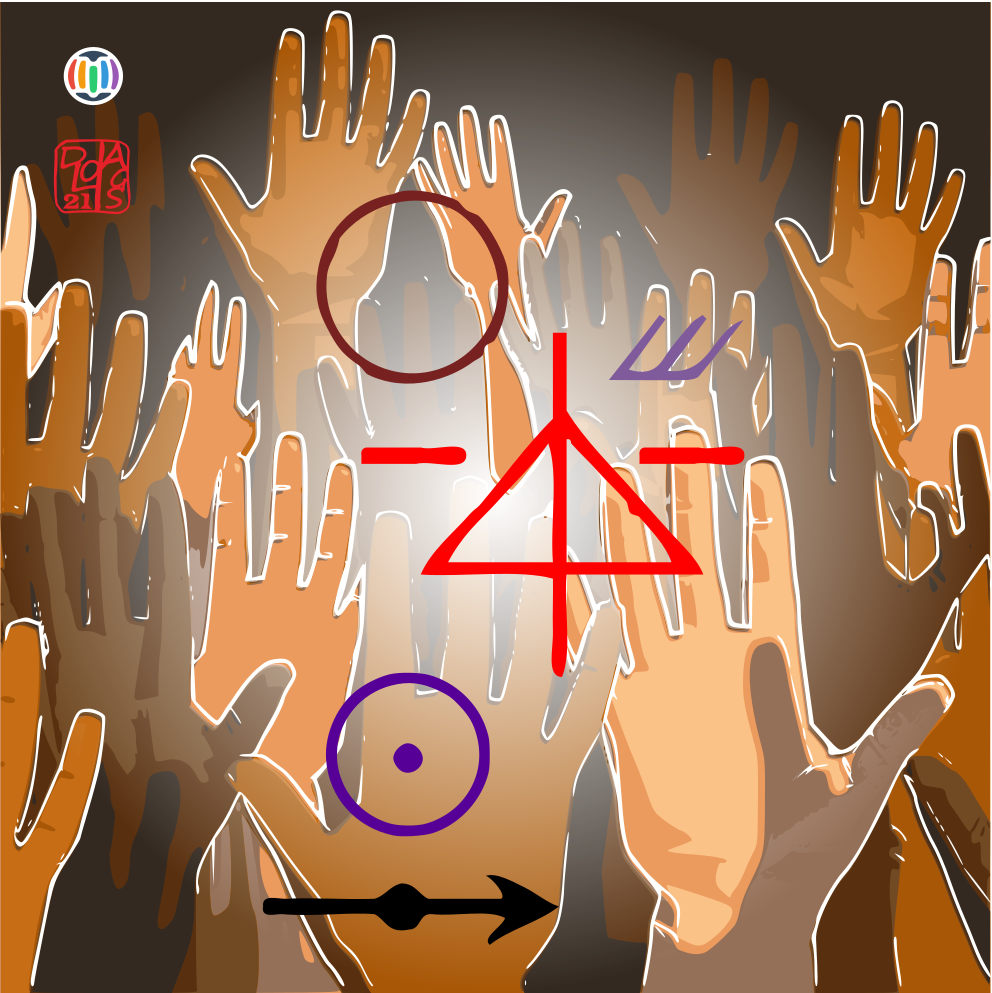
La Journée des droits de l’homme est célébrée chaque année le 10 décembre, jour anniversaire de l’adoption en 1948 par l’Assemblée générale des Nations Unies de la Déclaration universelle des droits de l’homme, un document fondateur qui a proclamé les droits inaliénables de chaque individu en tant qu’être humain, sans distinction aucune, notamment de race, de couleur, de sexe, de…Lire la suite10 décembre – Journée des droits de l’homme
En 1977, l’Assemblée générale des Nations Unies a prié le Secrétaire général de l’ONU d’organiser chaque année, en consultation avec le Comité pour l’exercice des droits inaliénables du peuple palestinien, une Journée de solidarité avec le peuple palestinien. La date du 29 novembre a été retenue en raison de sa signification particulière pour le peuple palestinien. En effet, ce jour-là…Lire la suite29 novembre – Journée de solidarité avec le peuple palestinien

William Booth a évolué dans le milieu anglican avant de rejoindre les tenants de la théologie de John Wesley, les wesleyiens, qui constitueront plus tard le mouvement méthodiste. Il commence comme prédicateur de rue dans les quartiers de l’est de Londres, ce qui l’amène vers les plus démunis. Mais son désir de partager l’Évangile se heurte à la pauvreté, à…Lire la suite5 juillet – Fondation de l’Armée du Salut
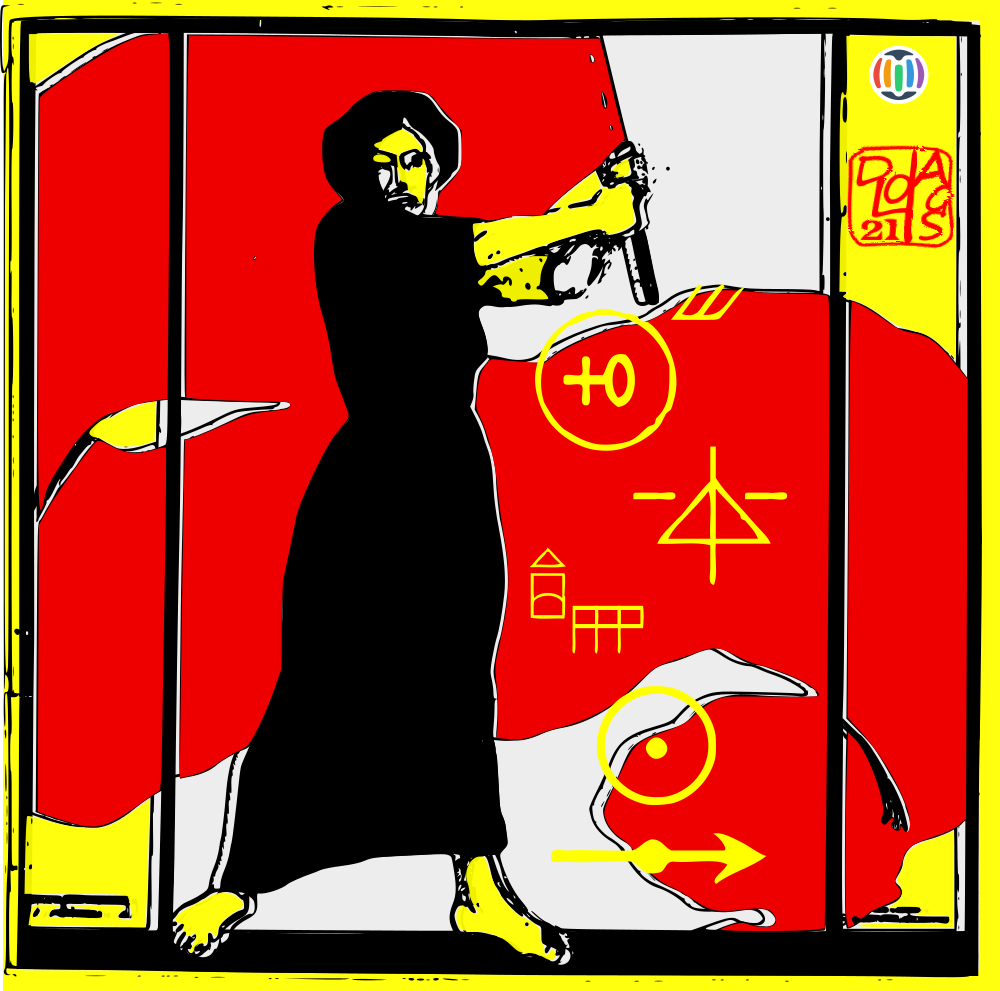
La Journée internationale des femmes, également appelée journée internationale des droits des femmes, est célébrée le 8 mars. Elle est issue de l’histoire des luttes menées pour l’égalité des droits sur les continents européen et américain. Historiquement, une « Journée nationale de la femme » (National Woman’s Day) a vu le jour aux États-Unis à l’appel du Parti socialiste d’Amérique…Lire la suite8 mars – Journée internationale des femmes
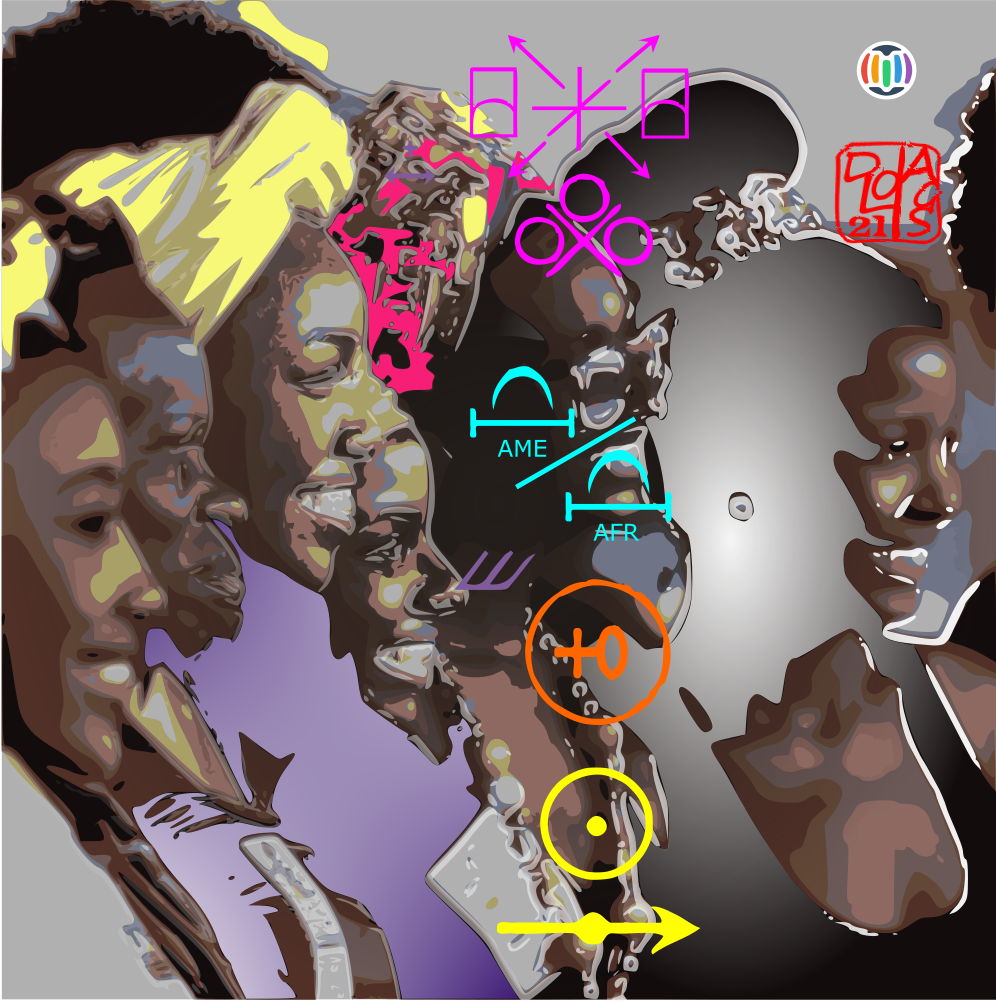
C’est le 25 juillet 1992 que cette date a été reconnue par l’ONU comme la Journée de la femme noire latine et des Caraïbes ; au Brésil, en 2014, la loi n° 12.987/2014 a été reconnue ce même jour, comme la Journée de Teresa de Benguela et de la femme noire. Tereza de Benguela était un chef quilombola qui a…Lire la suite25 juillet – Journée internationale des femmes afro-latines, afro-caribéennes et leur diaspora
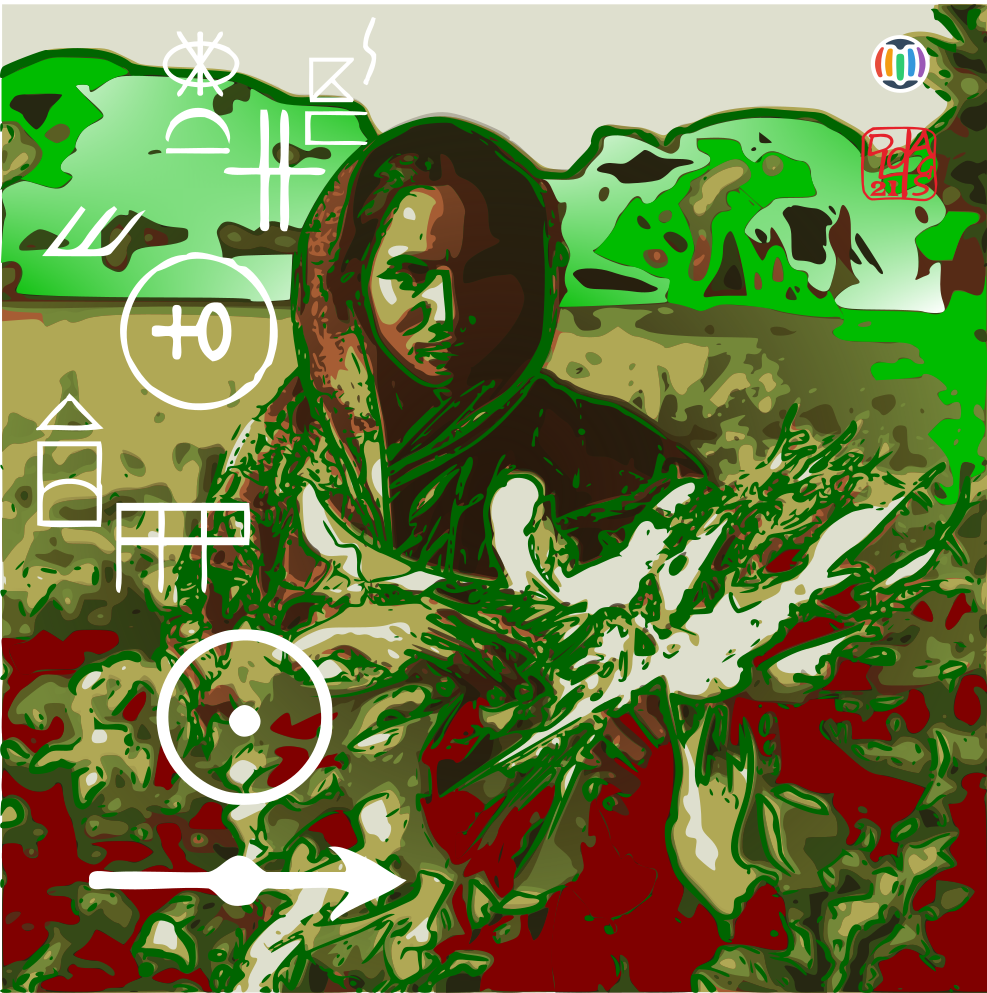
La Journée internationale de la femme rurale attire l’attention à la fois sur la contribution des femmes dans les zones rurales et sur les nombreux défis auxquels elles sont confrontées. Cette journée internationale, instituée par l’Assemblée générale dans sa résolution du 18 décembre 2007, reconnaît « le rôle et la contribution essentiels des femmes rurales, y compris des femmes autochtones,…Lire la suite5 octobre – Journée internationale de la femme rurale