
Le མཚོ་མོ་རི་རི་ (Mtsho mo ri ri), ou Tso Moriri, est un lac ladakhi reposant à près de 4 522 mètres d’altitude, au cœur du plateau du Changthang. Entouré de montagnes aux lignes douces et de vastes pâturages, il appartient autant aux paysages qu’à la culture des pasteurs nomades Changpa, qui vivent depuis des siècles dans cette région d’altitude. Le nom…Lire la suiteTso Moriri, le lac des nomades
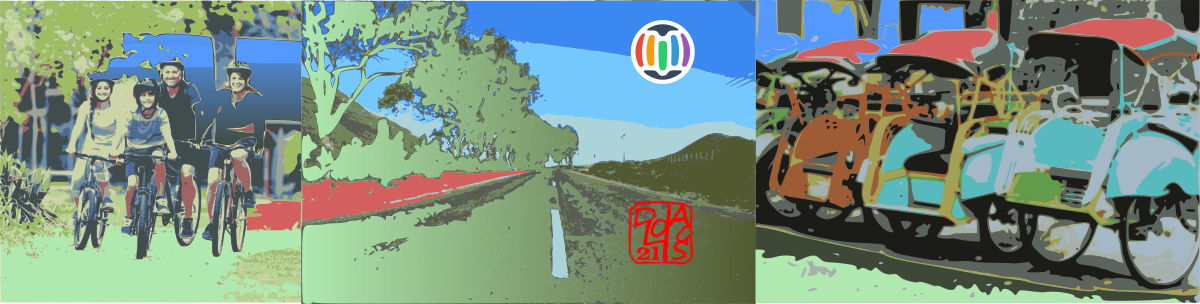
Pantopique : aller
Le déplacement, ce mouvement incessant qui caractérise de nombreuses espèces vivantes, dans sa quotidienneté ou ses exceptions, renvoie aux motivations, défis et impacts qui l’entourent. Qu’est-ce qui incite les êtres vivants à se déplacer ? En quoi l’espèce humaine se caractérise dans ce domaine ? Quelle part y prennent les raisons économiques, culturelles, politiques ou simplement la curiosité voire l’ennui ? Comment les déplacements participent-ils à nos interrelations avec le monde ? Quels sont les défis et les opportunités inhérents au déplacement, en situation de handicap par exemple ? Comment différencier la nature du déplacement dans le cadre de migrations massives, de voyages quotidiens pour le travail, ou encore d’explorations individuelles à travers des territoires inconnus ? Comment ces déplacements influent-ils sur les dynamiques sociales, économiques et environnementales ? Quel rôle jouent les frontières, les langues et les cultures dans la définition de notre expérience du déplacement, et comment les voyages transforment-ils notre identité individuelle et collective ? Comment les avancées technologiques, telles que les moyens de transport rapides et les communications instantanées, redéfinissent-elles la nature même du déplacement et les barrières traditionnelles liées à la distance ?
Un pantopique correspond à la réunion de quelques repères, plus ou moins nombreux, que vous pouvez commenter, compléter, étendre, selon vos propres champs d’expériences, de savoirs, d’enquêtes… - contact@21dialogues21.org
À l’extrême est du Ladakh, sur les immenses hauts plateaux du Byang thang (བྱང་ཐང་, Changthang, « les plaines du Nord »), vivent les Changpa བྱང་པ་, Byang pa, littéralement « gens du Nord ». Ici, à plus de 4 500 mètres d’altitude, la vie suit un rythme imposé par les saisons, les troupeaux et les ressources en eau. Les Changpa sont…Lire la suiteLes Changpa, nomades du Changthang
Lorsque Leh résonnait encore du tintement des clochettes des caravanes, le voyage à travers l’Himalaya ne se mesurait pas en heures mais en semaines, parfois en mois. Les marchands venant de Yarkand, de Lhassa, du Cachemire ou du Baltistan traversaient des milliers de kilomètres avant d’atteindre les marchés du Ladakh. Leur progression était scandée par des haltes indispensables : les…Lire la suiteLes caravansérails, maisons des voyageurs
Au Ladakh, partir en pèlerinage ne consiste pas à visiter un lieu remarquable. Le voyage extérieur n’est que le reflet d’un chemin intérieur. Chaque pas devient une pratique, chaque montée une occasion d’observer son esprit, chaque rencontre une part de l’enseignement. Les destinations sont nombreuses : un དགོན་པ་ (dgon pa, monastère), un མཆོད་རྟེན་ (mchod rten), une grotte où médita གུ་རུ་པདྨ་འབྱུང་གནས་…Lire la suiteLe pèlerinage, marcher vers soi-même
Le long des chemins, à l’entrée des villages, dans les cours des monastères ou au bord des rivières, une roue métallique ou de bois tourne lentement sous la main d’un pèlerin. Ce geste, répété des milliers de fois chaque jour, appartient aux images les plus familières de l’Himalaya. Le moulin à prières se nomme en tibétain མ་ཎི་འཁོར་ལོ་ (ma ṇi ‘khor…Lire la suitemoulin à prières
Vous pouvez compléter, modifier, améliorer cette indéfinition ou en proposer une autre au regard de vos savoirs, langages, pratiques, histoire… qu’elle soit formulée sur un mode scientifique, culturel, poétique… contact@21dialogues21.org
Au Ladakh, il existe une manière particulière de marcher. Devant un མཆོད་རྟེན་ (mchod rten), un monastère, un mur à mani ou une montagne sacrée, les fidèles avancent lentement dans le sens des aiguilles d’une montre. Cette pratique porte le nom de སྐོར་བ་ skor ba, la circumambulation. Elle est l’un des gestes les plus simples et les plus profonds du bouddhisme…Lire la suitecircumambulation
Vous pouvez compléter, modifier, améliorer cette indéfinition ou en proposer une autre au regard de vos savoirs, langages, pratiques, histoire… qu’elle soit formulée sur un mode scientifique, culturel, poétique… contact@21dialogues21.org
Avant les ponts suspendus, avant les routes asphaltées et les ouvrages d’art, traverser une rivière était un acte quotidien qui demandait expérience et prudence. En ladakhi comme en tibétain, le gué se nomme ཆུ་བརྒལ་ས་ chu brgal sa, littéralement « l’endroit où l’on franchit l’eau ». Ce mot rappelle une réalité longtemps essentielle dans les vallées himalayennes : une rivière ne…Lire la suitechu brgal sa
Vous pouvez compléter, modifier, améliorer cette indéfinition ou en proposer une autre au regard de vos savoirs, langages, pratiques, histoire… qu’elle soit formulée sur un mode scientifique, culturel, poétique… contact@21dialogues21.org
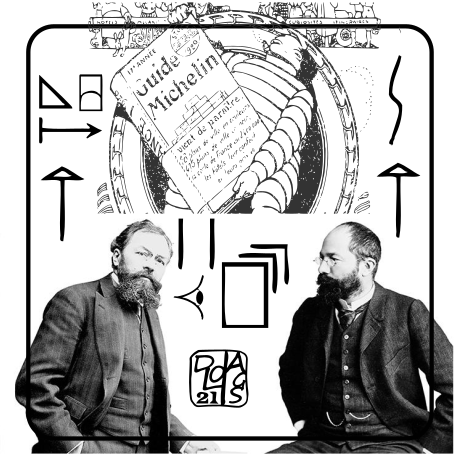
The Michelin Guide was launched at the turn of the 20th century, at a time when automobiles were still a rarity. Its initial goal was simple: to encourage travel and thereby promote the use of tires. To assist drivers, the guide provided practical information on roads, repair shops, and places to eat. Over time, the publication underwent a profound transformation. Its restaurant reviews eventually became its most famous feature. Michelin stars gradually gained global influence over the reputations of restaurants and chefs. The guide reflects how mobility transforms eating habits. Traveling involves eating, discovering new places, and exploring culinary traditions. Tires, roads, and gastronomy are thus linked within a single narrative. The Michelin Guide perfectly illustrates the sometimes unexpected cultural consequences of technical innovation.Lire la suiteGuide Michelin
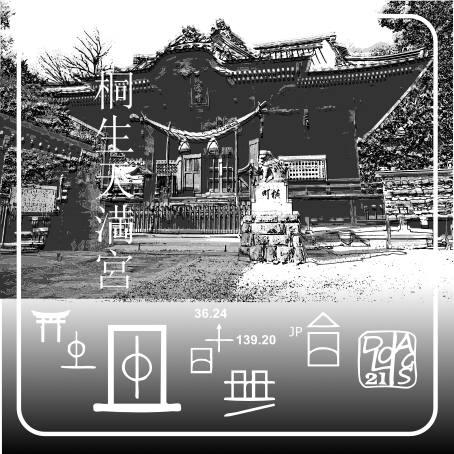
Kiryu-Tenmangū Shrine (桐生天満宮) is a branch of Kyoto/Kitano Tenmangū Shrine and one of the five major shrines in the Kanto region, where it serves as the guardian shrine of the city of Kiryu. This shrine has a long history. According to its records, it was built to worship the deity Amano Hohi no Mikoto, before later becoming a Tenmangu dedicated to the deity Sugawara no Michizane at the beginning of the Northern and Southern Courts period. (…) Furthermore, although Tenmangu is commonly known as the “god of learning,” the blessings of this shrine are not limited to that alone. Kiryu, whose scenic beauty has long been renowned, occupies an ideal location from a feng shui perspective. In other words, this place can be described as a kind of spiritual epicenter. In accordance with feng shui practices, the main shrine houses the four gods Seiryu, Byakko, Suzaku, and Genbu, positioned respectively in the east, west, south, and north. Their many blessings, drawn from the energy of heaven and earth, include business prosperity, family well-being, good health, happiness, and fortune, as well as protection from disasters.Lire la suiteKiryu-Tenmangū (Kiryu)
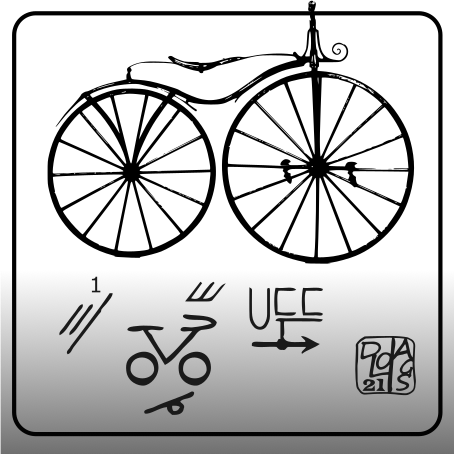
The term “velocipede” refers to several early types of bicycles developed in the 19th century. These machines represent a decisive milestone in the history of personal transportation. For the first time, a rider could cover significant distances using only their own muscle power, while benefiting from the mechanical efficiency of the wheels. The earliest models were often uncomfortable and difficult to handle, but they opened up a vast field of innovation. The velocipede contributed to the transformation of cities, leisure activities, and conceptions of movement. It also fostered a new relationship between the body and speed. Even before the automobile, it offered a modern experience of personal mobility. Its development spurred advances in metallurgy, bearings, tires, and road infrastructure. Through it, a culture of movement emerged that would profoundly shape the 19th and 20th centuries. The velocipede is thus one of the direct ancestors of the contemporary world of transportation.Lire la suitevélocipède
Vous pouvez compléter, modifier, améliorer cette indéfinition ou en proposer une autre au regard de vos savoirs, langages, pratiques, histoire… qu’elle soit formulée sur un mode scientifique, culturel, poétique… contact@21dialogues21.org
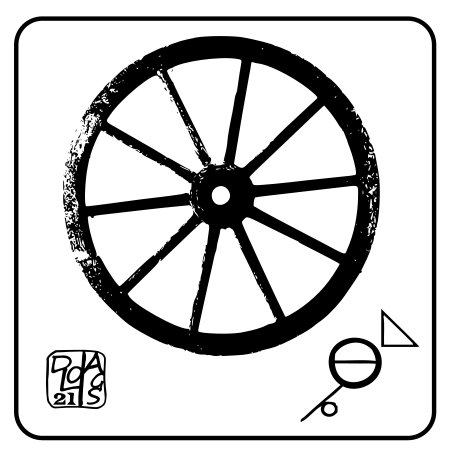
The wheel is a circular mechanical device that rotates around an axis to facilitate the movement of people, animals, and loads. It is considered one of the most important inventions in human history. The first known wheels appeared around 3500 B.C. in Mesopotamia, where they were initially used on potter’s wheels before being adapted for transportation. This invention marked a decisive step in the development of societies, as it made it possible to move much heavier loads with less effort. Thanks to the wheel, trade expanded, distances became easier to travel, and economic activities became more efficient. Its use gradually spread to many civilizations around the world. Over the centuries, the wheel underwent numerous improvements: solid wooden wheels, spoked wheels, metal-rimmed wheels, and eventually wheels fitted with tires. Its importance is not limited to transportation. It also gave rise to numerous technical mechanisms, such as mills, gears, clocks, industrial machinery, and many tools. The wheel thus plays an essential role in the fields of agriculture, crafts, industry, and transportation.Lire la suiteroue
Vous pouvez compléter, modifier, améliorer cette indéfinition ou en proposer une autre au regard de vos savoirs, langages, pratiques, histoire… qu’elle soit formulée sur un mode scientifique, culturel, poétique… contact@21dialogues21.org
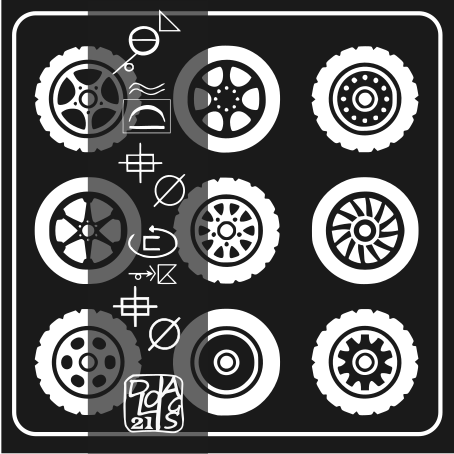
A tire is a rubber ring mounted around a wheel to provide contact between the vehicle and the ground. Its main functions are to support the vehicle’s weight, provide traction, transmit braking and acceleration forces, and absorb some of the road’s unevenness. The invention of the pneumatic tire dates back to 1845, when Robert William Thomson filed a patent for a wheel equipped with an air-filled casing. However, this innovation saw little use until 1888, when John Boyd Dunlop developed an inflatable tire for bicycles. The success of this invention led to its adoption on early automobiles. In 1891, Michelin developed the removable tire, making it easier to replace and repair. Throughout the 20th century, tires underwent numerous advancements thanks to the use of new materials, the introduction of the radial tire, and improvements in manufacturing processes. Today, they offer better traction, longer life, reduced fuel consumption, and enhanced safety. Current research focuses on tires that are more environmentally friendly, connected, and adapted to new transportation technologies.Lire la suitepneu
Vous pouvez compléter, modifier, améliorer cette indéfinition ou en proposer une autre au regard de vos savoirs, langages, pratiques, histoire… qu’elle soit formulée sur un mode scientifique, culturel, poétique… contact@21dialogues21.org
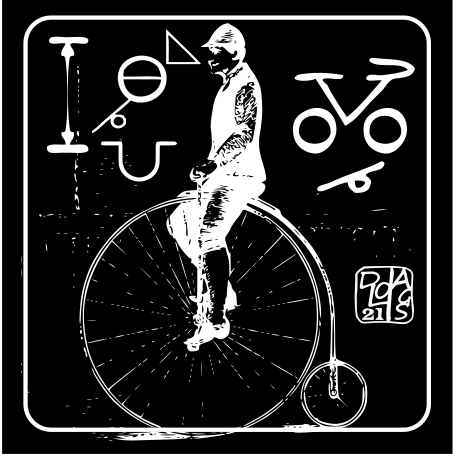
The penny-farthing, sometimes called a “high-wheeler,” is one of the most recognizable vehicles in the history of transportation. Its enormous front wheel and small rear wheel give it a spectacular silhouette. Its name comes from two British coins whose dimensions resembled the vehicle’s proportions. This configuration was driven by technical logic: before the invention of modern drivetrains, increasing the wheel’s diameter allowed for greater distance covered with each pedal stroke. The grand-bi represents a phase of intense experimentation in the history of the bicycle. It bears witness to an era when engineers were still searching for the most efficient forms of individual mobility. Riding it requires skill, balance, and courage. Despite its limitations, it helped popularize travel on two wheels. Even today, it remains a visual icon of 19th-century mechanical ingenuity. It serves as a reminder that the most familiar technologies are often the result of numerous trials and detours.Lire la suitepenny-farthing
Vous pouvez compléter, modifier, améliorer cette indéfinition ou en proposer une autre au regard de vos savoirs, langages, pratiques, histoire… qu’elle soit formulée sur un mode scientifique, culturel, poétique… contact@21dialogues21.org
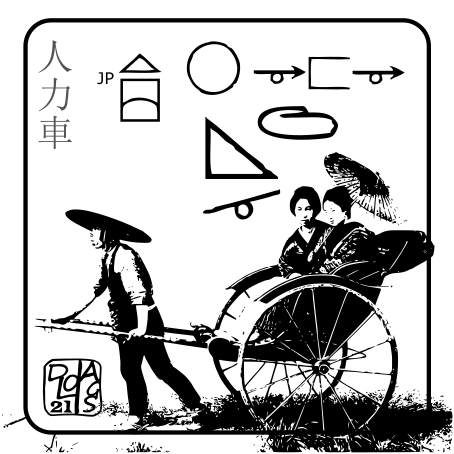
The Japanese word jinrikisha 人力車 literally means “human-powered vehicle.” First appearing in 19th-century Japan, this invention combines two major traditions: human traction and the modern lightweight wheel. The vehicle is pulled or pushed by a person while one or more passengers sit in the back. Its development coincided with the rapid modernization of Japanese cities during the Meiji era. The jinrikisha offered relatively fast mobility in urban areas where motorized infrastructure was still limited. It quickly became a symbol of Asian urban life before spreading to other parts of the world. Its history also raises social questions. Passenger comfort depends directly on the driver’s effort. The vehicle thus reveals economic hierarchies and changes in the nature of work within industrializing societies. Straddling tradition and modernity, the jinrikisha occupies a unique place in the global history of mobility.Lire la suitejinrikisha
Vous pouvez compléter, modifier, améliorer cette indéfinition ou en proposer une autre au regard de vos savoirs, langages, pratiques, histoire… qu’elle soit formulée sur un mode scientifique, culturel, poétique… contact@21dialogues21.org
The inner tube is one of the major innovations that has made modern transportation comfortable. Placed inside the tire, it contains compressed air that absorbs bumps in the road. Before its invention, vehicles with solid wheels transmitted shocks directly to passengers. Air thus became a technical material in its own right. Invisible yet essential, it plays a role in the overall functioning of the system. The inner tube transforms the travel experience by reducing vibrations and improving traction. Its development went hand in hand with that of the bicycle and later the automobile.Lire la suitechambre à air
Vous pouvez compléter, modifier, améliorer cette indéfinition ou en proposer une autre au regard de vos savoirs, langages, pratiques, histoire… qu’elle soit formulée sur un mode scientifique, culturel, poétique… contact@21dialogues21.org
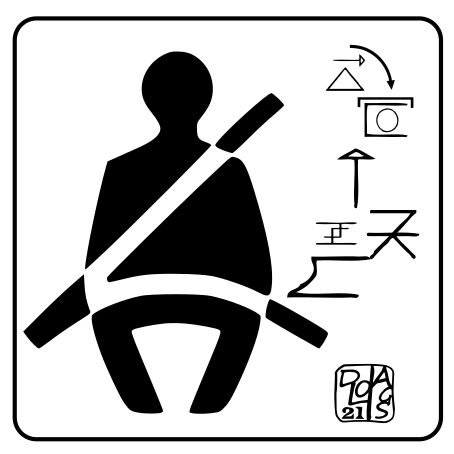
The seat belt is one of the innovations that has contributed most to reducing the consequences of traffic accidents. Attached to the vehicle seat, it restrains the body during sudden decelerations and limits the risk of serious injury. Its history reveals an interesting paradox. It illustrates how a voluntary constraint can become a prerequisite for freedom of movement. Without it, modern forms of rapid mobility would be far more dangerous. The seat belt is thus part of a long history of body protection devices. It also offers a lens through which to examine the relationships between technology, individual responsibility, and public policy. A mundane object of daily life, it nonetheless bears witness to a profound transformation in the culture of travel during the 20th century.Lire la suiteceinture de sécurité
Vous pouvez compléter, modifier, améliorer cette indéfinition ou en proposer une autre au regard de vos savoirs, langages, pratiques, histoire… qu’elle soit formulée sur un mode scientifique, culturel, poétique… contact@21dialogues21.org
Antoine François Prévost, plus connu sous le nom de l’abbé Prévost, est un écrivain français du XVIIIe siècle né en 1697 et mort en 1763. Sa vie personnelle fut presque aussi mouvementée que les romans qu’il écrivit. Destiné à une carrière religieuse, il entre très jeune chez les bénédictins et devient abbé. Pourtant, son existence est marquée par une instabilité…Lire la suiteAntoine François Prévost

Depuis l’Antiquité, Bordeaux fut un port de commerce ouvert sur le monde, propice aux migrations. À l’époque romaine, des navigateurs et marchands méditerranéens s’installent à Burdigala. Au Moyen Âge et à l’époque moderne, des juifs séfarades fuyant l’Inquisition s’établissent à Bordeaux, notamment dans la rue Judaïque. Les XVIIIe et XIXe siècles voient l’arrivée de négociants étrangers, d’esclaves affranchis des colonies,…Lire la suitePetite histoire des flux migratoires à Bordeaux
Situés entre Bacalan et la Garonne, les Bassins à flot sont deux vastes bassins portuaires creusés entre 1860 et 1879 pour désengorger le port de Bordeaux. Ils permettaient l’accueil de navires de haute mer en aval du centre-ville. Conçus sous la direction de l’ingénieur Claude Deschamps, ils accompagnèrent le développement de l’activité maritime et industrielle de la ville. Les lieux…Lire la suiteBassins à flot
La gare de Bordeaux-Saint-Jean est une véritable porte d’entrée de la ville. Conçue initialement en 1855 pour la Compagnie des Chemins de fer du Midi, elle est agrandie entre 1889 et 1898 sous la direction de l’ingénieur Gustave Eiffel, qui conçoit la grande halle métallique emblématique couvrant les voies. De style néo-classique en façade, la gare conjugue patrimoine et modernité.…Lire la suiteGare de Bordeaux-Saint-Jean