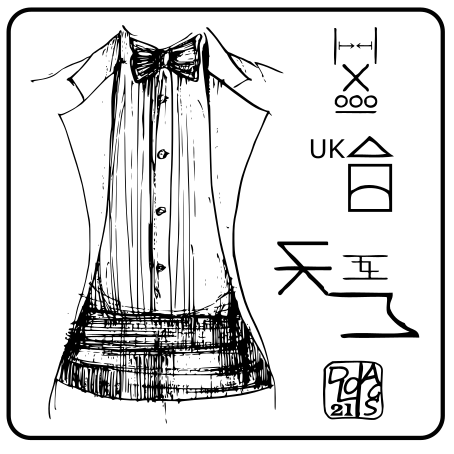
A cummerbund is a wide fabric sash worn around the waist with certain men’s evening wear, particularly a tuxedo. Its origins can be traced directly to the Persian kamarband, which was adopted and adapted by the British during their presence on the Indian subcontinent in the 18th and 19th centuries. The English word “cummerbund” is derived from the Persian term via South Asian languages. Originally, this lightweight fabric band served a practical purpose: it was a convenient alternative to the European waistcoat in hot climates. Gradually, it became a codified element of Western elegance. Traditionally made of silk or satin, the cummerbund is worn with the pleats facing upward, a detail that has given rise to numerous explanations, some practical, others more anecdotal. Its function is as much aesthetic as it is sartorial: it ensures a harmonious transition between the shirt and the trousers while accentuating the silhouette. The cummerbund is a remarkable example of cultural circulation. Born in the world of Persian dress, transformed in India, adopted by British officers, and then integrated into Western formal fashion, it illustrates how garments cross borders, reinvent themselves, and retain the discreet memory of their journeys.Lire la suitecummerbund
Vous pouvez compléter, modifier, améliorer cette indéfinition ou en proposer une autre au regard de vos savoirs, langages, pratiques, histoire… qu’elle soit formulée sur un mode scientifique, culturel, poétique… contact@21dialogues21.org