
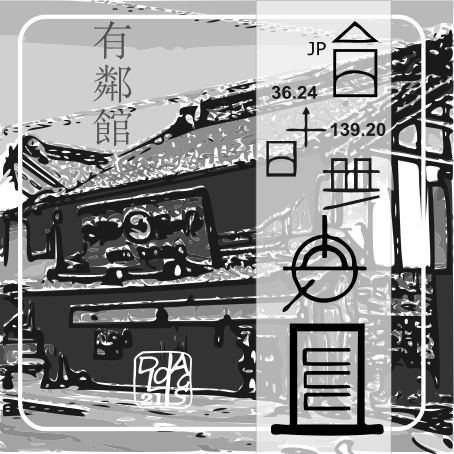
Yurin-kan 有鄰館 is a remarkable complex of historic buildings consisting of former warehouses associated with production and trade. The preserved structures span several periods, from the Edo period to the 20th century. Sake, miso, and soy sauce were once produced here. Today, the site offers an exceptional example of Japanese utilitarian architecture. The thick walls of the warehouses illustrate the importance of storage in pre-industrial and industrial economies. The Yūrinkan serves as a reminder that a textile town does not live by its looms alone. It also depends on networks for the supply, trade, and storage of goods. The buildings demonstrate how local prosperity was embodied in tangible infrastructure. They allow us to observe the connections between food, trade, and industry in a medium-sized Japanese town.Lire la suiteYurin-kan
Pantopique : Kiryu
Un pantopique correspond à la réunion de quelques repères, plus ou moins nombreux, que vous pouvez commenter, compléter, étendre, selon vos propres champs d’expériences, de savoirs, d’enquêtes… - contact@21dialogues21.org
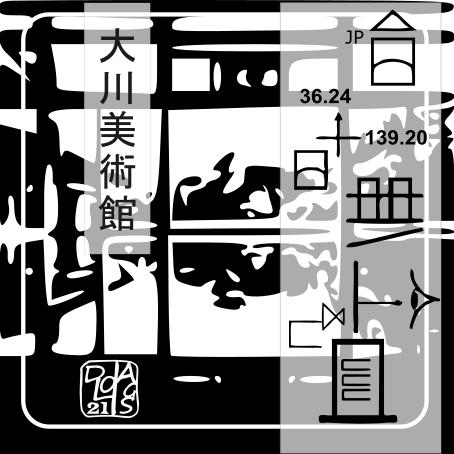
The Okawa Museum of Art 大川美術館 is an interesting example of cultural diversification in a city historically shaped by the textile industry. Founded with the collection of Kiryu-based patron and entrepreneur Eiji Ōkawa, the museum is primarily dedicated to modern Japanese art. Its existence demonstrates how the wealth generated by industry can be reinvested in sustainable cultural institutions. The museum also offers a glimpse into Kiryu’s evolution.Lire la suiteŌkawa Museum of Art
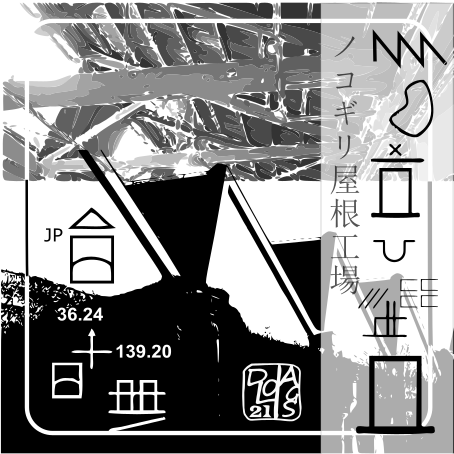
The “sawtooth-roofed factories” (Nokogiri-yane-koujou | ノコギリ屋根工場) are among Kiryu’s architectural landmarks. Their distinctive silhouette is the result of an ingenious adaptation to the needs of the modern textile industry. The north-facing glass walls provide the steady light essential for thread work and fabric inspection. In Kiryu, these buildings became ubiquitous during the period of industrial expansion in the late 19th and early 20th centuries. They embody a convergence of architecture, production, and artisanal craftsmanship. While large chimneys often symbolize Western industry, the sawtooth roofs here represent a different image of modern manufacturing. Their preservation in the urban landscape still allows us today to understand the city’s economic organization. These buildings are to Kiryu what the spinning mills are to Manchester or the canuts to Lyon.Lire la suiteNokogiri-yane-koujou
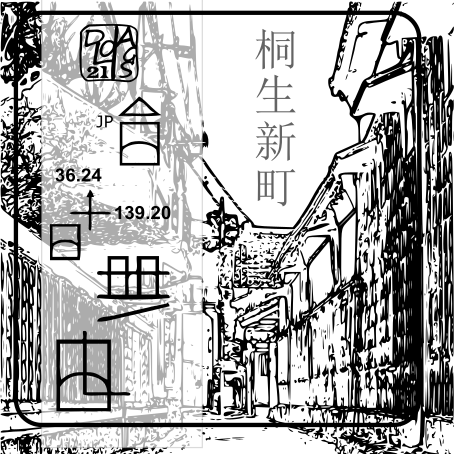
The historic district of Kiryu Shinmachi 桐生新町 is likely the best gateway to Kiryu’s history. Its origins date back to the late 16th century, when the town was organized around the Tenmangū Shrine. The street layout from that era remains largely visible today. For several centuries, Shinmachi became the commercial heart of the textile city. Silk brokers, yarn merchants, cloth merchants, dyers, and manufacturers established their businesses there. The streets still reveal this former prosperity through the warehouses, merchant houses, and workshops that have survived the transformations of the 20th century. Unlike many industrial cities, Kiryu has preserved an urban landscape where the textile economy remains visible in the stone, wood, and built structures. In 2012, the area was designated a district for the preservation of traditional architectural ensembles. Shinmachi thus serves as an open-air urban archive of Japan’s textile golden age.Lire la suiteKiryu Shinmachi
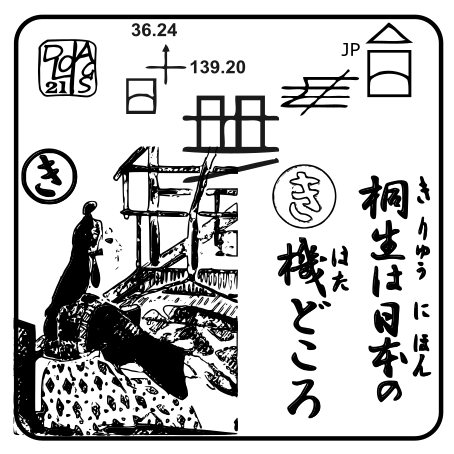
The phrase 日本の機どころ (Nihon no hatadokoro), often translated as “Japan’s weaving country” or “Japan’s city of looms,” is closely associated with Kiryu. It features prominently in Gunma’s popular culture and encapsulates several centuries of textile specialization. This phrase does not refer to a specific product but to a collective reputation. It expresses the idea that an entire region can be identified with a technical skill. Many cities around the world have been defined by a dominant industry: silk in Lyon, wool in Bradford, carpets in Isfahan. Kiryu belongs to this family of cities whose identity has become inseparable from a productive craft. The phrase serves as a condensed memory of several generations of artisans, merchants, and industrialists. It represents a true cultural motto of the city.Lire la suiteNihon no hatadokoro
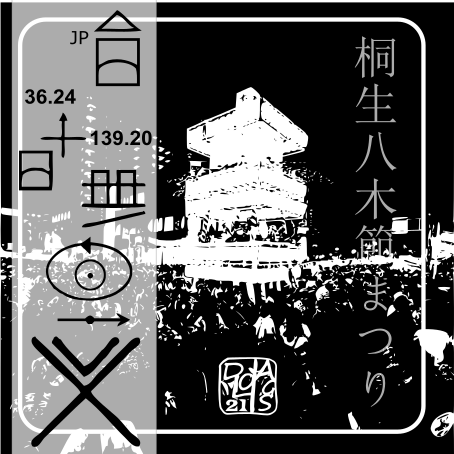
The Kiryu Matsuri 桐生八木節まつり is one of the major events on the local calendar. Like many Japanese urban festivals, it combines religious, community, and celebratory elements. Residents celebrate both their connection to the city and the continuity of traditions passed down through generations. Floats, music, decorations, and gatherings temporarily transform the urban landscape. The festival also serves as a special occasion for cultural transmission. The skills required to organize it bring together associations, families, and neighborhood groups. Behind the festival’s apparent spontaneity lies a considerable collective effort. The Kiryu Matsuri demonstrates how local communities create and preserve their own collective memory. It reminds us that a city’s identity is built as much through celebrations as through monuments.Lire la suiteKiryu Matsuri
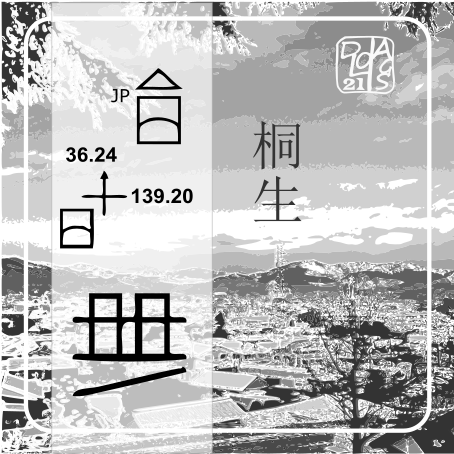
Located in Gunma Prefecture, the city of Kiryu 桐生 is often associated with a long tradition of textile production. Its development is linked to a combination of geographical, economic, and technical factors that fostered the emergence of a major production center. For centuries, the skills involved in spinning, dyeing, and weaving have formed an essential part of its identity. However, Kiryu is not merely defined by its artisanal specialization. The city illustrates how a community can build its reputation on mastery of a craft. Its history also attests to the ability of regions to integrate innovations while preserving ancient legacies. Like other textile cities around the world, it has had to navigate industrialization, international competition, and changing fashion trends. Kiryu thus serves as a particularly fascinating case study of the relationship between heritage and adaptation. Its history reflects several centuries of economic and cultural transformation in Japan.Lire la suiteKiryu
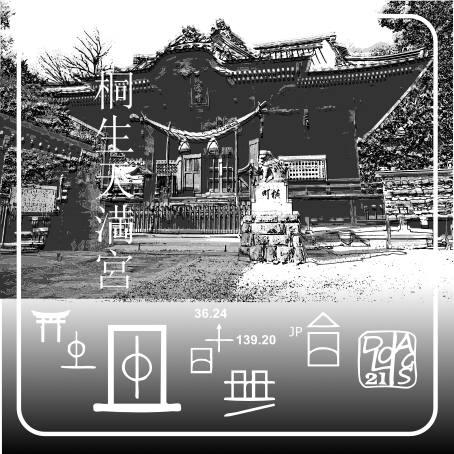
Kiryu-Tenmangū Shrine (桐生天満宮) is a branch of Kyoto/Kitano Tenmangū Shrine and one of the five major shrines in the Kanto region, where it serves as the guardian shrine of the city of Kiryu. This shrine has a long history. According to its records, it was built to worship the deity Amano Hohi no Mikoto, before later becoming a Tenmangu dedicated to the deity Sugawara no Michizane at the beginning of the Northern and Southern Courts period. (…) Furthermore, although Tenmangu is commonly known as the “god of learning,” the blessings of this shrine are not limited to that alone. Kiryu, whose scenic beauty has long been renowned, occupies an ideal location from a feng shui perspective. In other words, this place can be described as a kind of spiritual epicenter. In accordance with feng shui practices, the main shrine houses the four gods Seiryu, Byakko, Suzaku, and Genbu, positioned respectively in the east, west, south, and north. Their many blessings, drawn from the energy of heaven and earth, include business prosperity, family well-being, good health, happiness, and fortune, as well as protection from disasters.Lire la suiteKiryu-Tenmangū (Kiryu)